

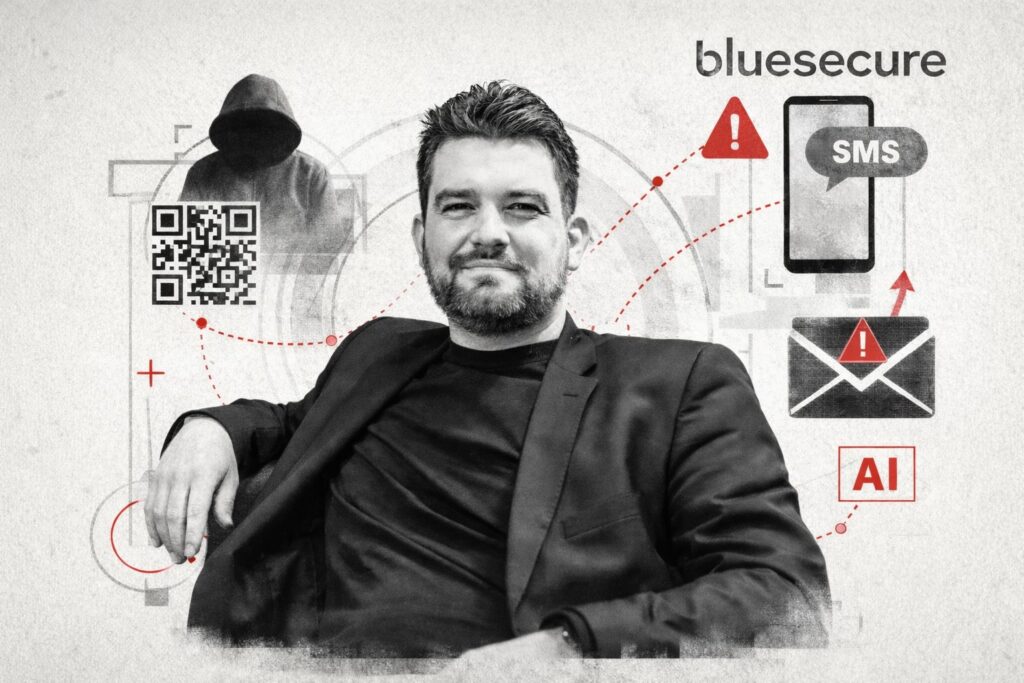
Artificial Intelligence Shifts Cyber Risk Focus to Human Elements, Says BlueSecure CEO
In a rapidly evolving digital landscape, artificial intelligence (AI) is increasingly shifting the center of cyber risk from technical defenses to human factors. Jean-Baptiste Artignan, CEO and Sales Director of BlueSecure, asserts that the widespread adoption of automated agents, the rise of industrialized spear phishing, and the emergence of shadow AI are compelling organizations to rethink their governance strategies. As regulatory pressures mount and insurers’ demands grow, the nature and scale of cybersecurity awareness are undergoing a significant transformation.
Historically, cybersecurity initiatives have prioritized technical layers such as firewalls, multifactor authentication, network segmentation, and Zero Trust architectures, shaping the investment strategies of IT and security leaders. However, data indicates that human factors frequently contribute to incidents along the attack chain. The explosive growth of AI technology is fundamentally altering this balance, enhancing attackers’ offensive capabilities while simultaneously fostering unregulated internal usages of AI.
IT Social: Before we dive into the intersection of AI and governance, can you introduce BlueSecure and your market positioning?
Jean-Baptiste Artignan: “BlueSecure has been operational since 2017, specializing in raising employee awareness about cyber risks. We offer an online platform that enables security managers to oversee their awareness programs comprehensively. Our services include simulation attacks, particularly phishing, with a significant distinction: we address every channel that attackers currently exploit, including email, SMS, QR codes, phone calls, malicious USB drives, and instant messaging. Our goal is to accurately reflect the real threat landscape, which is now multichannel.”
“Furthermore, we’ve developed a scenario editor that incorporates AI to create realistic and contextualized simulations. Yet, simulation is only one aspect of our offerings. The core of our business revolves around immersive training: interactive, gamified formats, online escape rooms, and scripted adventures that place users in realistic scenarios. We aim to move beyond traditional top-down training to focus on retention and comprehension of the stakes involved. Our subscription-based model features a continually evolving catalog. As threats and usage patterns change, so must our awareness programs.”
How does AI alter the nature of cyber risk from a human perspective?
“There are two key aspects. First, AI is leveraged in attacks, and second, it serves as a tool used by individuals. On the attack side, the game changer is automation. Previously, executing a targeted spear phishing attack required a human to conduct research on the target and craft a storyline. Now, it’s possible to program an agent to gather intelligence from open sources, aggregate data from leaks, and automatically generate personalized messages.”
“We’re moving toward generalized spear phishing. Whereas before, only specific roles or sensitive sectors were targeted, automation allows for a broader scope. Management now resembles a dashboard; the scenarios are deployed, with human intervention limited to utilizing the outcomes.”
Risk doesn’t solely stem from external attackers; internal use of AI also raises concerns.
“Exactly. We’re seeing a rise in ‘shadow AI’ reminiscent of ‘shadow IT.’ Employees often resort to unapproved tools to gain immediate productivity enhancements. For instance, an assistant might record a strategic meeting, have it transcribed and summarized by an external service without realizing sensitive data is being transferred. Users do not always recognize that they may be exposing confidential information. Even rephrasing an email can involve personal or strategic data. Personal data cannot be shared without a legal basis, while confidential information is protected under employment contracts. Feeding this information into public AI applications raises compliance and liability issues.”
Who should lead this transformation: IT, security, HR, or management?
“The focus should be on technical teams, who must offer regulated tools; otherwise, users will seek public alternatives. However, management plays a crucial role too. You’re absolutely right: frontline managers are key. Simply sending a document for signature doesn’t ensure understanding. To enforce rules, one must comprehend their significance. Managers can contextualize risks based on their team’s specific job functions and reinforce best practices daily. Regarding AI, we are gradually integrating it into professional training. For instance, mastering prompts is becoming a valuable skill. We are developing specific modules on the art of formulating queries since this critically affects the quality of outcomes and management of exposed data.”
The cyber and AI training market is buzzing— is consolidation inevitable?
“The market is still in an exploratory phase. Many players offer traditional approaches, while others, like us, invest in interactive formats, immersive scenarios, and gamification. Awareness training is transitioning into a subscription-based platform, akin to software models. One-time training is insufficient. Threats and usage evolve, and it’s vital to refresh training formats to maintain engagement. If we deliver the same module each year, the message will no longer resonate. Tools are changing weekly, and we’re continuously testing new solutions to identify common denominators, like prompting, to build sustainable training despite technological volatility.”
“Awareness training has evolved beyond merely avoiding unfortunate clicks. It is now a lever for governance, employability, and competitiveness. With AI accessible worldwide in an instant, the need for adaptation is faster than previous technological revolutions. Effectively managing human risk has now become a strategic endeavor that intertwines technical, managerial, and executive responsibilities.”



