

SUSE Acquires Losant to Expand Edge Portfolio into ‘Tiny Edge’ Segment
SUSE has announced its acquisition of Losant, a strategic move aimed at broadening its Edge computing offerings into the emerging ‘Tiny Edge’ segment. This acquisition places the open-source company firmly within the industrial Internet of Things (IIoT) value chain by integrating a comprehensive application platform focused on process automation.
According to 451 Research, an S&P Global entity cited in SUSE’s press release, IoT devices are expected to evolve into AI terminals by 2026 due to cost-effective connectivity solutions. This transformation is set to trigger a significant equipment renewal cycle, not experienced at such a scale in the past decade. Such developments reinforce the Edge’s role as a vital execution layer in hybrid AI architectures, where local processing complements cloud capabilities to address latency, operational continuity, and scalability needs.
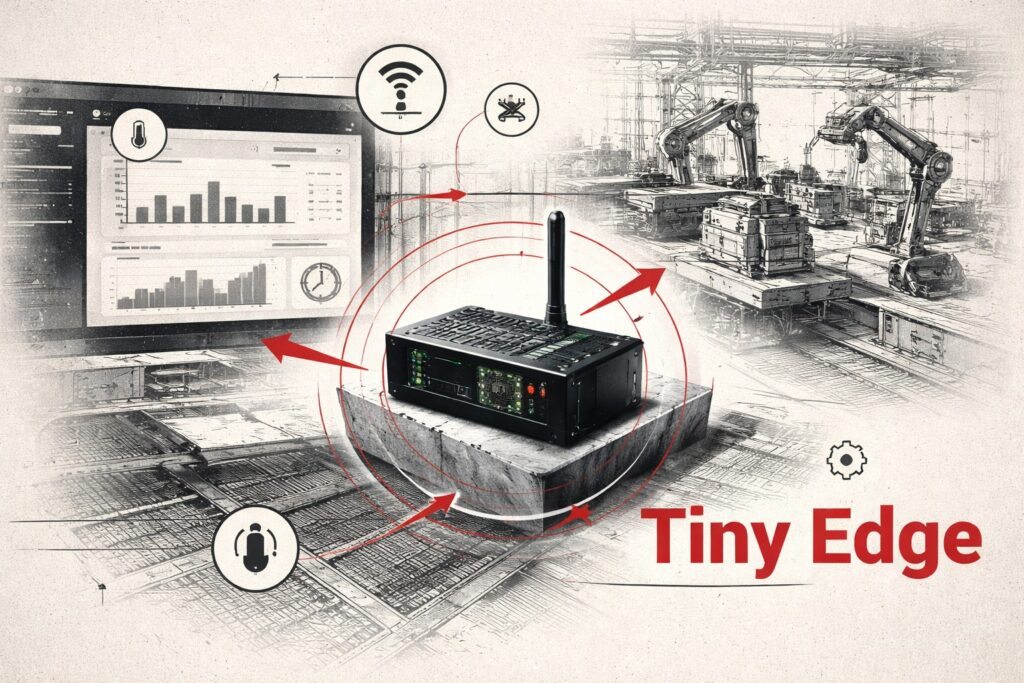
In this context, SUSE is extending its scope beyond ‘Near Edge’ and ‘Far Edge’ to include ‘Tiny Edge.’ This term refers to the deployment of processing and control capabilities directly onto low-resource industrial devices. Keith Basil, General Manager of SUSE Edge, noted that this acquisition allows the company to “deliver the part of the Edge where the digital world directly interacts with the physical one, where machines, environments, and people engage in real-time.” This shift enables SUSE to transition from a focus on infrastructure to encompassing operational execution.
Expansion into a Full-Stack IIoT Platform
Losant’s industrial IoT platform enhances SUSE’s Edge foundation with a visual workflow engine, customizable dashboards, and equipment orchestration capabilities. “This partnership combines our low-code industrial IoT platform with SUSE’s 30 years of enterprise software expertise,” said Losant CEO Charlie Key. The integration of data management, business logic, and application activation transforms SUSE Edge into a complete software stack, bridging from infrastructure to business processes.
This evolution is set to redefine projects for IT leaders and operational technology (OT) managers. A direct link between operational systems and enterprise analytical tools minimizes the lag between data collection from the field and automated response actions. The press release illustrates this mechanism with a predictive maintenance use case, where locally processed sensor data triggers corrective actions before faults occur. The implications of this capability are significant for equipment availability and minimizing unplanned downtimes.
Open Source Versus Proprietary Platforms
Losant has been recognized in Gartner’s 2025 Magic Quadrant for global industrial IoT platforms. SUSE has expressed its intention to make Losant’s technology open source and collaborate with community stakeholders to accelerate the standardization of interfaces and interoperability. This strategy addresses competitive pressures posed by tightly integrated IoT solutions that rely on proprietary cloud environments.
By adopting an open and standards-compliant architecture, SUSE aims to provide manufacturing industries with an alternative to closed platforms. Independence from single-vendor solutions and the portability of workloads between Edge and cloud environments are critical considerations for asset-intensive sectors. The open-source positioning also serves as a differentiating factor in a market often characterized by vertical integration and technological lock-in.
Integrating Operational Technology and Enterprise Systems
Keith Gamble, Software Engineering Director at Barry-Wehmiller Design Group, remarked that manufacturers are seeking to connect “sensors, controllers, and production equipment with modern IT systems for analysis, governance, and enterprise-level decision-making.” The integration of Losant under SUSE unites secure Edge infrastructure with a dedicated IIoT application platform.
This convergence of operational technology and business intelligence facilitates the connection between shop floor activities and ERP and analytical systems. For CIOs and CISOs, the focus is on governing industrial data flows, segmenting OT and IT environments, and deploying AI models close to equipment without compromising critical networks.
This acquisition strategically positions SUSE against hyperscalers and specialized OT vendors by bringing in a recognized IIoT platform. The industrial Edge market is evolving toward architectures capable of orchestrating automated business processes integrated with embedded AI models. By combining infrastructure, orchestration, and application automation, SUSE strengthens its full-stack positioning tailored for critical industrial environments amid a cycle of investment in connected equipment renewal.



