

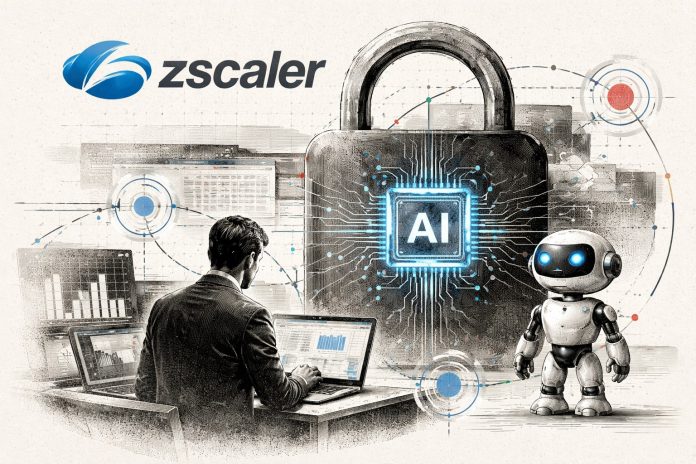
Zscaler’s AI Security platform offers organizations a unified inventory of AI applications, models, and agents, along with Zero Trust access controls tailored for artificial intelligence use cases. This security suite correlates AI asset discovery with traceability of access and execution behaviors to identify potential risks associated with AI usage, including AI generation services, SaaS applications integrating models, and AI development environments.
<p>According to the ThreatLabz AI Security Report released by Zscaler in January 2026, a staggering 78% of surveyed organizations lack comprehensive visibility into their AI applications, complicating efforts to assess data loss exposure. The report also highlights that legacy security tools are inadequate for analyzing new AI traffic patterns resulting from machine-to-machine interactions. “Leaders are seeking a holistic solution rather than a patchwork of isolated tools” to manage identified risks related to AI systems and enterprise data access through models or agents, stated Jay Chaudhry, CEO of Zscaler.</p>

<p>The Zscaler AI Security suite facilitates an inventory of AI assets by linking generative AI services, custom models, autonomous agents, and the underlying infrastructure through a mapping of dependencies and data access relationships. This mechanism enables Chief Information Security Officers (CISOs) to understand which data each AI component utilizes and identify data loss exposure in line with internal governance regimes.</p>

<h4>Zero Trust-Based AI Access Controls</h4>
<p>The AI inventory mechanism relies on analyzing network flows and the identity of AI services to produce a catalog of all discovered AI components, correlated with metadata classifying the sensitive data utilized by these components. This classification informs the prioritization of security rules and data governance policies.</p>

<p>According to product specifications released by Zscaler, this dependency correlation employs behavioral heuristics and signatures to identify atypical machine-to-machine access associated with AI model interactions with information systems. The solution introduces Zero Trust access controls for all enterprise-approved AI services, combining real-time traffic inspection with AI request classification to mitigate data loss and model misuse while ensuring business continuity for users and IT teams.</p>

<h4>Identity-Based Service Filtering</h4>
<p>This control mechanism relies on “policy enforcement” rules applicable to each identified AI component in the inventory, with filtering criteria based on service identities, categories of manipulated data, and typical request vectors from API-like model interfaces. These rules can block access to highly sensitive or regulatory-compliant data when security criteria are not met.</p>

<p>As detailed in Zscaler's technical documentation, real-time inspection of AI requests utilizes a content classification engine that analyzes model inputs and outputs to detect request patterns associated with data leak risks or malicious exploitation of AI functionalities.</p>

<h4>Comprehensive AI Lifecycle Security</h4>
<p>The suite deploys automated red teaming AI testing tools and request hardening, coupled with continuous assessment of the risk posture of AI components from development to execution. These mechanisms dictate the production rollout of AI models and applications based on measured business risk thresholds.</p>

<p>AI red teaming is conducted through attack simulation modules that generate sequences of malicious requests or hostile prompts to test model resilience against attack surface manipulations. This allows security architects to gauge the capabilities of AI environments to withstand attempts at injecting malicious requests or generating outputs that do not comply with internal policies.</p>

<p>According to Zscaler's documentation, the dynamic execution guardrails layer in an additional evaluation of AI behavior in production, implementing business rules that can disable or isolate AI services when deviations from safe usage profiles are detected.</p>

<h4>Aligning Governance and Regulatory Compliance</h4>
<p>Zscaler introduces AI usage reporting tailored for board committees and integrates with frameworks such as the NIST AI Risk Management Framework and the European AI Act to standardize AI security programs around legal and business compliance criteria.</p>

<p>Compliance utilizes measurable metrics such as the rates of detection for sensitive data exposures, the number of AI components not conforming to internal data processing policies, and response times to AI model-related incidents. These metrics are periodically generated to inform governance dashboards and regulatory compliance reviews. As stated in the integration release notes from Zscaler, connectors with cloud providers like AWS, Google, and Microsoft facilitate the synchronization of AI security indicators with identity and access management platforms and SIEM systems for a consolidated view of risks.</p>
<div class="td-a-rec td-a-rec-id-content_bottom td-rec-hide-on-p tdi_3_668 td_block_template_1">
    <style>
        /* custom css */
        .tdi_3_668.td-a-rec-img {
            text-align: left;
        }
        .tdi_3_668.td-a-rec-img img {
            margin: 0 auto 0 0;
        }
    </style>
</div>


