

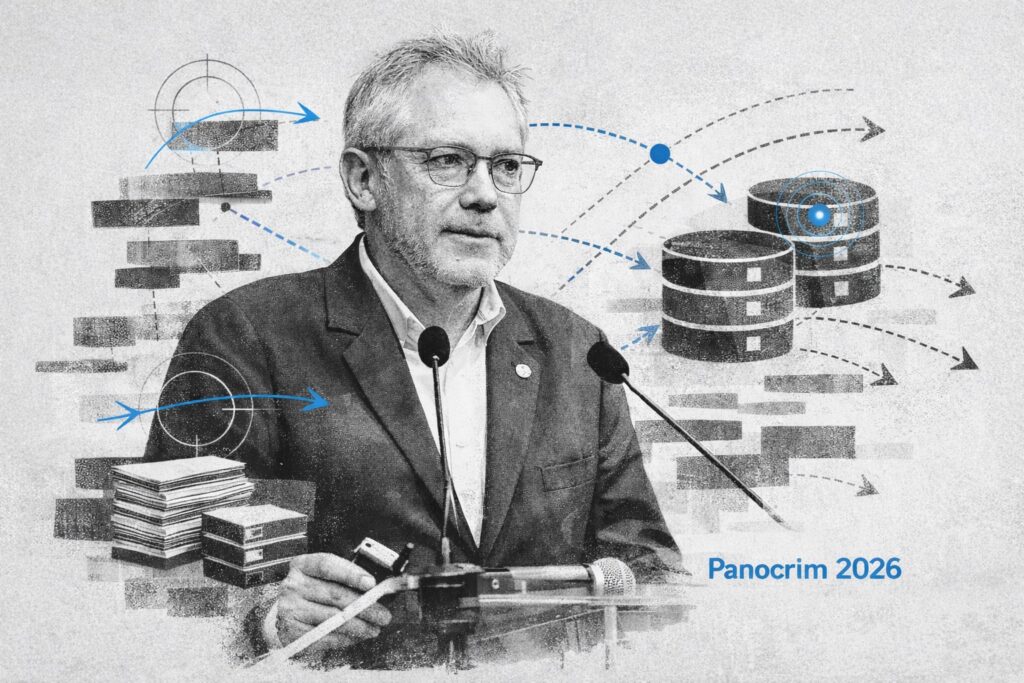
Clusif Unveils New Panocrim Report, Revealing Shift in Cyberattack Strategies
The Club de la sécurité de l’information français (Clusif) has unveiled the latest edition of its Panocrim report, highlighting a notable evolution in cyberattack strategies towards influence, disruption, and pressure tactics within organizational friction zones. The report provides a comprehensive and detailed overview of significant incidents that occurred in 2025, laying the groundwork for anticipating future cyber threats.
Presented annually in Paris, the Panocrim event gathers experts from Clusif for a collective analysis of emerging cyber trends. The 2026 edition of the report, developed by around fifty professionals—including cybersecurity officers, researchers, consultants, and representatives from both public and private sectors—confirms the acceleration of various structural disruptions. This study employs a mixed methodology, combining chronological analysis of real incidents with sectoral perspectives and cross-sectional interpretations of systemic changes.
Intrusions Exploit Decision-Making Complexity
The attacks recorded in 2025 target more than just IT systems or critical resources; they infiltrate decision-making frameworks, aiming to induce panic and manipulate often-invisible technical or legal dependencies. This trend is particularly prevalent in heavily regulated sectors or those exposed to governance conflicts, such as healthcare, public management, and higher education.
“The hospital has become a battleground for digital confrontation as much as a healthcare facility,” summarizes Élise Philippe, an analyst at Sanofi and co-author of the report. “What stands out is the diversity of motivations. Some groups are after ransom, others seek visibility, but all exploit internal coordination failures.” The combination of siloed decision-making, heavy reliance on contractors, and budget constraints creates a fertile ground for cascading compromises.
VPNs, Shadow IT, and Legacy Systems Facilitate Lateral Access
Cybercriminals have adapted to the distributed enterprise landscape. In the post-COVID era, the widespread adoption of remote access has introduced new attack vectors. “The sometimes haphazard implementation of remote access and VPNs has significantly expanded the possibilities for cybercriminals to access personal and corporate data,” warns Gaston Gautreneau, a cybersecurity expert and consultant for CNIL.
Shadow IT is also implicated in several major incidents. Unapproved tools—such as cloud storage services, third-party video conferencing platforms, and non-validated applications—have served as gateways for complex intrusions. The report highlights a specific case involving a regional public institution whose servers were hijacked for cryptocurrency mining without triggering immediate alerts.
Securing Supply Chains and Providers
Another critical finding is the increasing entanglement between clients, service providers, and digital service suppliers, rendering organizations vulnerable to domino effects. The report meticulously examines emblematic cases, including the compromise of an IT management provider in the higher education sector, which affected nearly twenty universities and schools.
“It’s no longer just about the weakest link. The very dynamics of interconnectivity are becoming a source of risk, with often poorly understood technical dependencies and vague responsibilities,” observes Mehdi Bouzelmat, a cybersecurity officer in the banking sector. Incident response coordination remains insufficient, with alert and remediation times varying significantly among involved parties.
Automated Negotiation Tools Emerge
In response to the rise of no-payment policies and explicit prohibitions against yielding to extortion in certain public sectors, ransomware groups are adjusting their operational tactics. Several incidents documented in 2025 indicate a resurgence of double-extortion techniques, combining data encryption with threats of disclosure.
Some actors are also developing automated negotiation tools or utilizing parallel channels to bypass internal crisis management procedures. The report notes a troubling trend towards automating the phases of reconnaissance, deployment, and psychological pressure, including the increasing use of AI-driven conversational modules.
Sharing Knowledge and Strengthening Tools
In light of these developments, Clusif calls for an end to siloed approaches to cybersecurity. “The report emphasizes an urgent need for coordination, shared anticipation, and clarity of responsibilities in the event of an attack,” summarizes Alain Bouillé, Clusif’s General Delegate. This necessitates improved information flow among peers, consolidation of observation tools, and strengthened security chain governance—especially for public sector actors and multi-site organizations.
Moreover, the 2026 Panocrim report stresses the importance of educating operational roles about new attack logics to identify weak signals, correlate diffuse alerts, and prevent overwhelming technical teams. “Even today, critical solutions like workstation encryption are not systematically deployed, despite being natively supported by operating systems,” highlights Gaston Gautreneau. He also points to the lack of offline backups, weak or reused passwords, and overlooked digital hygiene practices as recurring causes of compromises.



