

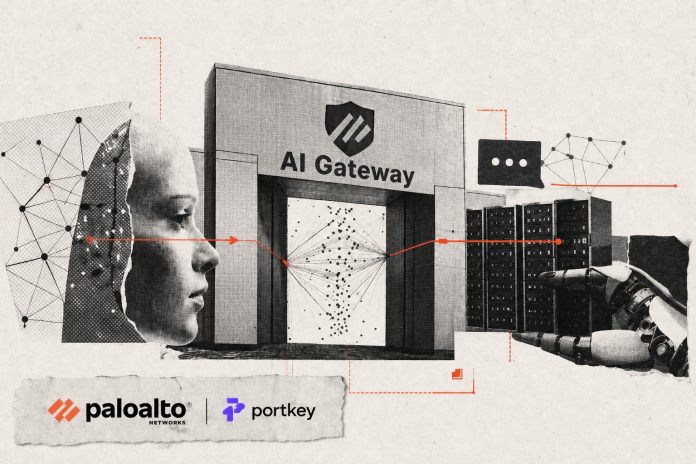
Securing autonomous AI agents is poised to become the next frontline in corporate cybersecurity. Palo Alto Networks has taken the lead by integrating an AI Gateway into its platform through the acquisition of Portkey, a solution already leveraged by several Fortune 500 companies to process trillions of tokens monthly. This move positions Palo Alto Networks to establish a standard in the market before competitors like CrowdStrike, SentinelOne, or Microsoft can act.
AI agents operate with privileges akin to insiders, accessing sensitive data, interfacing with both internal and external APIs, and making real-time decisions without systematic human validation. According to Palo Alto Networks, 81% of companies are either piloting or have already deployed AI agents in production. This widespread adoption has occurred despite security infrastructures being unprepared for such rapid integration. Existing detection and response tools were designed to monitor human activities, not the autonomous agent chains generating thousands of transactions per second between language models.
Big players in cybersecurity have yet to tackle this challenge directly. While CrowdStrike, SentinelOne, and Microsoft Defender have expanded their detection capabilities to include cloud environments and identities, none have implemented a unified control plan for agent traffic within their platforms. This is the gap that Palo Alto Networks aims to fill. In the realm of platform markets, the first to enforce its architecture as the standard interception layer creates a dependency that can be challenging for competitors to overcome. Just as firewalls became essential in the 1990s and SIEMs in the 2010s, the AI Gateway is set to become a mandatory layer for all sensitive traffic.
What the AI Gateway Offers CISOs
The core issue surrounding AI agent deployments is fragmentation. Each team implementing an agent does so with its own parameters, access levels, and integrations with language models. There is no centralized observation point, no uniformly applied least privilege policy, and no consolidated audit log. Portkey’s AI Gateway acts as an intermediary between all agents and language models or MCP servers, inspecting, authenticating, and authorizing each transaction before execution.
The inspection encompasses several dimensions. It identifies the issuing agent, ensures that its access rights cover the requested action, analyzes the content of the request for potential prompt injection or data leakage attempts, and generates comprehensive logs for auditing. The least privilege policy is applied automatically to each interaction through integration with CyberArk for agent identity management. An agent receives only the permissions strictly necessary for the current task, which are revoked immediately after the transaction is completed.
Prisma AIRS also incorporates automated red teaming for agents prior to their production rollout, subjecting them to known attack scenarios (prompt injections, exfiltration attempts, out-of-bounds behaviors) to identify vulnerabilities before they can be exploited. The claimed availability of 99.99% for autonomous workloads, achieved through semantic routing and automatic failovers between model providers, addresses another critical requirement for CISOs in mission-critical production environments: resilience.
Why Portkey Over In-House Development
According to Palo Alto Networks, Portkey processes trillions of tokens monthly, serving a clientele that includes several Fortune 500 companies. This extensive operational experience represents what would have taken years to accumulate with internal development. The integration, which requires only three lines of code, indicates an architecture designed for broad adoption rather than specialized deployment. Access to over 3,000 language models and MCP servers through a unified interface gives Prisma AIRS immediate market coverage.
Centralized artifact management is another noteworthy technical benefit. The gateway centralizes the management of model versions, agent configurations, and access to MCP servers. For large organizations managing dozens of agents in production, this capability addresses a concrete problem: knowing precisely which version of an agent made which decision, with which accesses, at what time. This is essential for compliance audits on AI systems subject to the AI Act.
“Scaling AI in production requires a delicate balance between total flexibility for developers and ultimate control for security teams,” said Rohit Agarwal, CEO and co-founder of Portkey. “By joining Palo Alto Networks, we will establish the AI Gateway as the foundational layer for the AI-secured enterprise.”
The Race for the Standard Against CrowdStrike and SentinelOne
Major transitions in cybersecurity have consistently followed a similar pattern: a new attack surface emerges, an initial player establishes their architecture as the reference layer, and others adapt or create their own competing standards. Email had its anti-spam gateways, networks had firewalls, the cloud had CASBs. Agent AI will have its AI Gateways. The question remains which vendor will define the reference architecture, and at what cost subsequent entrants will be able to challenge that choice.
“As autonomous agents join the workforce of enterprises, they also become a new unmanaged attack surface,” stated Lee Klarich, Chief Product and Technology Officer at Palo Alto Networks. “By integrating Portkey into Prisma AIRS, organizations will be able to deploy and govern AI agents with confidence.”
By positioning Prisma AIRS as the platform that encompasses the entire agent lifecycle (development, production, execution, auditing), Palo Alto Networks is creating a difficult perimeter for competitors to bypass. Platform vendors for agent orchestration (LangChain, LlamaIndex, Microsoft Azure AI) and other cybersecurity players must either integrate with this control layer or propose their own competing standard. The closure of this acquisition is expected in the fourth quarter of Palo Alto Networks’ fiscal year 2026.
For CISOs and CIOs evaluating Prisma AIRS, a key consideration should be the potential implications of the technology, regardless of its technical merits. Palo Alto Networks is based in the U.S. and is subject to the Cloud Act. Any data passing through Prisma AIRS or Portkey, including audit logs and agent transaction logs, may be subject to requests from U.S. federal authorities, irrespective of server location. For organizations subject to European regulatory obligations such as NIS2 and DORA, or operating under the SecNumCloud framework, this exposure must be assessed prior to any production deployment.



