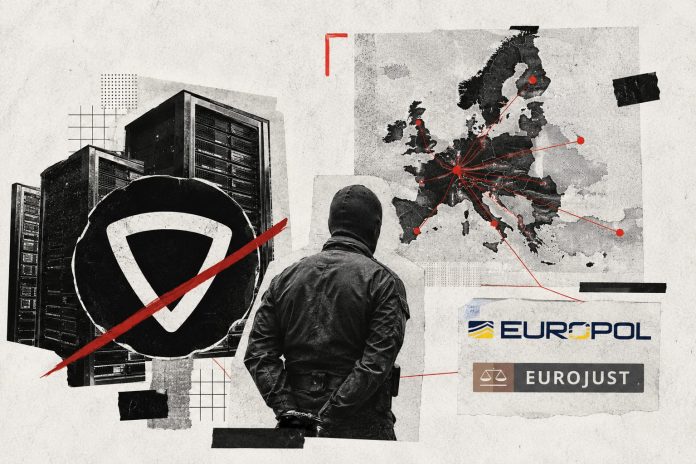
French and Dutch authorities, with the support of Europol and Eurojust, have dismantled First VPN, a virtual private network (VPN) utilized by cybercriminals to obscure ransomware attacks, data thefts, and large-scale fraud operations. On May 19 and 20, 33 servers were taken offline, an administrator was arrested in Ukraine, and the service’s domain names were seized.
For several years, First VPN built its reputation in Russian-speaking criminal forums by promising absolute anonymity: anonymous payments, hidden infrastructure, refusal to cooperate with judicial authorities, and no activity logs. The service claimed to operate outside any jurisdiction. For groups specializing in ransomware, organized fraud, and data theft, this guarantee of impunity held significant commercial value, which authorities took four years to dismantle.
The service’s reach within the cybercriminal landscape was unprecedented in recent times. According to Europol, First VPN was implicated in nearly all major cybercrime investigations supported by the agency over recent years. Investigators identified thousands of users linked to cybercriminal activities, including actors involved in ransomware attacks, fraud schemes, and other serious offenses worldwide. The user database, obtained through infiltration while the service was still operational, allowed authorities to reconstruct connections and patterns of activity that criminals believed were permanently erased.
A Four-Year Infiltration Investigation
The case began in December 2021 when initial reports sparked an investigation. French authorities contacted Eurojust in May 2022 after the service was detected on known criminal forums. By November 2023, a joint investigation team was established under Eurojust’s guidance, enabling French and Dutch services to work closely, exchange evidence, and develop a coordinated prosecution strategy. As the investigation progressed, additional countries joined, resulting in the execution of several European investigation orders and mutual legal assistance requests facilitated by national correspondents and liaison prosecutors at Eurojust.
The most complex phase involved infiltrating the service before taking it offline. Investigators gained access to First VPN while it was still active, retrieving traffic data and the user base within an environment the criminals deemed completely secure. This information fueled 83 intelligence packages distributed to international partners, with details related to 506 users shared worldwide and advancements in 21 investigations supported by Europol. Collaboration with cybersecurity firm Bitdefender played a critical role during this operational intelligence-gathering phase.
Sixteen Countries Mobilized for Judicial Coordination
Eurojust organized 16 coordination meetings among the concerned authorities in preparation for the days of action. An operational task force assembled at Europol brought together investigators from 16 countries to analyze the seized data and coordinate intelligence sharing. The Joint Cybercrime Action Taskforce hosted by Europol ensured coordination, liaison, and prevention of jurisdictional conflicts. An operational coordination center was established at Eurojust on the day of the raid to adjust the prosecution strategy in real-time across the seven participating countries.
On May 19 and 20, simultaneous operations involved France, the Netherlands, Luxembourg, Romania, Switzerland, Ukraine, and the United Kingdom. In Ukraine, the General Prosecutor’s Office, the Security Service of Ukraine, and the National Police simultaneously conducted searches and interrogated the service’s suspected administrator. The seized domain names include 1vpns.com, 1vpns.net, 1vpns.org, and related onion domains. Users of the service were notified of the shutdown and informed of their identification by authorities.
The Maturity of European Judicial Cooperation
This case exemplifies the professionalization of the cybercriminal services market. While a VPN is generally a legitimate tool for privacy protection, First VPN twisted this function: the service sought not to protect journalists or human rights defenders but to ensure operational impunity for ransomware groups and organized fraudsters. Its commercial promise — no judicial cooperation, no logs, no jurisdiction — was a clear signal of its targeted clientele and the foundation of the service’s perceived value.
For security teams and risk management officials, this operation serves as a reminder that investigators’ tracking capabilities have advanced in proportion to the sophistication of criminal anonymization tools. The prior infiltration of the service, the collection of real-time traffic data, and operational sharing among 16 countries indicate a growing maturity in European judicial cooperation against criminal cyber infrastructures. The 21 investigations propelled by the intelligence collected show that the dismantling of First VPN is not an end in itself; it serves as leverage for future operations against the groups that relied on the service to operate.