

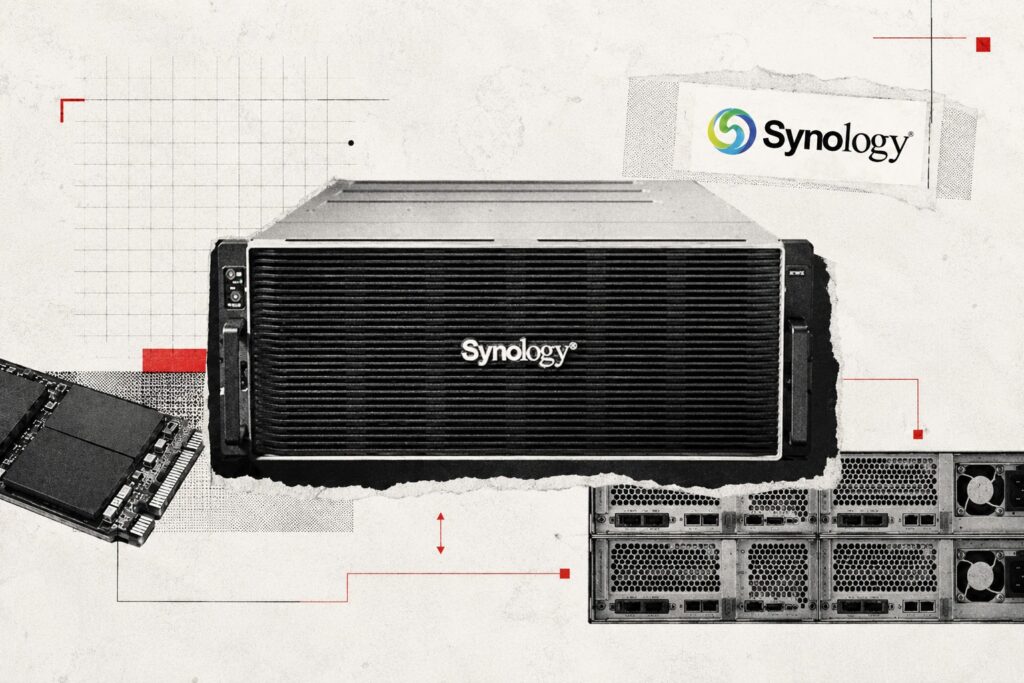
Synology Launches the PAS7700: A High-Performance NVMe All-Flash Storage Solution for Critical Workloads
Synology has officially unveiled the PAS7700, marking its entry into the competitive realm of active-active, NVMe all-flash storage systems designed for critical workloads. This robust 4U chassis features dual controllers and offers 48 NVMe SSD bays, delivering impressive performance metrics of up to 2 million IOPS, a maximum throughput of 30 GB/s, and latency under one millisecond, with expandable raw capacity reaching 1.65 PiB via seven expansion units.
The NVMe all-flash storage segment for critical workloads has seen rapid growth over the past three years, with specialized storage vendors facing off against hyper-scalers in the managed storage arena. As IT departments strive to reduce total cost of ownership while maintaining near-zero interruption availability, the decision to adopt a critical storage platform becomes a significant investment, influencing not just budgets but also recovery architecture and a long-term management ecosystem.
With the PAS7700, Synology, long recognized for its NAS solutions catering to SMEs and large enterprises, steps into the realm of high-performance enterprise storage with an active-active architecture. This market has predominantly been led by companies such as Pure Storage, NetApp, and Dell Technologies. The product’s launch follows a year-long field validation program conducted with customer enterprises. “After a comprehensive year of field validation, the PAS7700 has proven its reliability and performance, assisting customers in reducing their total cost of ownership,” stated Bie-i Chu, Executive Vice President of Synology NAS Group. Performance figures were rigorously tested in real production environments prior to the public announcement.
Active-Active Architecture and NVMe for Critical Workloads
The architecture of the PAS7700 features a dual-controller setup in an active-active configuration, allowing both controllers to process I/O simultaneously, thereby eliminating passive failover that could introduce latency during incidents. The 4U chassis accommodates 48 NVMe SSD bays and supports up to seven expansion units, pushing the maximum raw capacity to 1.65 PiB. Memory is configurable up to 2,048 GiB, while network connectivity extends to 100 GbE. These specifications position the PAS7700 to handle workloads requiring high storage density and sustained bandwidth, including transactional databases, large-scale dense virtualization, and real-time analytics.
Synology claims performance metrics of 2 million IOPS with less than one millisecond latency and a peak throughput of 30 GB/s. These specifications are manufacturer benchmarks obtained under test conditions; actual production performance will vary based on workload profiles, deduplication rates, and network parameters. The PAS7700 supports a wide array of file and block protocols—NVMe-oF, iSCSI, Fibre Channel, SMB, and NFS—allowing it to seamlessly integrate into heterogeneous environments without necessitating changes to existing application layers.
Multi-layer Resilience and Integrated Data Protection
The active-active architecture is complemented by several protective mechanisms. Redundancy is reinforced through triple-parity RAID, synchronized write protection in memory, IP failover, and protocol-level failover. This comprehensive setup aims to ensure operational continuity without noticeable interruption in the event of hardware or network failures on either controller, catering to the business continuity requirements of environments where any downtime is unacceptable.
The data protection suite includes self-encrypting drives, write once, read many (WORM) mode, immutable snapshots, snapshot replication, and Hyper Backup. These features, already present in other Synology products, are natively available on the PAS7700 with no additional licensing costs at this time. Future updates will introduce Synology Tiering, which will automatically allocate cold data to less expensive storage based on configurable policies, reserving high-performance NVMe capacity for active loads and ultimately reducing the overall cost footprint.
Built-in Advanced Deduplication
The advanced deduplication integrated within the PAS7700 aims to minimize the effective storage footprint for data-heavy workloads with high redundancy rates, directly affecting total cost of ownership. Synology emphasizes this combination of NVMe performance, active-active resilience, deduplication, and future tiering as a solution for organizations seeking to consolidate their critical infrastructure without proliferating management platforms.
As a Taiwanese company, Synology’s hardware components deployed on-site are not subject to the U.S. Cloud Act. For organizations operating the PAS7700 with local administration, data governance remains under direct control. However, attention is required regarding remote monitoring and update functionalities: depending on management practices implemented, some administrative traffic may transit through third-party services, necessitating due diligence on their location and applicable legal framework. Security teams and data protection officers should map these flows before deployment in sensitive environments, especially those subject to sector-specific regulatory obligations.



