

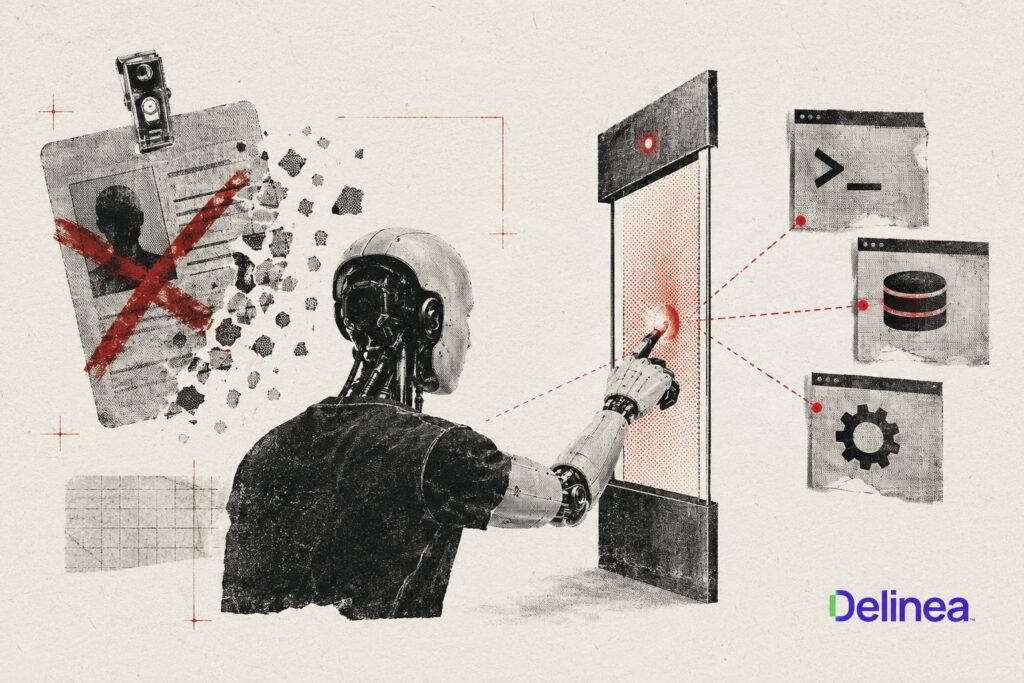
Delinea Unveils Runtime Authorization to Enhance AI Agent Security
On July 30, 2026, Delinea introduced a groundbreaking feature known as “runtime authorization,” significantly enhancing its identity security controls for AI agents that interact with production databases, SSH hosts, Kubernetes clusters, and cloud consoles. This development marks a substantial shift in how access authorization is approached, taking it beyond simply verifying agent identities.
Delinea’s new framework ensures that permissions are enforced at the very moment an AI agent performs any action—rather than merely at the point of logging in. Each tool call is now scrutinized and either permitted or blocked prior to execution, establishing a more dynamic and secure operational environment.
Action-by-Action Security Policies
The platform now distinguishes between an agent’s connection and the actions it takes once logged in. Historically, security teams would verify access during login sessions and then audit or revoke permissions afterward. Delinea claims to be the first solution to implement a security policy for each action taken by an agent, regardless of the protocol it uses.
The company’s approach employs just-in-time access for agents, allowing them only the permissions necessary for the specific task at hand and revoking these privileges immediately after the task is completed. By adopting what it terms “default zero trust,” Delinea shifts security from merely guarding the entry point to ensuring that every action within the session is protected.
An agent’s session can initiate multiple tool calls, each carrying its own risk profile—from database access to commands that could halt a production cluster. Delinea evaluates and enforces distinct policies for each call, whether that entails granting permission, blocking access, or requiring human validation before execution. This isolates potential abnormal behaviors to specific actions rather than blanketly affecting entire sessions.
Addressing Diverse Protocols
Delinea asserts its innovative control spans all protocols used in AI-agent interactions. Since databases, SSH hosts, Kubernetes clusters, and cloud consoles each present unique entry points—like SQL gateways, SSH proxies, Kubernetes admission controllers, and cloud API gateways—Delinea’s claims to ensure security across varied surfaces. However, the company has yet to clarify the specific mechanisms used for these controls or the thresholds for human validation.
Governance Designed for Autonomous Agents
Delinea recognizes that an agent executing a chain of actions without intermediate validations is different from a co-pilot under continuous human supervision. This distinction directly impacts accountability in the event of an incident. By verifying whether the connection originates from an agent or a human prior to granting access, Delinea applies agent-specific policies from the moment of connection rather than relying on click-based user rules.
While Okta, CyberArk, and HashiCorp Vault manage human and machine identities under similar principles of least privilege, Delinea uniquely extends this control throughout an agent’s active session. “Every action is now linked to a specific identity and logged individually,” stated Dhruv Kumar, infrastructure product manager at Telnyx, a client cited by Delinea.
Implications for Security Leaders Amid Cloud Act Exposure
Delinea’s new capabilities allow organizations to implement the zero trust principle for AI agent accounts without additional architecture, as the platform already manages privileged human accounts across thousands of enterprise environments.
However, as a U.S.-based platform, Delinea remains susceptible to the Cloud Act concerning access logs and metadata, regardless of the geographical locations of the production systems it protects for European clients.
As the first widespread deployments roll out, it will be essential to evaluate whether runtime authorization can handle the actual traffic and demands of a fleet of agents in production, rather than just during initial showcases. This capacity will be critical in demonstrating that just-in-time access provides the robust protection Delinea promises.



