

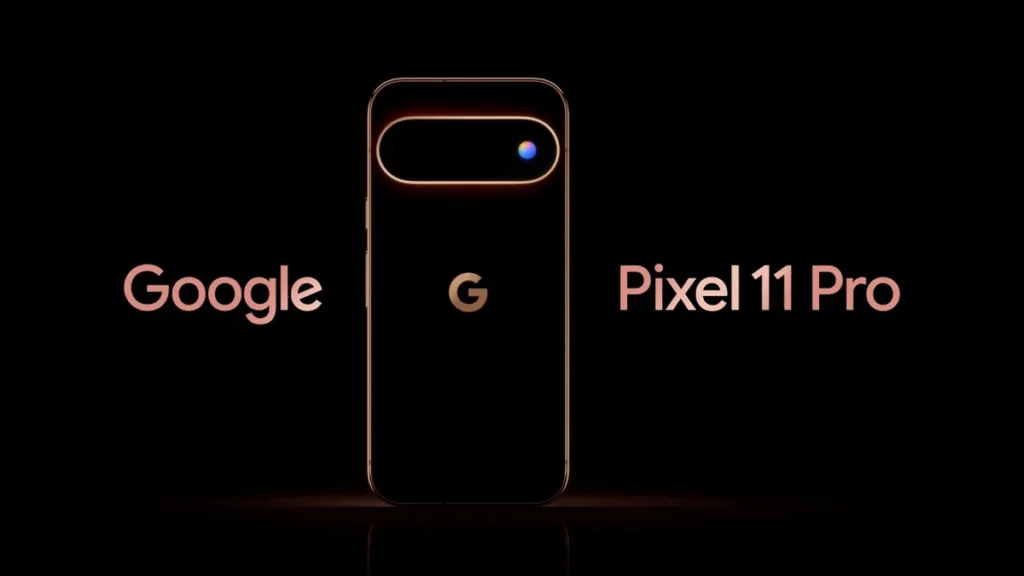
Pixel 11: HiLight will offer nine colors to identify calls from your favorite contacts
With just a week to go before the official unveiling of the Pixel 11, Google appears to have revealed a new detail about HiLight, the mysterious LED integrated into the back of its upcoming smartphones. Code lines discovered within the Google Contacts application suggest that users will be able to assign a specific color to certain favorite contacts, allowing them to identify calls without having to turn the phone over.
This idea immediately recalls the old RGB LEDs found in Android smartphones. However, at this stage, HiLight seems to offer a more limited customization than many users had hoped for.
Nine colors identified in Google Contacts
The discovery comes from version 4.85 of Google Contacts. Several code elements refer to the internal name “glow,” which has already been associated with early rumors about this feature. One of the texts explicitly states: “Tap to set up HiLight for your favorite contacts.”
The colors currently identified include blue, cyan, green, orange, pink, purple, turquoise, white, and yellow.
Users could thereby associate a color with a specific contact. When that contact calls, the LED within the camera module will light up in the corresponding hue.
The name HiLight is confirmed
For several months, the new LED has been dubbed Pixel Glow in leaks. This name originated from references discovered in beta versions of Android 17. However, the latest marketing visuals and new code lines are now converging towards a different designation: HiLight.
Google seems intent on making this feature a distinctive element of its upcoming hardware, with an easily identifiable name that is directly linked to light.
A LED designed for calls and Gemini
The available information suggests that HiLight will have at least two primary uses. The first involves incoming calls from favorite contacts. The selected color would allow users to quickly identify the caller when the phone is resting face down on a surface.
The second relates to Gemini. The LED could illuminate when the AI assistant is active, adopting the light-based visual language that Google has started to implement in other products.
Future Googlebooks are expected to incorporate a Glowbar, while the company’s smart speakers already use light animations to signal interactions with Gemini.
Consequently, HiLight fits into a broader strategy: giving artificial intelligence a cohesive visual presence throughout the Google ecosystem.
A feature that still appears very limited
In principle, the idea is appealing. In practice, the functions revealed thus far seem rather modest. The old RGB LEDs featured in Nexus smartphones and many Android devices already allowed users to signal calls, messages, or notifications from various apps.
At this stage, there is no confirmation that HiLight will be usable for SMS, messaging apps, third-party notifications, battery status, or reminders and alarms.
This limitation explains the mixed reactions from some of the Pixel community, who view HiLight as a nostalgic throwback being presented as a major new feature.
Google will need to convince with more customization
The real value of HiLight will depend on its level of customization. A multicolor LED could become useful if users can precisely define:
- Which events trigger the light
- Which apps have access
- Which colors are associated with each type of alert
- Which patterns or animations are used.
Without this, HiLight risks becoming merely a simple indicator for a limited number of calls and for Gemini, falling short of the capabilities offered by older Android notification systems.
An important novelty in a very cautious generation
HiLight draws extra attention as the Pixel 11 does not appear to be preparing for a major hardware breakthrough. Various leaks suggest a design very similar to the Pixel 10 series, a price increase, slightly smaller batteries in several models, revised storage configurations depending on the versions, and few spectacular changes in the camera department.
In this context, Google may be tempted to present HiLight as one of the flagship innovations of this generation. However, this remains a risky bet. A rear LED can enhance the daily experience, but it may struggle to justify a new generation of smartphones at a higher price point.
The true potential of HiLight remains to be seen
The code lines discovered in Google Contacts now confirm the name HiLight and its color system for favorite contacts. However, they likely only reveal part of its functionality.
Google will need to leverage the Made by Google conference on August 12 to demonstrate that this light is not just a simple nostalgic return of notification LEDs. If HiLight offers extensive customization and deep integration with Android, it could become a discreet yet genuinely useful tool.
Otherwise, it risks illustrating the caution of a Pixel 11 lineup that currently seems more focused on recycling good ideas from the past than on inventing new uses.



