

Eset Integrates Technologies with Sekoia to Enhance SOC Efficiencies
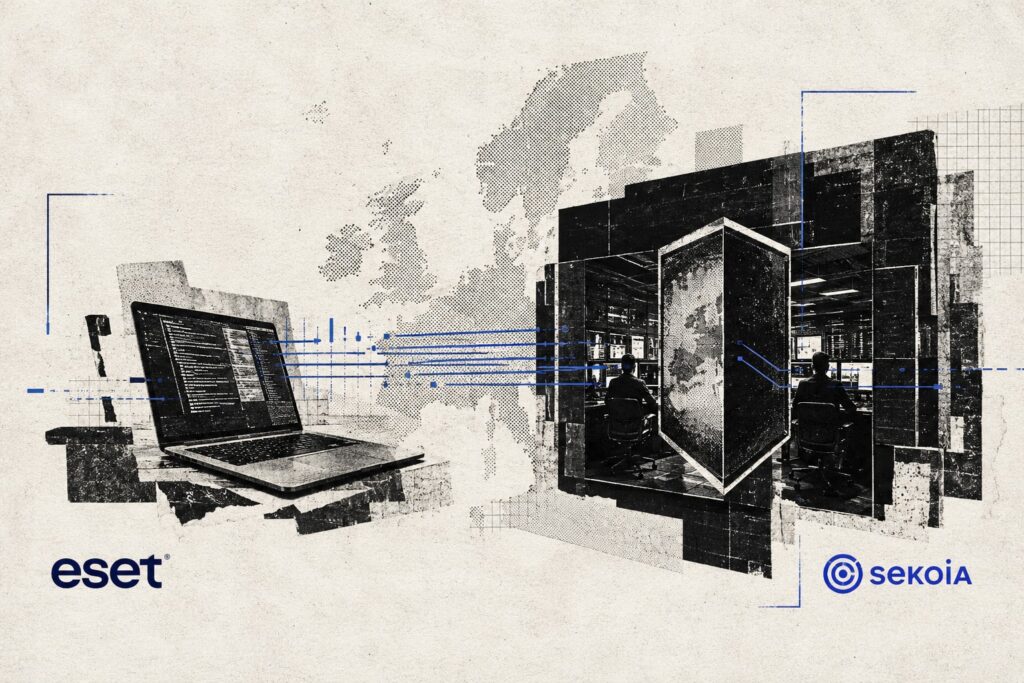
Eset has announced the integration of its endpoint protection technologies with Sekoia, a company known for its AI-driven Security Operations Center (SOC) platform. As of June 9, 2026, telemetry data from Eset Protect now feeds directly into Sekoia Defend, facilitating improved correlation, detection, and automated responses. Both companies emphasize a detection and response chain designed in Europe.
This integration merges Eset’s endpoint protection capabilities with the advanced detection features of Sekoia Defend, functioning within a unified workflow. Telemetry data and alerts generated by Eset Protect—whether in cloud or on-premises versions—are transmitted to Sekoia’s platform. There, they are correlated, enriched with threat intelligence, and evaluated against sophisticated detection rules. According to the two firms, this collaboration leads to faster incident resolution that is better contextualized.
The technical process is defined clearly: Eset Protect exports endpoint events in JSON format through a secure TLS Syslog protocol to a collector configured with a Sekoia ingestion key. The data is then sent to Sekoia Intake, where it is normalized, complemented by threat intelligence, and analyzed using Sigma rules. Correlated alerts are returned with complete context, allowing analysts to initiate automated response actions via integrated playbooks that leverage Eset Protect’s APIs.
Addressing Alert Fatigue
This integration addresses a common operational challenge. When endpoint alerts remain isolated from broader security workflows, investigations can drag on, alert fatigue sets in, and the risk of missing critical detections rises, leading to potential incidents or data breaches. By bringing together the two platforms, the integration combines endpoint data and its analytical context in a single environment.
“By combining Eset’s rich endpoint telemetry with our detection and automated response capabilities powered by threat intelligence, we provide analysts with the necessary context to reduce noise, refine their decisions, and respond to threats at machine speed,” said Vikraman Selvarajan, Global Director of Strategic Alliances at Sekoia. The urgency is clear: cyber defense is evolving at machine speed, and manual responses are falling behind the pace set by AI-enhanced attackers.
The true added value manifests at the intersection of raw endpoint data and intelligence. An isolated alert from Eset Protect might indicate suspicious behavior on a device; however, when correlated within Sekoia Defend, incorporating threat intelligence and data from other sources, it can be classified as part of an ongoing campaign, elevating its priority and triggering a tailored playbook. This transition—from isolated signal to contextualized verdict—shifts an analyst’s work from mere data collection to critical decision-making, a synergy that both companies promote.
A Technical Connector, Not a Capital Alliance
It’s important to clarify the scope of this agreement; it is primarily a data and workflow integration between two products, with no announced financial alliance. Automated responses remain restricted to the capabilities of Eset Protect’s APIs, and the integration focuses on environments equipped with Eset solutions. Eset positions this collaboration as part of its ecosystem strategy, where each integration addresses specific operational challenges faced by SOCs, adhering to the principles of simplicity and visibility on its platform.
The targeting of security leaders, SOCs, and Managed Security Service Providers (MSSPs) is explicit. For MSSPs, the practical benefits lie in scalability; faster deployment, unified event visibility across endpoints, and automated response workflows help reduce the marginal costs associated with each monitored client. This is particularly pertinent in a landscape where the rise of offensive AI intensifies the demands on operational centers.
European Positioning as a Market Signal
The announcement also has broader implications for market positioning. “As European cybersecurity players, we are proud to support organizations that prioritize trustworthy technologies developed in Europe,” stated Wolf Schumacher, Vice President of Global Partnerships and Alliances at Eset. The Slovakian firm, whose technologies are developed within the European Union, collaborates with France’s Sekoia to create an End Point Detection and Response (EDR), Threat Intelligence (CTI), and Extended Detection and Response (XDR) chain operating under European jurisdictions.
This jurisdictional consideration weighs increasingly in requests for proposals from public organizations and entities subjected to European regulatory requirements, which seek consistent detection chains lacking extraterritorial dependencies. The interoperability displayed by both companies positions them as an assembled alternative to integrated American platforms.
However, this assembled model carries its own challenges. Unlike integrated platforms that centralize detection, correlation, and response into a single product, the Eset Protect and Sekoia Defend chain necessitates maintaining a connector, monitoring Syslog data quality, and distributing diagnostic responsibilities between two providers. While this flexibility allows for replacing individual components without overhauling the entire system, it also incurs integration and contractual coordination costs, a point of reversible debate absent in unified platforms.
Combining EDR and SOC Solutions
For Chief Information Security Officers (CISOs), this integration offers an additional option within the European market: a combination of EDR and SOC components that can be selected independently, allowing for a trade-off between depth of integration and the ability to replace individual links. Initial operational feedback will determine whether the promise of reduced alert noise holds true across heterogeneous environments.
Furthermore, the specifics of the automated response must be scrutinized. The playbooks rely on Eset Protect’s APIs, which confines corrective actions to devices managed by this agent. Organizations using multiple protection solutions will need to ensure cohesive responses across all machines. Additionally, the quality of threat intelligence integrated into Sekoia Defend will significantly influence the relevance of correlations, serving as a primary determinant of the overall effectiveness. The true value of this integration will ultimately depend on its capacity to address the coverage of the environment and the quality of the intelligence provided.



