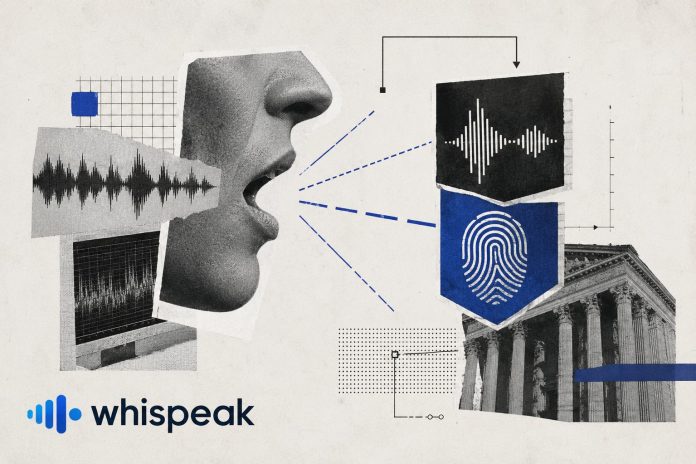
Whispeak, a Lille-based company specializing in securing voice interactions, has unveiled two AI-driven solutions to combat voice fraud: a synthetic voice detection engine and a voice biometric authentication system, both capable of delivering results in under a second. These technologies are being showcased ahead of the upcoming VivaTech conference, where the voice itself is increasingly recognized as a potential attack vector for financial services.
Today, replicating a voice requires only a brief audio sample. Just a few seconds are enough to create a remarkably realistic imitation that can deceive either a human interlocutor or an automated authentication system. Call centers, voicemail systems, and phone authentication processes are becoming vulnerable points for identity theft, bypassing access controls, and launching misinformation campaigns, especially with the rise of deepfakes as tools of social engineering.
Whispeak highlights the alarming growth of synthetic voice fraud through its own observations. The company reports that fraud cases involving synthetic voices in European financial services surged by 475% in 2025. Established in Lille, Whispeak boasts its model’s recognition as the top performer globally by Hugging Face in 2025 and a commendation at the DGA Cyber Challenge 2024. While these claims have not been independently verified, they help position a French player in a sector where effective detection must operate under real-world conditions.
A Synthetic Voice Detection Engine
The first component analyzes audio signals to differentiate between human and synthetic voices. This process utilizes a deep learning model that generates a representation of the signal, optimized to separate the two categories. Whispeak states that the model comprises 98.9 million parameters and maintains its ability to recognize voices produced by generators that emerged post-training, a critical capability in a market where synthesis models are constantly evolving.
The results are delivered in under a second, accompanied by a confidence score. Designed to handle all types of audio, including the degraded format of phone calls—which represents the real-world scenario of production calls—this model stands out in its operational application versus a lab demonstration. Models tuned to high-quality studio audio often see performance drop when applied to compressed call streams, a situation relevant to nearly all fraud encountered in customer service centers.
Voiceprint Authentication
The second technology pertains to authentication. During initial setup, users speak for a few seconds, and the model generates a unique voiceprint. In subsequent interactions, the system compares the live voice in real-time against this reference voiceprint, rendering a verdict—either verified or not—in under a second. The system can also identify fraud attempts, whether from synthetic voices or replayed recordings, rather than a person speaking live.
For security leaders, the integration of these two technologies creates a robust two-tiered voice defense: authentication verifies the declared speaker’s identity, while detection flags the synthetic nature of a signal. However, the effectiveness of such a system is hampered by the dynamic nature of voice synthesis technology. Detection models trained on known generators must constantly adapt to a stream of new variants, making long-term performance gains more valuable than short-term results. The confidence score, which is not a binary certainty, also requires the calibration of an appropriate decision threshold based on the risk level inherent to each process.
A Sovereign Positioning
Deployment options serve as a unique differentiator for sensitive environments. In addition to its programming interface and hosting solutions, Whispeak offers on-premise installation, completely isolated from external networks. This option meets the stringent requirements of sectors where voice data must remain within a controlled perimeter—such as banking, insurance, and defense—where reliance on third-party services hosted outside the organization’s control raises significant concerns.
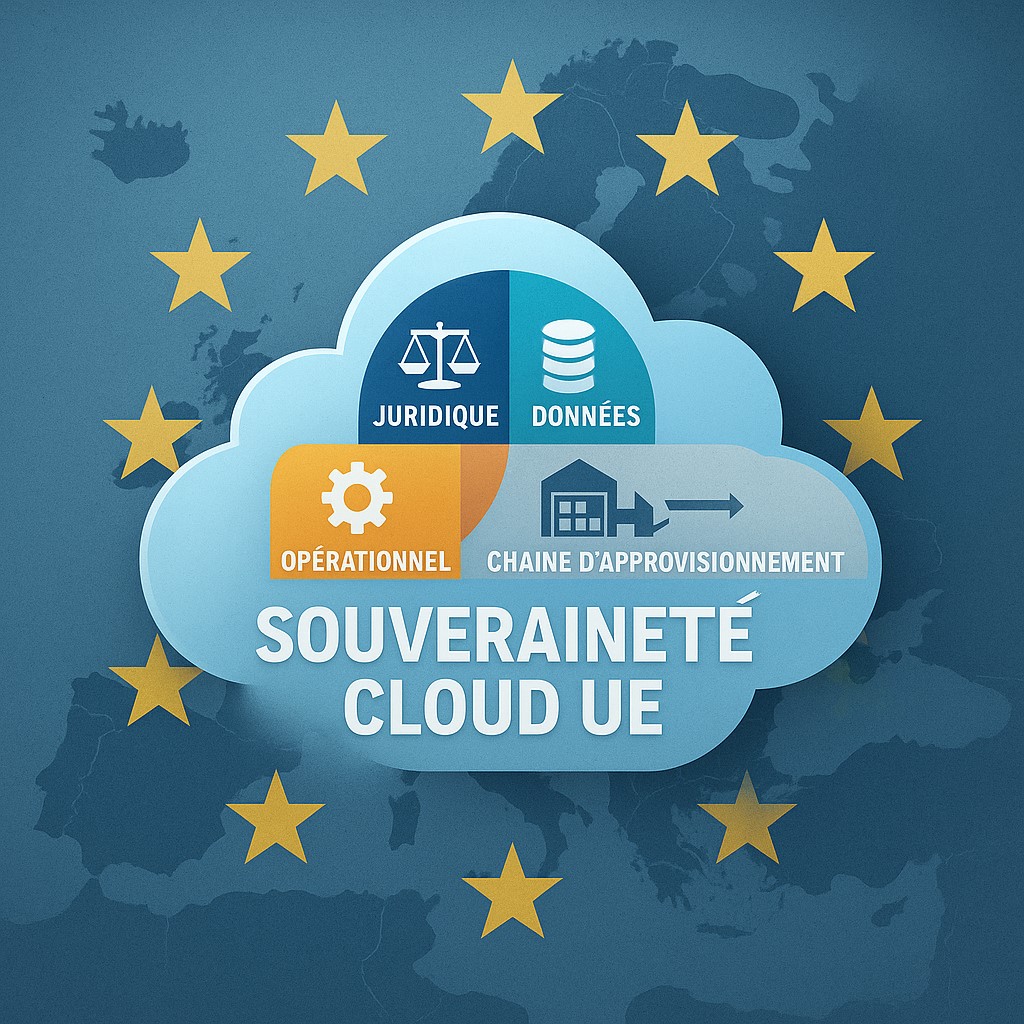
The company’s profile further supports this argument. As a French entity, Whispeak shields its clients from the extraterritorial access regimes that affect providers governed by U.S. law, a dimension compliance officers are now factoring into security evaluations. For financial institutions under the DORA regulation, which mandates control over operational resilience and the supply chain, the option for a fully managed end-to-end deployment by a European provider is a favorable criterion. Additionally, voice biometrics qualify as sensitive personal data under GDPR, necessitating a legal basis and specific safeguards for collection and retention, which organizations must define regardless of the selected provider.
Whispeak will showcase its solutions at the VivaTech event from June 17 to 19. The challenge it emphasizes goes beyond the performance of a model. Restoring trust in voice, which continues to serve as a proof of identity in many processes, demands tools capable of functioning effectively in production environments and a governance structure that defines the role of detection within the control chain. While technology provides a signal, the ultimate decision to grant or deny access remains the responsibility of the organization.