

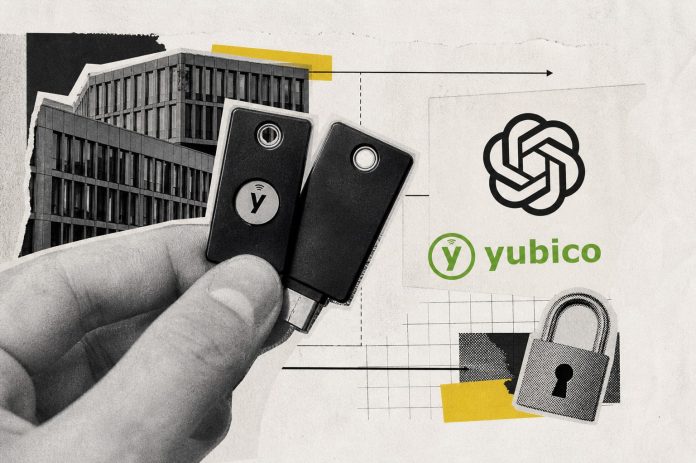
Yubico and OpenAI have launched a robust authentication program tailored for ChatGPT users who are at high risk of targeted attacks. The package features two custom YubiKeys based on the FIDO2 standard, made available through OpenAI’s Advanced Account Security program. Previously, OpenAI had deployed these keys internally to safeguard its employees.
Accounts on generative AI platforms have become prime targets for malicious actors. ChatGPT credentials can give access to conversation histories containing sensitive information, corporate strategies, proprietary code, or personal data. The breach of a professional account tied to ChatGPT presents a potential data exfiltration risk that CISOs are increasingly factoring into their risk assessments, especially in organizations where generative AI use has proliferated without formal oversight.
The partnership is grounded in a significant reality: OpenAI has adopted YubiKeys as its internal security standard for employees before extending this offer to its users. This seamless integration of internal protection and external offering indicates that the threat level facing the platform’s accounts warrants measures equivalent to those employed to safeguard one of the most targeted infrastructures in the AI sector.
A Two-Key Package for At-Risk Users
The Advanced Account Security program from OpenAI explicitly targets users who are at heightened risk of digital attacks. The package includes two complementary YubiKeys: the YubiKey C NFC, which allows for authentication via close contact on mobile devices, and the YubiKey C Nano, designed to stay plugged into a USB-C port for everyday use with laptops. Both models support FIDO2 standards and hardware passkey functionalities.
The press release does not specify the price of the package. Yubico and OpenAI only mention that it is offered at an exclusive rate for existing OpenAI account holders. “We are introducing a new, phishing-resistant security model for the AI ecosystem. This partnership with OpenAI provides the highest level of protection against phishing while ensuring a smooth user experience,” says Jerrod Chong, CEO of Yubico.
Passkeys: A Step Beyond Software Authentication
Software passkeys, stored on a device or in a password manager, offer significant resistance to phishing attacks. Hardware passkeys carried by a YubiKey take security a step further: the cryptographic secret never leaves the physical key and cannot be extracted by malware, interception attacks, or targeted phishing attempts. This capability has led Google, Microsoft, and major government agencies to adopt FIDO keys as the standard of protection for their most vulnerable populations.
For CISOs, the distinction between software and hardware passkeys is operationally significant. The former eliminate passwords, while the latter also mitigate the risks associated with compromising the device that stores the credentials. “Security keys represent one of the best ways to safeguard accounts against phishing, and Yubico has played a pivotal role in making this protection practical and accessible. We have integrated YubiKeys as a standard element of our employee protection strategy,” states Dane Stuckey, OpenAI’s Chief Information Security Officer.
Enterprise Implications of a Consumer-Focused Announcement
This partnership appears primarily consumer-facing, but its implications for businesses are stark. Millions of users access ChatGPT in professional contexts, often outside their organization’s identity management perimeter. These personal accounts connected to corporate data represent a blind spot in traditional IAM policies. The compromise of one of these accounts could expose strategic information without triggering any alerts within internal detection systems.
The Advanced Account Security program primarily targets high-risk profiles: journalists, executives, activists, and researchers. This targeting aligns with Google’s Advanced Protection program, designed for similar demographics. For companies, it raises a crucial security policy question: should employees using ChatGPT for professional purposes be subjected to the same strong authentication requirements as those applied to core IT system tools?
The Cyber Maturation of AI Platforms
By rolling out customized YubiKeys for users after standardizing them internally, OpenAI signals that the cyber maturity of AI platforms now hinges on authentication layers. Yubico finds a pathway for widespread adoption of hardware passkeys in an ecosystem that has largely lacked them.
For CISOs of organizations where ChatGPT is utilized outside of controlled IT environments, the announcement prompts a broader governance question than the USB key itself: how to integrate the security of generative AI accounts into corporate authentication policies, especially when these uses often escape existing identity management tools?



