

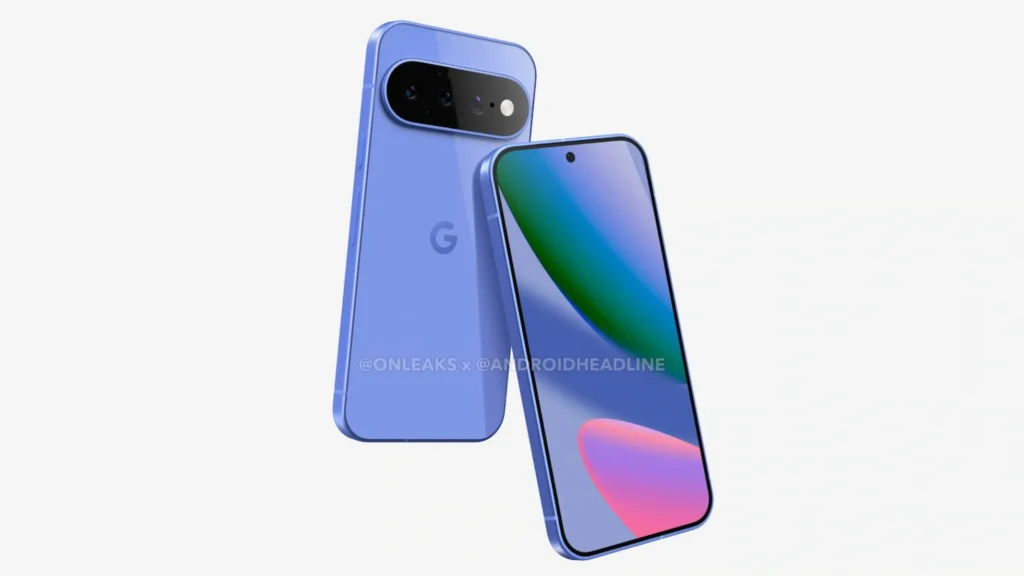
Google Pixel 11: Next-Generation Facial Recognition Delayed Once Again
Anticipated as a direct response to Face ID, Google’s Project Toscana may miss the Pixel 11 launch. A recent leak indicates a technical delay, postponing the introduction of a truly secure facial recognition system on Pixel smartphones.
An ambitious project… but still not ready
For several months, Google has been working on “Project Toscana,” an advanced facial recognition solution designed to compete with Apple’s. However, according to recent insider information, this technology will not be included in the Google Pixel 11 due to incomplete development, despite extensive testing phases, including on Chromebooks.
The aim was clear: to provide fast, reliable facial recognition that works well in low light — three areas where Apple currently holds a significant advantage.
Face ID in sight, but a major technical challenge
The Toscana system would rely on a combination of near-infrared sensors and potentially under-display technology, similar to that used by Face ID.
Ideally, this would allow for 3D facial recognition, quick unlocking even in the dark, and security compatible with payments and sensitive applications.
However, this type of system demands extreme precision. Any compromises could pose serious security risks — a critical point for Google.
The Pixel 4 precedent: a lingering lesson
This delay echoes a significant precedent: that of the Google Pixel 4. At that time, Google had introduced an advanced facial recognition system with dedicated 3D sensors and a Soli radar to anticipate movements.
Technically ambitious, the approach soon revealed a major flaw: the phone could unlock even with the eyes closed.
Despite a software correction, trust had been eroded. The result: Google abandoned this hardware approach with the next generation.
Pixel 11: advancements elsewhere but a strategic shortcoming
Even without Toscana, the Google Pixel 11 won’t be without innovations:
- New Tensor G6 chip
- Improved photo sensors
- Brighter OLED displays
- MediaTek M90 modem
- New RGB lighting on Pro models
However, the lack of secure facial recognition remains a significant gap. Currently, the facial recognition on Pixels mostly relies on the front camera — a practical solution, but limited in security.
A biometric battle that Google cannot ignore
In the face of Apple and its tightly integrated ecosystem around Face ID, Google operates in a more fragmented manner. The challenge is twofold: to provide a solution as secure as Apple’s, and to integrate it without sacrificing design (notch, visible sensors, etc.). Project Toscana represented an attempt to balance material innovation with visual discretion.
This delay may be frustrating, but it also highlights an essential reality: in biometrics, haste is not an option. An imperfect system would not just be a technical flaw — it could become a risk for payments, personal data, and user trust.
Google appears to be making a strategic choice: to delay for better security. In an industry where AI accelerates everything, this decision serves as a reminder of a fundamental truth: some technologies must be flawless before they can exist.



