

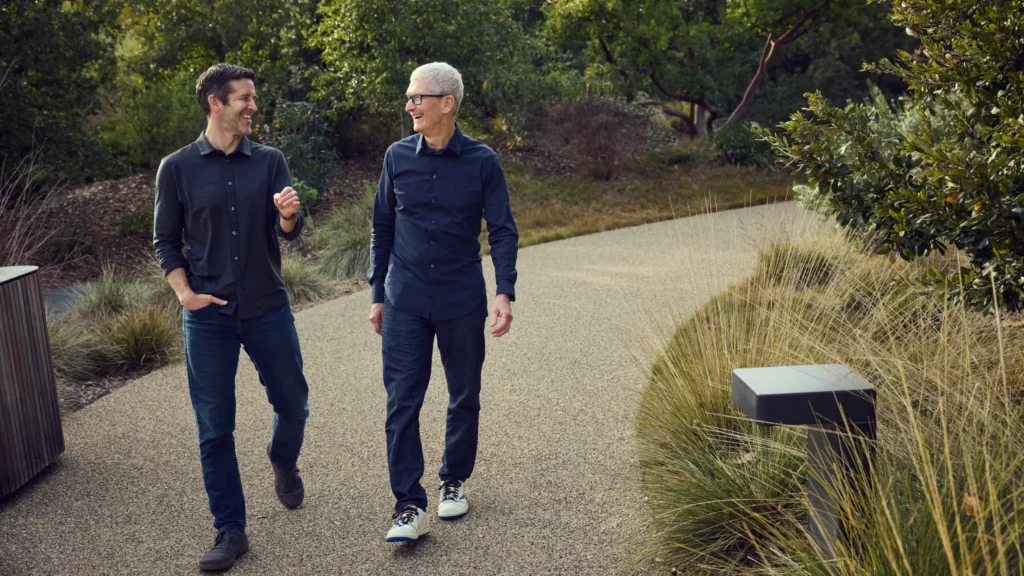
Tim Cook steps down as CEO: John Ternus takes the helm of Apple on September 1
August 31, 2026, marks the end of a significant chapter in Apple’s history. After fifteen years at the helm, Tim Cook concludes his last day as CEO, transitioning to the role of Executive Chairman.
Beginning Tuesday, September 1, John Ternus, formerly Senior Vice President of Hardware Engineering, will officially take over.
In a message to employees, Tim Cook emphasized that he is not leaving Apple. Instead, he is handing over operational leadership to an engineer closely associated with the company’s recent products. This decision sends a clear signal: as AI, chips, and new product formats reshape the industry, Apple aims to place hardware execution at the center of its next phase.
Tim Cook’s last day as CEO
Apple announced the transition on April 20, 2026. Tim Cook was to remain as CEO throughout the summer to ensure a smooth handover before becoming Executive Chairman starting September 1. John Ternus was set to succeed him the same day.
The timeline has now come to fruition. Tim Cook is leaving a role he has held since 2011, when he took over from Steve Jobs.
I am not leaving Apple
In his internal message, Tim Cook stressed this point. He is stepping down as CEO but will remain deeply involved with the company. His new role will allow him to continue engaging in certain strategic and institutional matters.
Apple had previously indicated in April that Cook would continue to manage some relationships with government officials around the world. This includes the United States and discussions with other governments crucial to Apple.
John Ternus receives overwhelming support
Tim Cook dedicated a significant portion of his message to his successor. He described John Ternus as one of the few leaders capable of truly understanding what it takes to build products that can change the world.
This praise is meaningful. Apple not only seeks to present Ternus as a competent manager but aims to establish him in the tradition of the company’s great product leaders. This is an important nuance for a company whose identity still heavily relies on how it designs its hardware.
The choice of Ternus is deeply symbolic
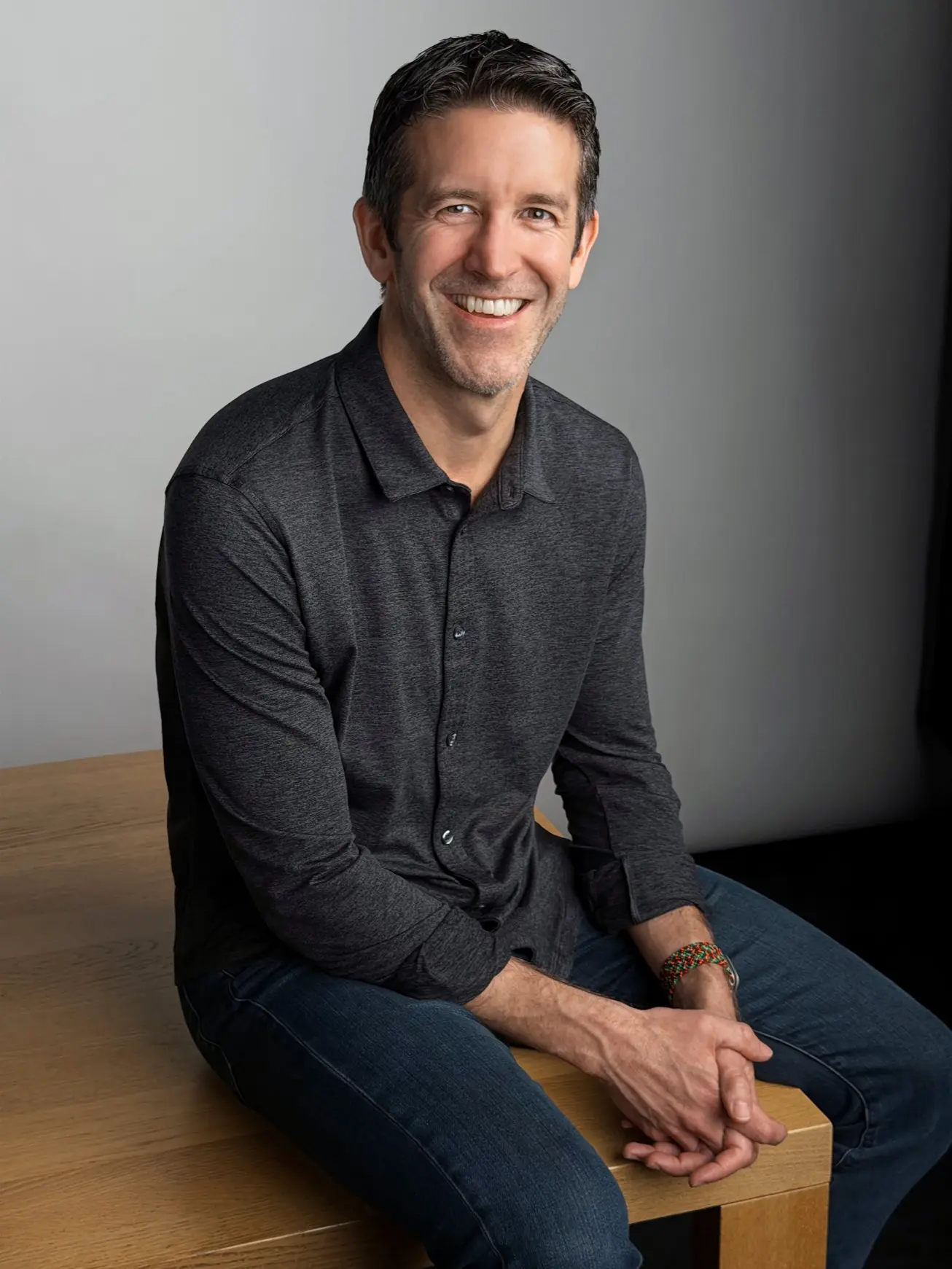
John Ternus is neither a services specialist nor a finance executive. He is an engineer. He has built his career around hardware and has overseen the hardware engineering for all major Apple product lines, including iPhone, Mac, iPad, Apple Watch, and AirPods.
This technical background immediately sets him apart from Tim Cook, who was primarily known for his operational and industrial expertise before becoming CEO.
Apple under Ternus could refocus on products
The appointment of a hardware leader naturally suggests a new priority. During the Cook era, Apple significantly expanded its services, subscriptions, and recurring revenue streams.
However, the company fundamentally remains dependent on its devices. The iPhone remains the economic hub of its ecosystem, with the Mac and iPad continuing to play strategic roles. The introduction of new product categories is essential for sustaining long-term growth.
Ternus will likely need to do what he does best: translate complex technologies into commercially viable products.
He has already overseen several iconic products
Under his leadership, Apple has launched several major generations of hardware. The new ultra-thin iPhone Air is among the recent products linked to this philosophy, while the MacBook Neo, positioned lower in the lineup, illustrates another direction: broadening access to the Mac without compromising the brand’s hardware identity.
The new AirPods with health-related features also demonstrate how Apple aims to transform accessories into products that play a larger role in daily life.
Ternus’s experience is directly connected to the company’s new expansion directions.
Hardware becomes even more important in the AI era
This transition comes at a time when artificial intelligence is profoundly changing the design of computers. The debate around AI often centers on models and software.
However, the devices running these models are equally important. Chips, memory, bandwidth, NPUs, cooling, and battery life—all these elements are now directly tied to AI capabilities.
Apple possesses a significant potential advantage here: it controls much of its hardware supply chain.
Apple Silicon chips are at the heart of this strategy
The transformation initiated with Apple Silicon has likely prepared the ground for the Ternus era. By developing its own processors, Apple further integrated hardware and software. This integration is particularly valuable with local AI. A model executed directly on a Mac or iPhone heavily relies on energy efficiency and available memory.
Apple can thus optimize the chip, the operating system, and the final product simultaneously. Under Ternus, this integration may become even more central.
The Mac is already benefiting from AI demand
Apple has accelerated certain Mac launches in 2026. The new generations of Mac mini and Mac Studio arrived earlier than in past cycles. The demand driven by AI usage played a role in this evolution, as developers, businesses, and researchers seek machines capable of executing more processing locally.
The Mac, thanks to its unified memory architecture, possesses several attractive features for these uses. Apple might look to transform this technical demand into a viable commercial opportunity.
However, Ternus inherits a complex situation
The hardware profile of the new CEO should not overshadow the challenges ahead. Apple still needs to prove its ability to remain competitive in artificial intelligence, regulatory issues surrounding the App Store remain significant, China is essential to the supply chain and revenue, relationships with governments are becoming increasingly sensitive, and the company must succeed in introducing new product categories without being perpetually reliant on the iPhone.
Ternus takes the helm during a period that is far more complex than a simple hardware refresh cycle.
Tim Cook will likely remain vital on political issues
This is precisely where his new role makes sense. Apple is not completely losing Tim Cook. By becoming Executive Chairman, he can continue leveraging the relationships he has built over fifteen years. In the U.S., this means maintaining dialogue with the Biden administration. In China, it means preserving an extremely delicate relationship with authorities and industry partners.
Cook possesses diplomatic experience that is hard to replace overnight.
The succession appears to have been designed as a role-sharing
The transition does not resemble a sharp break; Ternus takes on operational leadership while Cook retains institutional influence. This model allows Apple to refresh its leadership without immediately losing the accumulated experience at the top. It also serves to protect the new CEO during his initial months.
Ternus can thus focus more on products and internal organization while Cook continues to handle some of the most sensitive political relationships.
Cook’s memo says little about AI or strategy
However, the message conveyed to employees is intentionally low on technical details. Tim Cook does not detail the AI roadmap, does not discuss services, does not mention regulatory tensions, and does not address China directly. His text is primarily focused on Apple’s culture, which aligns with the occasion. It is not a strategic plan but a farewell message to a position he has held for fifteen years.
Culture over financial results
Cook places significant emphasis on one idea: Apple’s value cannot be summed up in an annual report. For him, the company is primarily based on a shared culture. He speaks of the belief that what Apple builds matters and that the company has a responsibility to the world.
This kind of language might seem very institutional. However, it reflects a constant in Apple’s internal communication. The product is never presented solely as a commercial object; it is meant to embody a certain vision.
Steve Jobs remains omnipresent in the narrative
Tim Cook also references Steve Jobs’ famous expression about leaving an “imprint on the universe.” This reminder is not innocent. Any power transition at Apple inevitably invites comparison to the Jobs era. Cook himself has long lived with this comparison, and John Ternus will now have to face the same heritage.
The challenge lies in maintaining this cultural link without trying to artificially recreate the past.
The Cook era will be recognized for expansion
The legacy of Tim Cook is immense. Under his leadership, Apple became one of the most valuable companies in the world. Services have taken on a significant role, Apple Silicon has transformed the Mac, the Apple Watch has become an important category, AirPods have developed a new ecosystem, and Apple’s supply chain has expanded to an almost uniquely industrial scale within the sector.
Tim Cook has not only preserved the company inherited from Jobs but has profoundly expanded it.
The next significant categories will be critical
The future foldable iPhone could be one of the first tests. Apple is also working on new wearable devices and new forms of interaction with AI. AirPods could evolve beyond just audio accessories, connected glasses remain an important horizon, and the Mac could gain new local AI functions. All these projects rely directly on the ability to combine hardware, chips, and software.
This is precisely Ternus’s area of expertise.
His appointment could also change the internal culture
A CEO from a hardware background can influence how decisions are made. Product teams may gain more weight: decisions about materials, repairability, reliability, or formats could be more directly brought to the top. Apple had previously highlighted Ternus’s work on these subjects during the announcement of his appointment.
Sustainability and hardware design are clearly part of his professional identity.
A final message directed at employees
In his memo, Tim Cook thanks the teams profusely. He emphasizes that his successes are the result of collective efforts and also mentions what he will miss: leading employees, overseeing projects, and engaging directly in the daily life of the company. The tone is intentionally personal. After fifteen years as CEO, Cook does not attempt to summarize his career through numbers.
Instead, he chooses to speak about how Apple operates.
On X, Cook also extended a message to the Apple community. He explains that while his title changes, his attachment to the company and its users remains unwavering. Again, the communication stresses continuity.
Sending lots of love to the Apple community on my last day as CEO. My title changes tomorrow, but the love I have for the Apple community never will. Thank you for being a constant source of inspiration. My gratitude is endless, and I’m excited for the next chapter!
– Tim Cook (@tim_cook) August 31, 2026
Cook is not leaving; he is changing roles. Apple clearly aims to avoid any impression of a vacuum at the top.
Apple begins the day with a new CEO
On Tuesday, September 1, 2026, John Ternus officially becomes the new CEO of Apple and also joins the board of directors. Arthur Levinson will concurrently step down from his position as non-executive chairman to become Lead Independent Director, while Tim Cook will assume the role of Executive Chairman. The entire governance structure of the company is thus being reorganized.
This is not just a simple appointment; it is a generational transition.
The first months of Ternus will naturally be closely watched. However, his true legacy will not be built with his inaugural speech. It will be shaped by the products that arrive in three, five, or ten years.
This is the peculiar nature of Apple. A new CEO often inherits several years’ worth of already committed projects. Thus, it will take time before distinguishing what still belongs to the Cook era from what truly bears Ternus’s signature.



