

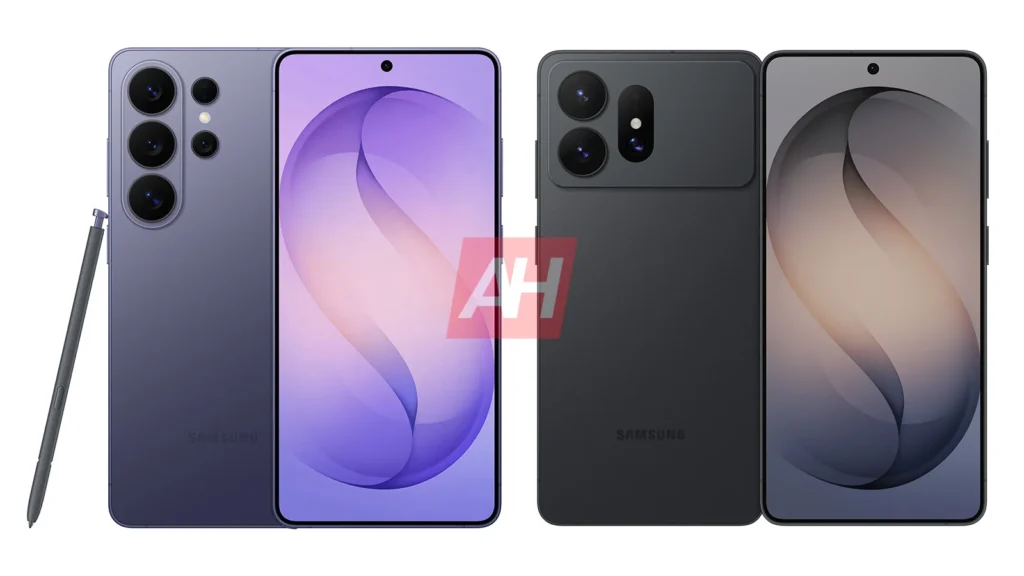
Galaxy S27 Ultra: Samsung testing a new 4x telephoto lens with a much larger sensor
Samsung may be significantly rethinking the photography strategy for its upcoming Galaxy S27 Ultra. After multiple leaks suggested the discontinuation of the 10-megapixel 3x telephoto lens, new information indicates that the manufacturer is now testing a “super telephoto” 4x module with a sensor considerably larger than the one used in the Galaxy S26 Ultra.
On paper, transitioning from 5x to 4x may seem like a downgrade. However, the size of the sensor could matter much more than the native focal length. If Samsung approves this configuration, the Galaxy S27 Ultra could improve quality in portraits, nighttime scenes, and intermediate zooms while simplifying its camera system.
Samsung is testing a 4x telephoto lens with a 1/1.9-inch sensor
According to leaker @phonefuturist, Samsung is currently evaluating a new 4x telephoto lens equipped with a 1/1.9-inch sensor. This format would be notably larger than the 5x 50-megapixel telephoto lens used in the current generation, which is approximately 1/2.5 inches.
While this difference may appear abstract, it is crucial in mobile photography.
A larger sensor can capture more light, reduce noise, and produce cleaner images under challenging conditions.
Switching from 5x to 4x isn’t necessarily a downgrade
The zoom number naturally draws attention. A 5x zoom immediately appears superior to a 4x on a specs sheet. However, mobile photography is not solely about multipliers. A good 4x telephoto lens with a larger sensor can produce better images than a 5x using a smaller sensor.
Quality relies on the amount of light captured, optics, stabilization, and software processing.
Samsung might therefore choose to sacrifice some native reach to achieve better overall quality.
Samsung is testing a super telephoto (1/1.9 4x)
— Schrödinger (@phonefuturist) August 30, 2026
A larger sensor could primarily aid in low light
This is likely where the gain would be most noticeable. Telephoto lenses are generally the most challenging cameras to use in low light. Their optics allow less light in than the primary sensor, and their photosensitive area is often smaller.
The result is that as light diminishes, smartphones increase digital processing, noise, or exposure time. A 1/1.9-inch sensor would give the Galaxy S27 Ultra more leeway.
Zoomed photos taken at a concert, indoors, or at night could therefore benefit from a more natural rendering.
Samsung could also enhance portrait photography
A telephoto lens around 3x or 4x is particularly interesting for portraits. This focal length provides a more flattering perspective than a wide-angle while maintaining sufficient distance from the subject. Samsung could thus use this new module as the main long-focus portrait camera.
This is also one of the reasons why discontinuing the smaller 3x telephoto lens may not be problematic. A high-quality 4x could potentially replace part of its role.
The 10-megapixel 3x has long been the weak link in the Ultra
For several generations, the Galaxy S Ultra has featured a multi-focal system. However, the 10-megapixel 3x telephoto lens is often regarded as one of the least ambitious modules. It remains useful for portraits and intermediate zooms, but its small sensor limits its quality in challenging scenes. Samsung is considering eliminating this module on the Galaxy S27 Ultra.
This decision would free up internal space and budget for a far more capable single telephoto lens.
A single, more versatile telephoto lens could simplify the system
The tested scenario seems to move in this direction. Instead of two relatively specialized telephoto lenses—a 3x and a 5x—Samsung might focus more on a central 4x module. The larger sensor would provide enough definition for digital cropping to superior focal lengths. The software processing could then reconstruct the zoom levels of 5x, 10x, or more.
This approach obviously relies heavily on the quality of the sensor and the algorithms. However, it could simplify the photographic architecture.
Digital zoom could benefit from a better starting image
This is a crucial point. Digital zoom is often presented as merely a loss of quality. However, modern smartphones do much more than crop. They combine multiple images, AI reconstruction, stabilization, and information from other sensors. The cleaner the native image, the better the processing has a solid foundation.
A 4x telephoto lens capturing more light and detail could therefore yield better results beyond its optical length than a less effective 5x.
Samsung may still retain a 5x option
Nonetheless, the leak specifies that nothing is yet decided. Samsung is comparing several prototypes and assessing the real benefits of the new 4x against its cost. If the improvement does not sufficiently justify the increased component price, the manufacturer might ultimately keep a 5x telephoto lens.
This is an important nuance.
The Galaxy S27 Ultra is still several months away from its unveiling, and the camera configuration can change at any time. Thus, it would be premature to consider the 4x as confirmed.
Component costs are becoming a significant issue
This hesitation is also explained by the current context. Smartphone manufacturers are facing rising costs for several components, including memory and storage. Adding a larger camera sensor further increases expenses. Samsung must therefore weigh multiple priorities: larger battery, new design, new chip, faster memory, and improved cameras.
All these changes come at a cost, and the Galaxy S27 Ultra cannot indefinitely increase its price without risking losing competitiveness.
The Galaxy S27 Ultra seems poised for a more ambitious photographic evolution
Samsung has faced criticism for its conservatism regarding certain sensors over the past few generations. The Galaxy S27 Ultra could signify a shift. The potential discontinuation of the 10-megapixel 3x, the introduction of a larger telephoto sensor, and a redesign of the camera module suggest a desire to rethink the entire system rather than simply making minor adjustments.
This would be particularly welcome amid competitors like Vivo, OPPO, and Xiaomi, who are heavily investing in large telephoto sensors.
Chinese manufacturers have put pressure on Samsung
The mobile zoom market has evolved significantly. The best Chinese flagships now feature large periscope sensors capable of producing very clean images at multiple focal lengths.
Vivo, in particular, has made the telephoto lens a major selling point of its Ultra models, while Xiaomi and OPPO follow a similar approach. Samsung retains a strong overall reputation but no longer automatically dominates in zoom technology. The Galaxy S27 Ultra will likely need to address this more aggressive competition.
The choice of a 4x lens could also be influenced by Apple
Apple has also evolved its telephoto focal lengths in recent years. Manufacturers are increasingly seeking a compromise between portrait, medium zoom, and long-range capabilities. A native focal length around 4x can be particularly versatile. It remains close enough for portraits while offering significant magnification.
Samsung might therefore prefer a more flexible solution over a potentially overly specialized 5x.
The rest of the lineup might become more standardized
The same leak also mentions a more uniform strategy for the Galaxy S27, S27+, and S27 Pro. Samsung is testing a common 3x telephoto lens across multiple models. The main sensor and the ultra-wide could also be more shared with the Ultra in certain configurations.
This standardization could offer several advantages: reduced costs, better software optimization, and fewer variants to produce. However, it might also lessen differentiation among the models.
The Ultra must still retain a clear photographic advantage
If the standard Galaxy S27 models receive better sensors, the Ultra version will need to justify its higher price in other ways. The 4x telephoto lens with a large sensor could precisely fulfill this role. Even if the rest of the system becomes more similar among models, the Ultra would still feature a significantly more ambitious zoom camera.
Samsung could thus simplify its lineup while maintaining a clear hierarchy.
The redesign may be linked to new cameras
The renders of the Galaxy S27 Ultra have already generated considerable buzz about its new camera setup. This transformation might have a technical justification. A larger sensor requires more space, and a more complex periscope module also alters the phone’s internal organization. Therefore, the new camera module could be less about aesthetic choice and more a direct consequence of component evolution.
Often, this is how major design changes on smartphones come about.
We will have to wait for tests to see if the bet pays off
Even if the 1/1.9 inch sensor is confirmed, its size does not automatically guarantee better photos. Optics, software processing, stabilization, and focusing speed all play significant roles. Samsung will thus need to optimize the entire pipeline. A large sensor that is poorly utilized could yield less convincing results than a smaller one that is perfectly calibrated.
This is precisely why prototypes are important.
Nothing is finalized yet
The Galaxy S27 Ultra is expected to debut early in 2027. Samsung has not confirmed any of these specifications. The 4x telephoto lens should be considered a currently evaluated option rather than a definitive specification. The mention of several prototypes reinforces this caution.
The manufacturer appears to be still comparing different architectures before finalizing the commercial version.
If the main rumors are confirmed, the Galaxy S27 Ultra could be one of the most exciting generations in years. If the new sensor is indeed significantly larger and better utilized, this lower figure could, in fact, deliver the best zoom ever offered on a Galaxy Ultra.



