

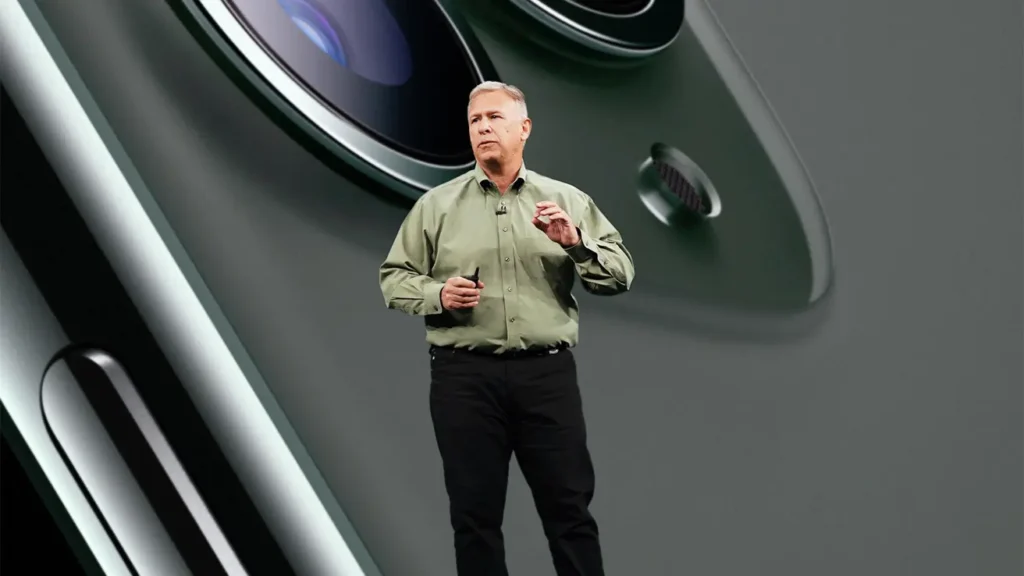
Phil Schiller steps back from the App Store: Apple reshuffles its leadership ahead of the John Ternus era
A new chapter begins at Apple as Phil Schiller, one of the most iconic executives in the company’s history, steps back from overseeing the App Store and managing major product events. At 66 years old, he remains an Apple Fellow but relinquishes two key responsibilities that have positioned him at the forefront of Apple’s product launches and recent regulatory battles.
The timing is particularly symbolic, coinciding with John Ternus taking over as the new CEO of Apple while the App Store returns under the authority of Eddy Cue’s Services division. Following years of confrontations with the EU, American courts, and developers, Apple appears poised to enter a new phase in the governance of its most controversial platform.
Phil Schiller Steps Down from Daily App Store Management
Phil Schiller is not leaving Apple entirely. He retains his title as an Apple Fellow, which he has held since his departure from the marketing division in 2020, and is expected to remain involved in various unspecified projects.
However, he will no longer lead the App Store and has also stepped away from overseeing product events—an area he is deeply associated with after decades on Apple’s main stages.
This shift significantly reduces his operational role.
The App Store Transitions to Eddy Cue’s Oversight
The platform is now part of the Services division under Eddy Cue’s leadership. This transition makes historical sense; prior to 2015, the App Store was already under Cue’s management before it was handed over to Schiller in a reorganization aimed at enhancing developer relations.
Eleven years later, the store returns to its origins. However, this time, the App Store is more than just a distribution channel; it has become one of Apple’s most strategically significant—and heavily regulated—economic infrastructures.
Carson Oliver to Oversee Daily Operations
Carson Oliver is set to take over the day-to-day management of the App Store. While less known to the public compared to Schiller or Cue, his role will be crucial. Oliver will need to navigate the complexities of a platform linking millions of developers to the Apple ecosystem while complying with regulatory requirements across multiple jurisdictions.
The organization is thus shifting towards a more traditional structure, with Eddy Cue maintaining strategic oversight and Carson Oliver handling execution, while Phil Schiller gradually steps back from the command chain.
Ann Thai Also Changes Reporting Lines
A particularly significant organizational change for Europe involves Ann Thai, who previously oversaw distribution tools and third-party application marketplaces. She will now report to Carson Oliver instead of Schiller.
Her role is directly tied to the transformations mandated by the European Digital Markets Act. For years, the iPhone officially supported application distribution solely through the App Store, but the EU has compelled Apple to open iOS to alternative app stores and distribution methods.
This regulatory activity is now substantial enough to exist within its own internal structure.
The 2026 App Store Is Vastly Different from That of 2008
When the App Store was launched, its mission was straightforward: provide developers with a platform to showcase their apps and offer users an easy way to download them.
Over time, the system has evolved into a far more complex entity involving payments, subscriptions, commissions, advertising, app reviews, gaming, services, alternative distribution, minors’ protection, and regulatory compliance. The App Store has effectively become an entire economy integrated within the iPhone.
Its governance now extends well beyond that of a simple software product.
Schiller Became the Regulatory Face of the App Store
During his last years in command, Phil Schiller often appeared less as the leader of an app store and more as a primary defender of Apple’s economic model. His name became frequently associated with antitrust proceedings and distribution policy changes.
He testified in court, defended the App Store’s operations, engaged in internal discussions regarding commissions, and navigated the gradual opening of iOS in response to regulatory pressures. Thus, his role transformed from a product leader to part of a larger, global regulatory challenge.
Europe Has Fundamentally Altered the Rules
The Digital Markets Act has expedited this transformation. Apple has been required to permit alternative marketplaces in the EU, allow for more payment methods, revise rules regarding external links, and frequently reassess its commercial terms. Each change has led to a new round of negotiations with the European Commission.
Apple aimed to preserve the economic and security value of its ecosystem while the EU sought to prevent the firm from using its control over iOS to maintain artificial barriers to competition. This conflict endured for several years.
In April 2025, the European Commission imposed a €500 million fine on Apple, centered on the so-called anti-steering rules. Apple barred or limited developers from directly informing users about cheaper alternatives outside the App Store. Brussels deemed these restrictions as infringing the obligations imposed on “gatekeepers” by the DMA.
Apple contested this interpretation and continued discussions with European authorities.
The U.S. Also Marked the End of Schiller’s Tenure
The Epic Games case became another significant legal battle. A U.S. court ordered Apple to ease its restrictions preventing developers from directing users to other payment methods. In 2025, Judge Yvonne Gonzalez Rogers found that Apple had not fully complied with this directive.
This ruling included a particularly embarrassing detail for Apple’s leadership: Phil Schiller reportedly recommended an internal approach more aligned with the intent of the injunction.
Tim Cook Allegedly Rejected Schiller’s Recommendation
According to court findings, Schiller advocated for a more direct compliance approach. Tim Cook, however, chose a different path influenced by the company’s finance team. The judge issued a notably harsh critique of the CEO’s decision.
This incident nuances Schiller’s image as a rigid defender of the App Store’s historic model. In certain areas, he had instead advocated for a more conciliatory response. This distinction is significant as he steps away from overseeing the platform.
His Departure Comes Right as Apple Shifts Leadership
This reorganization takes on greater significance with Tim Cook’s succession. John Ternus is set to become Apple’s CEO on September 1, 2026, with Cook transitioning to executive chairman. After fifteen years under Cook’s direction, this transition marks the most significant shift in leadership at Apple since 2011.
Phil Schiller is therefore significantly reducing his operational responsibilities right before this new era begins.
It’s hard to see this as a mere coincidence in timing.
John Ternus Inherits an Apple Undergoing a Responsibility Shuffle
The new CEO steps into a fluid organization. Several long-time executives have shifted roles or exited the company. Responsibilities are being redistributed, service teams are gaining importance, and regulation is transforming several previously tightly controlled products from Cupertino.
Ternus will need to build his own leadership team while maintaining a historically centralized company culture. The relocation of the App Store to Eddy Cue is part of this new equilibrium.
Eddy Cue Gains Even More Power
This change considerably strengthens the Services division. Eddy Cue already oversees several essential recurring activities for Apple, including Apple Music, Apple TV, iCloud, payments, and more digital services. Adding the App Store to this portfolio gives him responsibility for one of the largest economic engines within the company.
This consolidation makes sense as the App Store is now considered as much a service initiative as a software product.
This could be the most crucial strategic shift. For a long time, Apple viewed controlling hardware, the operating system, and application distribution as part of the integrated design of the iPhone.
Regulators challenge this reasoning. They argue that when a platform reaches a certain scale, that control can become market power requiring specific obligations. The discussion has thus evolved from a technical to an economic and political one, and Apple’s internal organization is beginning to reflect this reality.
The End of an Era for Apple Keynotes
Schiller’s withdrawal from event organization also carries an emotional dimension. He has been one of the most familiar faces at Apple keynotes for decades, showcasing countless Macs, iPhones, and software innovations alongside Steve Jobs and Tim Cook. Even after stepping down from his marketing vice president post, he remained involved in the orchestration of major events.
This responsibility will now shift to a new generation of leaders.
Starting in September 2026, another team will decide how Apple products can continue to evolve in a world where the company no longer sets all the rules.



