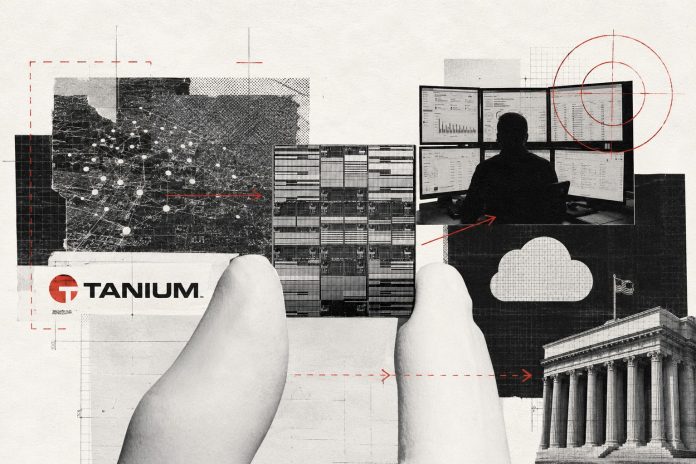
Tanium launched its Atlas system on June 25, 2026, making it available to all commercial cloud customers and U.S. government agencies, six weeks after an initial limited rollout. The company touts Atlas as a cybersecurity agent capable of managing inquiries from question to resolution with a single operator, leveraging real-time data from over 36 million endpoints. This agent plans and executes multi-step corrective actions but always pauses for explicit human approval before taking significant actions.
This announcement marks the general availability of a product initially introduced in May. Tanium, which positions itself as a leader in autonomous IT management, describes Atlas as an AI-driven operating layer above its endpoint database. The key selling point is a shift in operator involvement, with the company claiming that tasks previously requiring an entire team can now be handled by just one person—eliminating the need to switch between tools or transfer responsibilities among specialists.
The launch comes in response to a surge in attacks, which the company describes as a rapid evolution in threat landscape. Harmon Kaur, Tanium’s Chief Technology Officer, relates Atlas to emerging threats that can discover and exploit vulnerabilities in mere minutes. This acceleration can be attributed to recent AI models capable of autonomously identifying and exploiting flaws, such as Anthropic’s Claude Mythos, which independent assessments have indicated can reduce the timeline from vulnerability discovery to exploitation from months to just hours. Traditional security programs, predicated on periodic scans and ticket-managed patches, were not designed to cope with this pace.
This compression of available response time shifts the balance of power toward rapid reaction. As detection, analysis, and mitigation relied on transfers between specialists, response times were measured in hours or days, whereas exploitation now occurs in mere minutes. Tanium’s promise with Atlas rests on bridging this gap, aiming to match defensive responses to the speed of attacks through continuous monitoring of the security environment rather than relying on periodic snapshots.
Autonomy Bound by Human Approval
The mechanism at play distinguishes Atlas from basic conversational interfaces. According to the company, agents operate at the system level, continuously monitoring the environment so that an operator can move seamlessly from inquiry to analysis, and then to an approved action in one fluid experience. The agent plans and executes steps across thousands of endpoints but pauses for validation before any major action. For instance, in response to a request for cleanup of full disks, it identifies the affected terminals and implements fixes only after receiving approval.
This boundary between automated execution and human decision-making is a critical consideration for security leaders. Atlas can operate at machine speed to isolate an endpoint when prevention fails, but it retains a human oversight point for high-impact operations. The actual level of autonomy granted will depend on how organizations configure this approval threshold, necessitating a balance between desired speed and control over irreversible actions. The governance of these agents ultimately shapes the level of trust that teams can extend to them.
A One-Operator Model and Emerging Dependency
The proposal to consolidate tasks that previously required a team into the hands of a single operator raises questions about competency. A customer cited by Tanium, head of security at a healthcare provider, describes gaining clear access to data that once required bespoke interface scripts. While this argument highlights productivity gains, it also centralizes the responsibility and the operational capabilities that were formerly distributed and overseen by multiple eyes. The shift from detection to automated decision-making places the onus on maintaining high-quality configurations and accountability for the agent’s actions.
One point deserves attention from European leaders. For clients situated in unsupported regions, access to Atlas’s AI functionalities is routed through interregional connections via the United States. This reliance on American infrastructure exposes the data in question to the Cloud Act, which allows U.S. authorities to demand access to data held by U.S.-based providers, regardless of where the data is processed. Organizations bound by sovereignty requirements will need to scrutinize this issue before enabling AI capabilities in those regions.