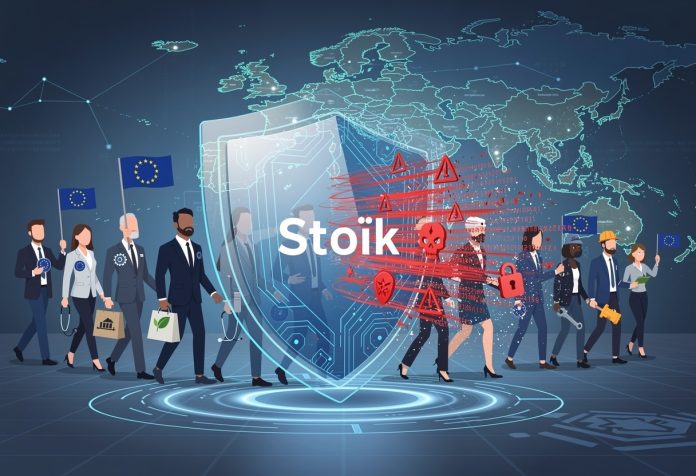
Stoïk, a rising star in the cybersecurity insurance market, has crossed a significant milestone by insuring over 10,000 companies across six European nations. This achievement highlights a shift in the cybersecurity insurance landscape, especially as SMEs and mid-sized enterprises face an unprecedented surge in cyberattacks. This impressive growth occurs in a sector still evolving, where increased awareness of risks is moving in tandem with the maturity of insurance offerings.
<p>Stoïk’s success aligns with a robust global market for cybersecurity insurance, which is projected to reach nearly $15.3 billion by 2024 according to Munich Re. The European market alone now accounts for over 20% of the global total, fueled by a rise in incidents and tighter regulatory demands. Yet, the adoption rate remains low; with more than 25 million SMEs in Europe, the 10,000 policies sold by Stoïk represent only a tiny fraction of the potential market.</p>

<p>In France, home to nearly 4 million businesses, the proportion of companies covered by cyber insurance is still minimal. An IFOP study commissioned by Stoïk and METI shows that 77% of mid-sized enterprise leaders recognize the growing cyber threat, and one in three has already experienced an attack. However, the level of insurance coverage does not match the reality of this risk.</p>

<h4><strong>Indicators of a Changing Landscape</strong></h4>

<p>Stoïk’s “active insurance” model, which combines prevention, crisis management, and managed services, meets an increasing demand for both technical and human support. This approach has led to a remarkable growth of over 200% reported in 2024, showcasing how new entrants can effectively shape demand. According to S&P Global, annual cyber insurance premiums are expected to grow by 15% to 20% each year until 2026, with the global market potentially surging past $44 billion by 2032.</p>

<p>Continental Europe, previously lagging, is witnessing a surge in both supply and demand for cyber insurance, driven by the widespread adoption of digital tools and regulatory pressures. However, the market remains fragmented. Cyber insurance is advancing primarily in sectors most at risk or among companies that are already digitally mature, leaving a vast number of SMEs and small businesses still largely unaware of the importance of coverage.</p>

<h4><strong>A Promising Upsurge Amid Persistent Challenges</strong></h4>

<p>Stoïk's announcement affirms the ongoing consolidation of an evolving market, but it does not signal a massive uptick in comprehensive coverage. The majority of European enterprises remain uninsured due to the complexity of available options, unclear perceptions of coverage, and a lack of standardization in products. For cybersecurity insurance to become as commonplace as professional multiperil insurance, the sector must focus on educating leaders, simplifying access to coverage, and enhancing trust in incident management.</p>

<p>During this transition phase, insured companies are already reaping tangible benefits: reduced operational risk, enhanced support in the event of an incident, improved business continuity, and better regulatory compliance. While the market’s structure is rapidly evolving, widespread adoption is still a goal to be achieved in the coming years.</p>
<div class="td-a-rec td-a-rec-id-content_bottom td-rec-hide-on-p tdi_3_666 td_block_template_1">
    <style>
        /* custom css */
        .tdi_3_666.td-a-rec-img {
            text-align: left;
        }
        .tdi_3_666.td-a-rec-img img {
            margin: 0 auto 0 0;
        }
    </style>
</div>