

OpenAI Ends ChatGPT Atlas: Why Its AI Browser Disappears Less Than a Year After Launch
The experience was short-lived, but it will leave a lasting impact. Less than a year after launching ChatGPT Atlas, its AI-centric browser, OpenAI confirmed that ChatGPT Atlas will be discontinued by September 2026. While this decision may seem surprising, it primarily reflects the rapid evolution of the company’s strategy.
Instead of maintaining a standalone browser, OpenAI now prefers to focus its efforts on its ChatGPT ecosystem, where intelligent browsing features are directly integrated into desktop applications and existing browser extensions.
A Browser That Placed ChatGPT at the Heart of the Web
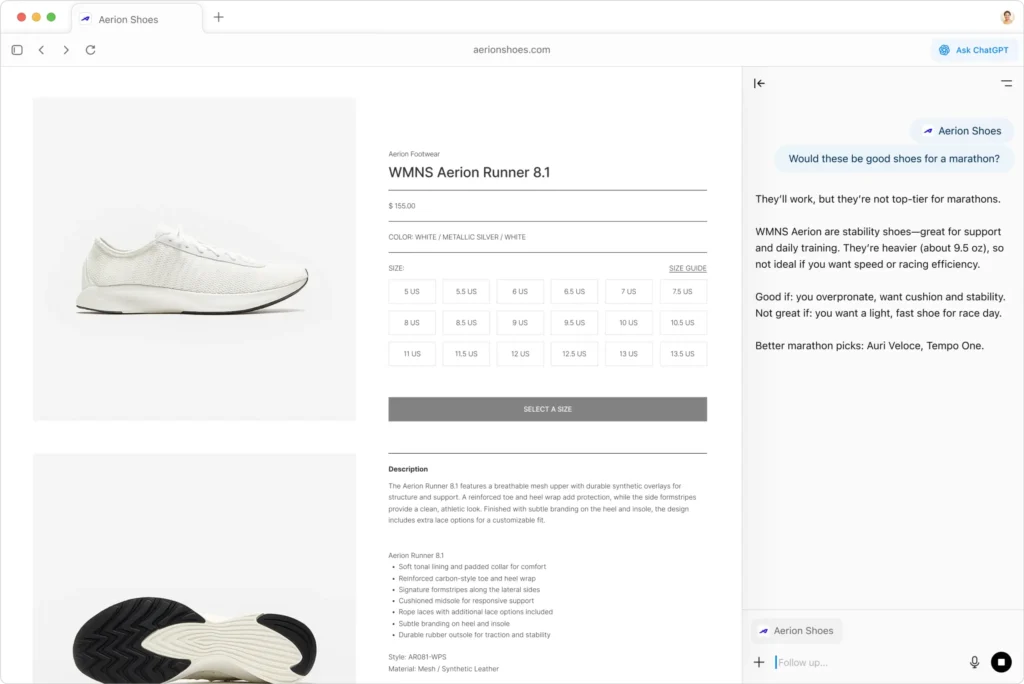
Introduced in October 2025, ChatGPT Atlas aimed to reinvent web browsing around a constant conversational assistant. Built on Chromium, Atlas provided an immediately familiar experience. Users found their extensions, favorites, history, and passwords readily available without any specific setup, all while enjoying a reimagined interface.
The central element of the browser was a single search bar, supported by a deeply integrated ChatGPT interface. A sidebar provided access to all tools in the OpenAI ecosystem, including Search, Codex, personalized GPTs, a personal library, and a complete conversation history.
Another major innovation was a sidebar accessible via the “Ask ChatGPT” button, allowing users to interact with the AI without leaving the viewed page—an approach that has since become widely adopted.
Atlas Ideas Quickly Inspired the Entire Industry
Although Atlas never achieved the expected success, many of its concepts were quickly adopted by competitors. Google gradually integrated Gemini directly into Chrome with a similar sidebar, while Microsoft enhanced the presence of Copilot in Edge. Opera, Firefox, and Perplexity, with its Comet browser, also adopted a vision where the AI assistant accompanies every step of browsing.
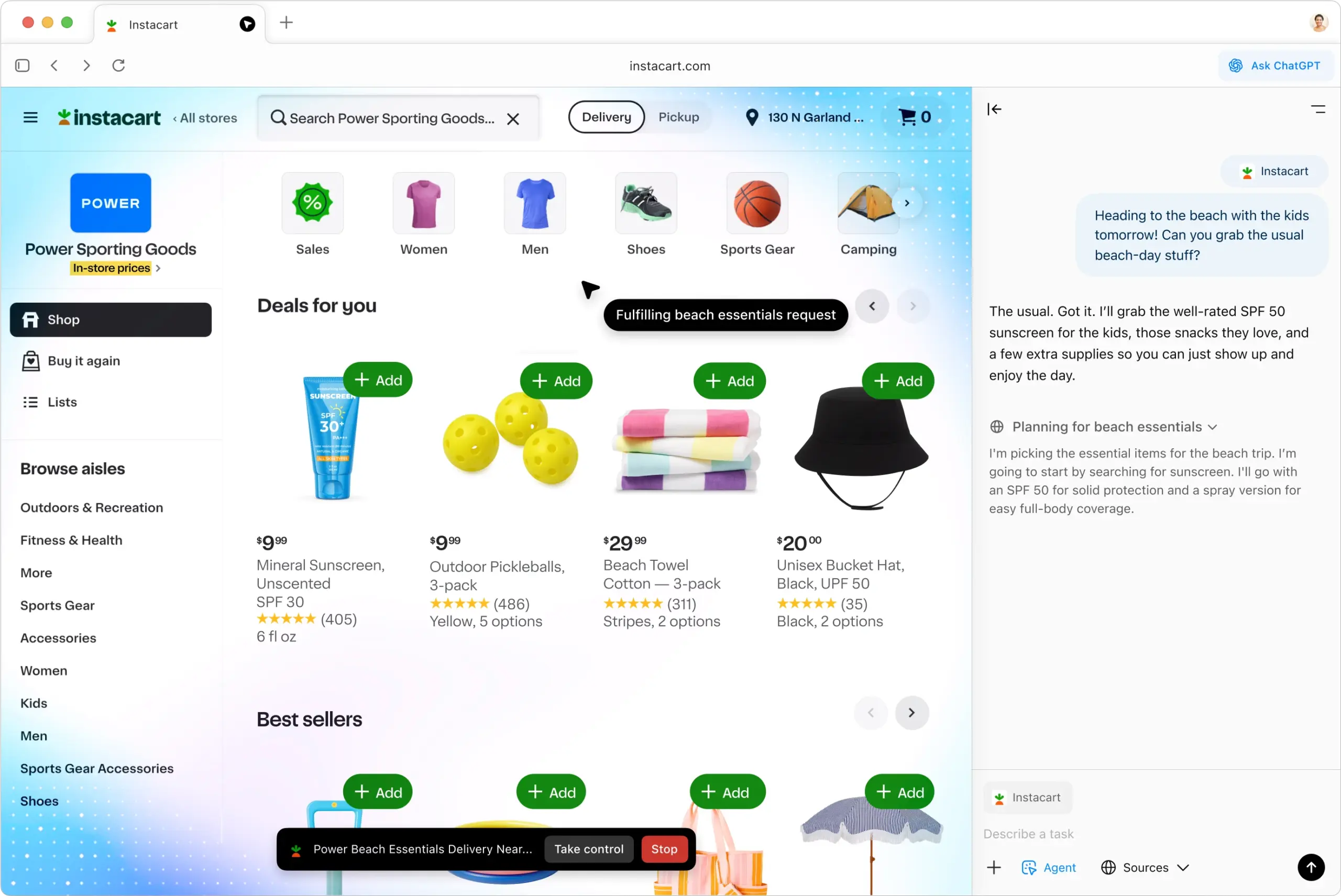
Atlas also offered an Agent mode capable of carrying out certain tasks autonomously, foreshadowing what has become one of the major trends in generative AI: agents capable of acting directly on the web instead of merely responding to queries.
Why Is OpenAI Abandoning Atlas?
James Sung, the project lead at OpenAI, explains that the company does not view Atlas as a failure but rather as a laboratory for experimentation.
All these features emerged from what we learned from Atlas users. You showed us how agents could enhance browsing and work on the web, and we are now integrating these insights into our new products.
In other words, Atlas may be disappearing, but its innovations will live on.
OpenAI is now focusing its investments on ChatGPT Work, its new productivity application that already incorporates a complete browser as well as a cloud browser for AI agents. Simultaneously, ChatGPT is now available as an extension in Chrome and other browsers, significantly reducing the need to maintain a proprietary browser.
Competition Has Become Impractical
The real challenge for Atlas was probably not technical but strategic. Why persuade hundreds of millions of users to switch completely to a new browser when Chrome already dominates the market with a shared Chromium base and a mature ecosystem?
Moreover, there was a relatively steep learning curve. Atlas introduced ambitious features that profoundly altered browsing habits, while most users primarily seek simplicity and continuity.
The situation became more complicated when several cybersecurity researchers began raising alarms about the risks associated with AI-driven browsers, particularly concerning personal data management, automated actions on the web, and the extensive permissions granted to intelligent agents.
At the same time, Google gradually integrated several features that were originally unique to Atlas into Chrome, such as tab understanding, multi-tab actions, and AI-powered contextual assistance. As these functions became native to Chrome, Atlas’s competitive advantage quickly diminished.
A Disappearance That Marks an Important Milestone
The end of ChatGPT Atlas does not signify the abandonment of AI-enhanced browsers. On the contrary, it illustrates a new phase in the market. Rather than creating an entirely distinct browser, major players now seem to prefer a strategy that integrates AI directly into platforms that are already widely adopted.
In less than a year, Atlas served as a testing ground for features that have now become almost indispensable in modern browsers. Its legacy can now be seen in Chrome, Edge, Opera, Firefox, and the new ChatGPT Work.
More than just an abandoned product, Atlas ultimately functions as a large-scale prototype that has accelerated the evolution of web browsing towards an experience where AI agents are gradually becoming constant co-pilots.



