

OpenAI Unveils Jalapeño Chip Performance Metrics, Promises Significant Efficiency Gains
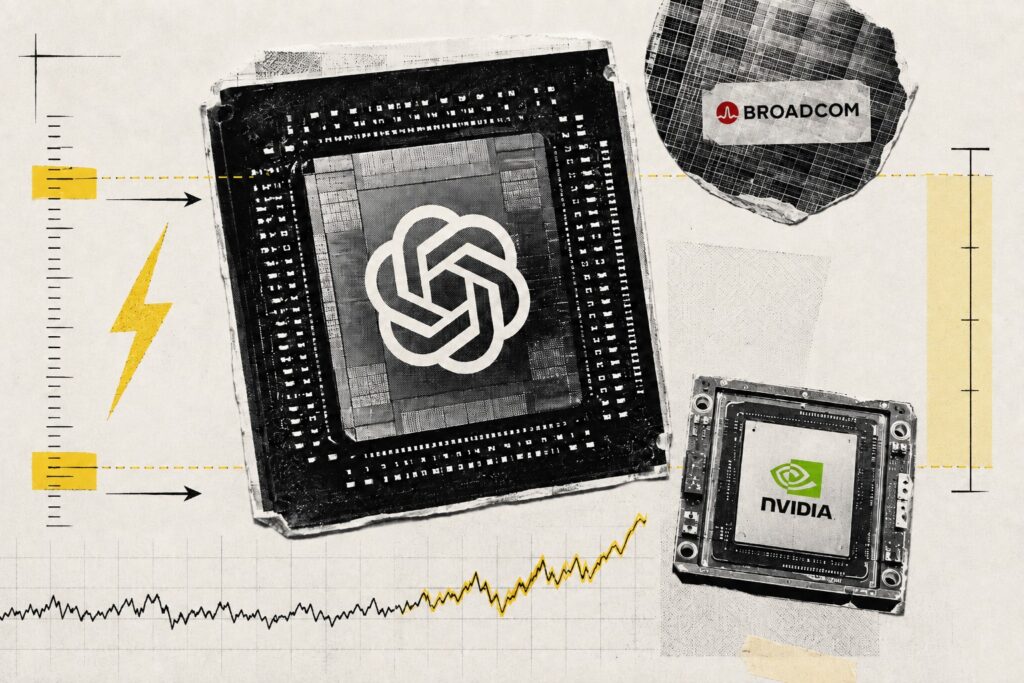
OpenAI has released the first performance metrics for its Jalapeño inference chip, developed in collaboration with Broadcom. The chip reportedly offers 1.5 to 1.9 times more productivity per watt compared to Nvidia systems used as benchmarks. These tests were conducted internally by OpenAI on three publicly available models, with a methodology and reference points determined by the company itself. The Jalapeño chip is set to be deployed within OpenAI’s infrastructure by the end of the year, with no plans for third-party commercialization.
Initially revealed on June 24, 2026, OpenAI had not provided any performance metrics, promising instead a significant improvement in performance per watt over existing technologies. A technical report was finally published on August 25, detailing quantitative results alongside a named benchmark and the three tested models. In addition, OpenAI outlined its future roadmap, including the deployment of Jalapeño in its own data centers, ongoing development of a second generation, and a third generation already in the pipeline.
Inference refers to the execution of a pre-trained model, where computations generate responses to specific queries. This process involves two contrasting phases: pre-filling, which handles the input and saturates processing, and generation, which produces responses token by token, saturating memory bandwidth. Chips optimized for one phase often sacrifice performance in the other, forcing operators to make trade-offs between throughput and latency. These trade-offs become even more complex when agents are involved, as they link numerous steps where each wait time compounds.
Performance Gains Measured in Work per Watt
OpenAI assessed Jalapeño using InferenceX, a public benchmark from SemiAnalysis that evaluates the full service of a request instead of isolated operations. The three models tested include GPT-OSS 120B, DeepSeek R1 670B, and Kimi K2.5 1T, with two of them developed outside of OpenAI. Results were normalized based on the published power usage of each accelerator: 700 watts for Jalapeño, 1,200 watts for Nvidia’s GB200, and 1,400 watts for the GB300. Notably, OpenAI indicates that its chip’s sustained power consumption remained at or below 550 watts during testing.
For the GPT-OSS 120B comparison against the GB200, OpenAI recorded an output of 85,448 mixed tokens per kilowatt versus 44,960 for Nvidia, yielding a ratio of 1.9, with an end-to-end latency of 1.03 seconds compared to 1.80 seconds. When comparing DeepSeek R1 against the GB300, the throughput ratio per kilowatt falls to 1.7, while the latency ratio rises to 3.6, logging 1.65 seconds against 5.99 seconds for Nvidia. With the Kimi K2.5 model, the company claims that Jalapeño achieves 1.5 times more work per watt and boasts 3.4 times lower latency.
However, these figures conceal a more complex reality, which requires careful analysis. OpenAI also measured the throughput each system could achieve at equal latency set at the best point of the competitor’s system, resulting in ratios ranging from 53 to 104. This selective measurement doesn’t provide a complete picture; it compares a system against its maximum limit rather than its current operating state, thus assessing the margin of performance loss the competitor experiences when pushed to its minimum latency.
The Publisher Conducted Its Own Testing
OpenAI conducted the tests that support these reported results, with SemiAnalysis providing a measurement protocol that any manufacturer could apply to their own hardware, though it did not participate in these specific tests. A public benchmarking setup ensures that the rules are known to all, but it does not guarantee an independent timer for the performance runs. As a result, the findings reflect the insights provided by the chip’s designer.
Nonetheless, OpenAI had discretion in two key decisions: the comparison machines used—one GB200 model and two GB300 models—and the configuration of each. Accelerators can be fine-tuned between two extremes: processing many queries together at the cost of response time or handling fewer queries simultaneously with quicker responses. Each configuration sets a distinct operational point, affecting the perceived performance ratio between machines.
Caution is also warranted in calculating the tokens per kilowatt ratio. OpenAI calculates this metric by dividing the throughput by the maximum power rating published by the manufacturer. Importantly, while the Nvidia setup incorporates a CPU alongside its graphical units, Jalapeño focuses solely on the accelerator. The 1,200 watts for the GB200 powers additional components absent in OpenAI’s chip, skewing the comparison unfavorably for Nvidia. OpenAI adds that the benefits of its chip expand further with its own high-end models, though no specific figures have been published.
AI Designed the Chip and Learned to Program It
Jalapeño transitioned from concept to manufacturing in just nine months, a timeline OpenAI attributes in part to leveraging its own models. These models explored implementation variations, shortened design and verification cycles, and optimized the chip’s arithmetic circuits. The architecture was also designed to enable a model to program it using local tensors, facilitating explicit communication and predictable synchronization.
The most tangible outcome of this approach emerged within two months on the kernels of three open-weight models. By employing Codex alongside the GPT-Astra model, the team achieved high performance levels on three open-weight models that were not part of the original production plan. Leveraging attention blocks and expert-mixture selections from GPT-OSS, the model produced implementations that are 1.5 to 1.8 times faster than those crafted by human experts. OpenAI notes that these results pertain specifically to the selected blocks, rather than the entire model.
Jalapeño Will Remain Exclusive to OpenAI
Importantly, Jalapeño will not be available for sale. Instead, it will serve as part of OpenAI’s computing infrastructure. The company confirmed that it will continue to deploy Nvidia accelerators and other partners’ technologies at scale for both training and inference. Production qualification is ongoing, software development is still in progress, and validation will need to extend to additional models.
For a Chief Information Officer, this decision to retain the chip and not offer it for sale reshapes the focus of performance considerations. The gains from Jalapeño will not materialize through straightforward purchases, but rather through the pricing of API access, response times from agents, or the availability of services during peak hours. A reduction in service costs from the provider will be transferred to the customer only if they choose to do so, and the current document does not make any commitments regarding this matter.
This trend is reflective of broader industry movements, as companies like Google, Amazon, and Microsoft have been developing their own inference accelerators for several years. Jalapeño distinguishes itself in this competitive landscape due to its creator’s unique position as a model publisher with expertise spanning down to the silicon level. This results in a profound integration between the model, execution environment, and the chip—all coming from the same provider under U.S. jurisdiction. The question remains whether an independent third party will validate these measurements before the anticipated deployment by the year’s end.



