

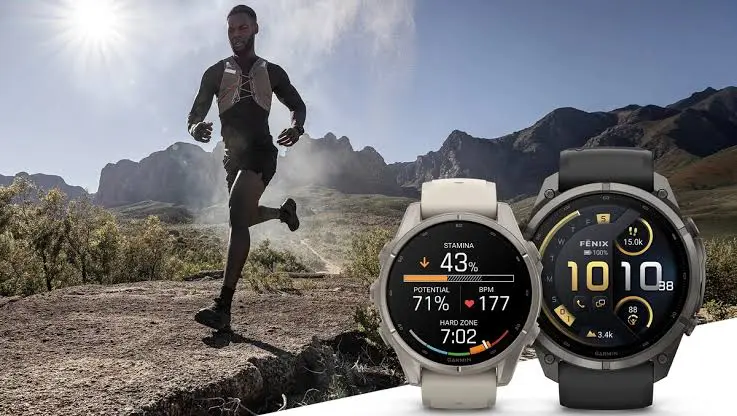
Garmin Fenix 9 and Fenix 9 Pro: price, battery life, new features and differences
Garmin updates the top of its outdoor range with the Fenix 9 and Fenix 9 Pro, two watches that do not seek to reinvent the formula but rather make it faster, more durable, and more coherent for demanding athletes. With new mapping, enhanced stamina tracking, expanded inReach functions, and solar models capable of lasting several weeks, Garmin refines an already mature platform.
Therefore, the real question is not whether the Fenix 9 is more comprehensive than the Fenix 8. Clearly, it is. The challenge is to determine whether these improvements justify an entry price that starts at €999.99.
A Broad Range of Fenix 9 Models
Garmin maintains a very modular strategy. The standard Fenix 9 is available in sizes of 43, 47, and 51 mm. The Fenix 9 Pro offers the same sizes, plus AMOLED or Solar versions depending on the configuration, as well as models with inReach connectivity.
The starting price is set at €999.99 for the Fenix 9 and €1,099.99 for the Fenix 9 Pro. The most advanced versions, especially the Pro models with inReach, go significantly higher depending on the size and chosen configuration.
This variety allows Garmin to cater to very different uses, from athletes wanting a premium multisport watch to users heading off-grid for several days who want to maintain a satellite connection.
The Fenix 9 Pro Features a Higher-End Case
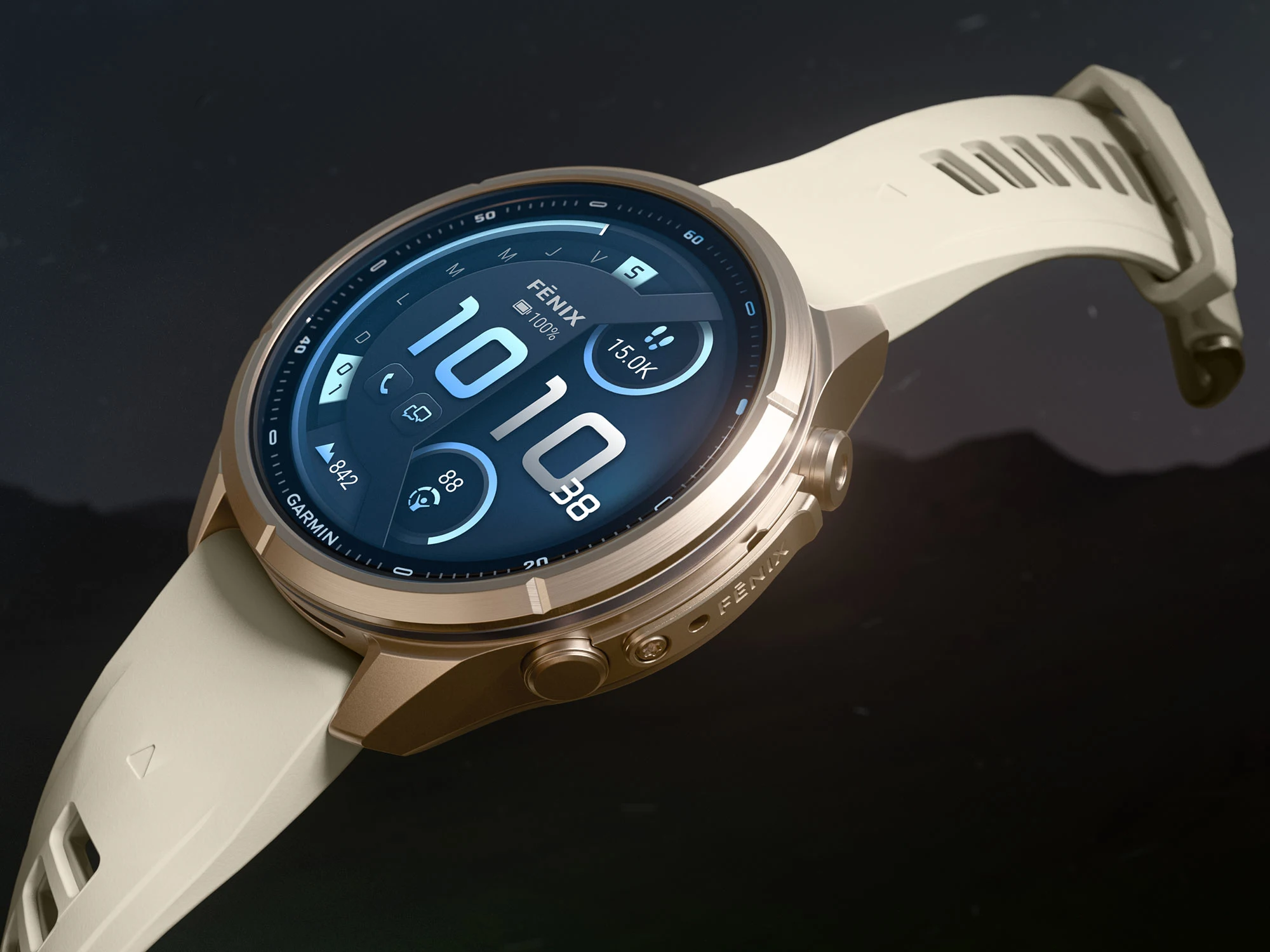
Garmin reserves several significant upgrades for the Pro version. The Fenix 9 Pro is notably the first Fenix to feature a titanium case, while the standard Fenix 9 retains a construction that combines reinforced polymer and metal components. This new architecture allows Garmin to reduce thickness while maintaining good durability.
On AMOLED models, brightness can reach up to 3,000 nits, aiming to enhance outdoor visibility. The 51 mm Pro version also gains a 1.5-inch AMOLED display, marketed as the largest ever integrated into a Fenix.
Garmin’s goal remains the same: to offer a watch rugged enough for outdoor use without compromising a high-end display akin to that of a classic smartwatch.
Faster and More Readable Mapping
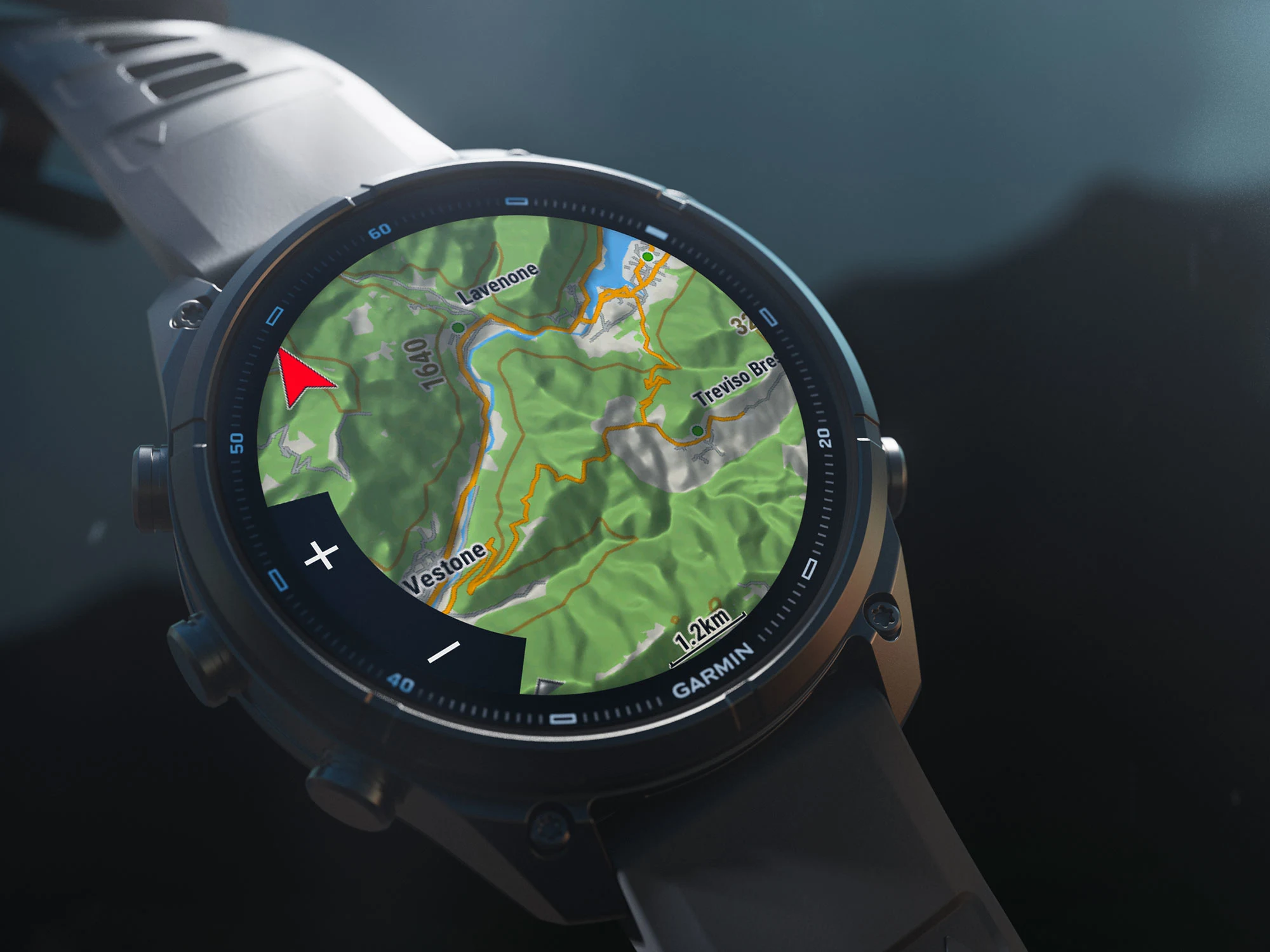
One of the most interesting improvements concerns navigation. Garmin increases the RAM by 50% compared to the Fenix 8, with a revamped mapping engine. According to the manufacturer, map navigation can be up to 30% faster. This gain is crucial for a watch intended for hiking, trail running, or off-road navigation, where smooth zooming and movement can make a significant difference.
Garmin also introduces a new perspective view designed for better visualization of what lies ahead on the route. This feature is not just aesthetic; it aims to make the map easier to read on the move without requiring as many manipulations.
64 GB of Storage and More Offline Maps
The Fenix 9 now features 64 GB of storage. Garmin claims this allows for about twice as many maps to be downloaded compared to the Fenix 8, while still providing enough space to store up to 7,000 music tracks. This additional capacity becomes particularly beneficial for users frequently traveling between different regions.

Instead of needing to delete certain maps before a trip, users can now keep more on the watch itself. In this way, Garmin continues to strengthen one of its main advantages compared to more generic smartwatches: the ability to function autonomously, away from a smartphone.
Stamina Zones and Stamina Curve for Better Endurance Tracking
The training aspect also receives several updates. Garmin introduces Stamina Zones and Stamina Curve, two tools aimed at better representing endurance evolution over time. The system is no longer limited to displaying an estimate of remaining stamina during effort. It can now show how this capacity evolves based on training history and physiological progress.
The idea is to help the user manage intensity better, as well as understand if their endurance is genuinely improving over several weeks.
This logic aligns perfectly with the positioning of the Fenix: accumulating data over time and transforming it into usable indicators for adjusting training.
Garmin Enhances Rucking and Rowing Features
The Fenix 9 also expands several more specialized sports profiles. Rucking, which involves walking or running with a load, now allows for adjusting the weight of the pack during an activity. Garmin adds compatibility with certain GORUCK training sessions and allows users to set specific goals related to the carried weight, which can be tracked up to 100 kg.
Rowing indoors has also advanced. The watch can retrieve more data from compatible rowing machines, including power curves and zones. It can even estimate VO2 Max during certain rowing sessions, allowing for a more detailed integration of this activity into overall fitness tracking.
Garmin Epic Introduces Storytelling for Workouts
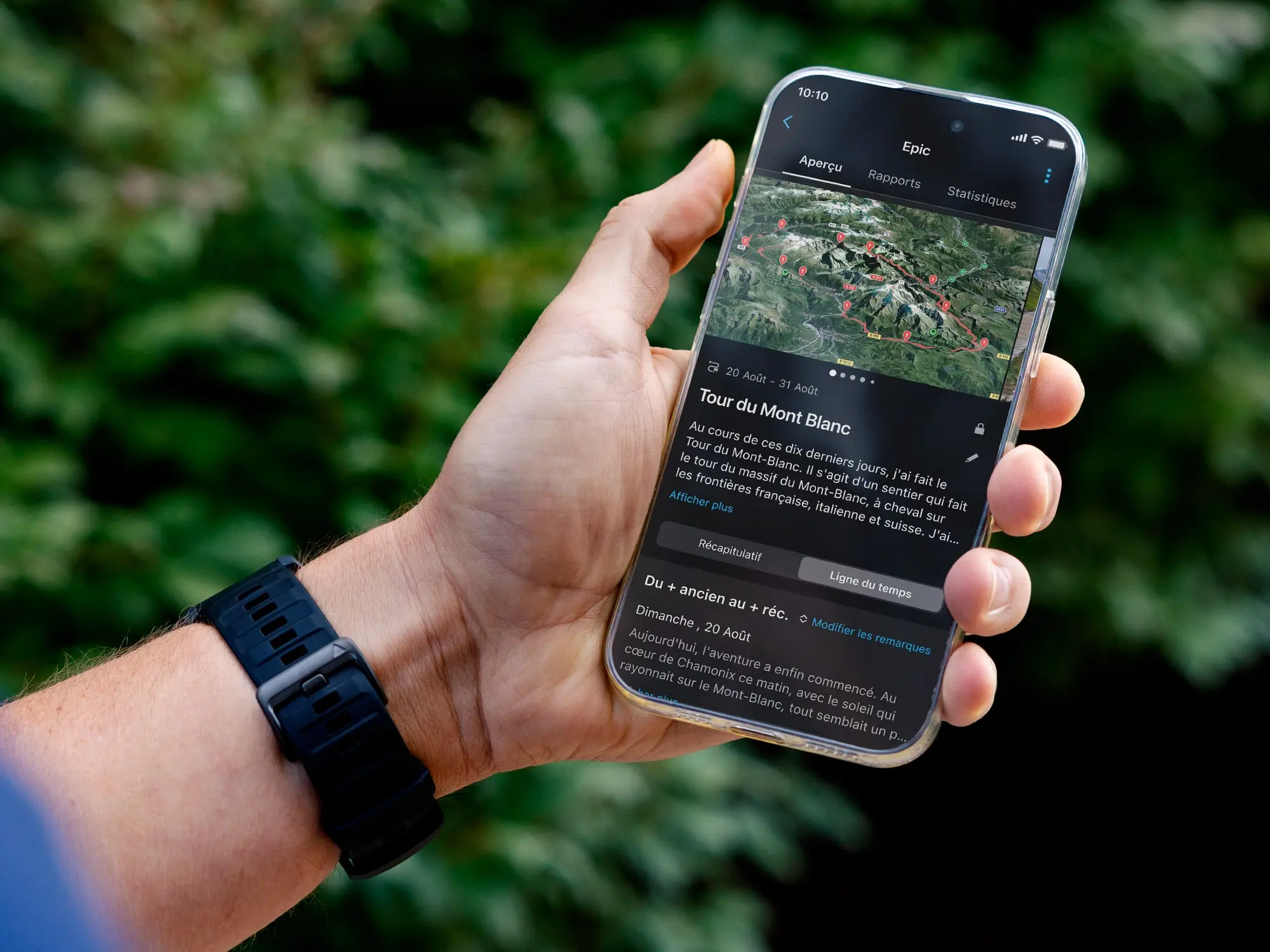
Garmin also adds a new feature called Epic. The concept is to bundle multiple activities into a single experience. A multi-day hike, a stage cycling race, or a weightlifting program can be presented as a cohesive experience within Garmin Connect.
Sports data, health information collected between sessions, photos, and notes can all be organized in one place. This feature also works with previously recorded activities, allowing users to reconstruct a journey or training program retrospectively.
While not necessarily the most technical addition to the Fenix 9, it illustrates an interesting evolution in Garmin Connect: data is no longer simply stored session by session but is now organized around longer experiences.
inReach Connectivity Expands Across More Fenix 9 Pro Models
The Fenix 9 Pro models equipped with inReach place a greater emphasis on smartphone independence. Garmin has expanded the availability of this connectivity across all three sizes of the Pro range: 43, 47, and 51 mm. With an active inReach subscription and depending on the available coverage, the watch can handle certain communications via LTE or satellite.
This includes messaging, calls, certain LiveTrack functions, and interactive SOS messages.
Garmin has also strengthened integration with its Messenger app. Contacts can receive notifications when an activity starts, track progress, and send or receive specific messages.
Garmin Locate Simplifies Temporary Location Sharing
The new Garmin Locate feature complements this strategy. A contact can temporarily request the location of the watch bearer via Garmin Messenger. The watch can then share its location without requiring continuous tracking. This approach can be particularly advantageous during hikes or long outings when a loved one wants to check where the user is.
However, Garmin is gradually pushing Fenix owners towards its own communication ecosystem. While this enhances integration between products, it also increases dependence on Garmin Messenger to fully enjoy certain features.
Up to 57 Days of Battery Life on Solar Models
Battery life remains one of the key selling points of the range. The standard Fenix 9 can last up to 29 days in smartwatch mode on the largest model. The Fenix 9 Pro AMOLED can go up to 31 days depending on the configuration. The Solar versions extend even further, boasting up to 57 days of battery life under certain conditions.
These figures can vary significantly based on the use of GPS, the always-on display, sensors, and communication features. But they serve as a reminder of the fundamental difference between a Fenix and a traditional smartwatch: Garmin continues to design for weeks of battery life rather than days.
Fenix 9 or Fenix 9 Pro: Which to Choose?
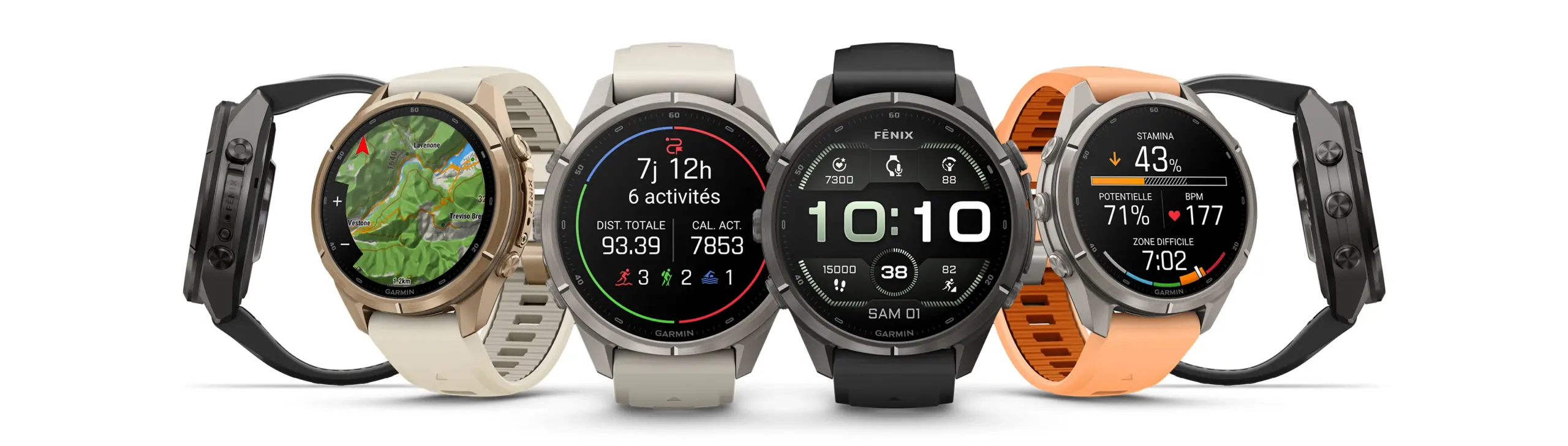
The standard Fenix 9 is likely the most rational choice for most athletes. It retains the essential new features: updated mapping, enhanced stamina tracking, Garmin Epic, 64 GB of storage, and sporting improvements. The Fenix 9 Pro becomes more appealing for those seeking a fully titanium case, a brighter AMOLED display, maximum solar battery life, or especially inReach connectivity.
In short, the Pro version does not fundamentally transform the watch’s athletic capabilities. It primarily adds comfort features, construction quality, and communication options aimed at the most demanding users.
A More Pragmatic Rather Than Revolutionary Evolution
The Fenix 9 does not represent a break as significant as some previous generations. Garmin is not changing the philosophy or positioning of the range. However, the improvements specifically target the points that regular users feel in their daily use: faster maps, clearer displays, more storage, better endurance analysis, and tighter satellite connectivity integration.
For those owning an older Fenix, the gap becomes significant. For those who already have a Fenix 8 or Fenix 8 Pro, the decision will be much harder to justify unless there are specific needs around inReach, mapping, or battery life.
Ultimately, Garmin seems to have chosen maturity over revolution. And for a watch that aims to be primarily a reliable tool for venturing further, this pragmatism could very well be its best quality.



