

NotebookLM adopts Gemini 3.5 and gains advanced search and export features
Google continues to evolve NotebookLM, its AI-powered research and synthesis tool. With a new update, the platform gains autonomy, adopts Gemini 3.5 as its default model, and adds advanced software capabilities driven by Antigravity.
The goal is clear: to transform NotebookLM into an assistant that can not only analyze sources but also help find, structure, and convert them into usable content.
NotebookLM Can Now Find Its Own Sources
Previously, NotebookLM mainly relied on a straightforward approach: users would import their documents, and the AI would extract summaries, responses, or analyses.
With this update, Google makes a significant leap forward.
Want a closer look at today’s launch? Here is a breakdown of what’s new and exciting 🧵:
First up: An upgraded, more thoughtful chat experience.
Powered by Gemini 3.5 and @Antigravity, you will now have better visibility into the AI’s thinking process. Plus, each notebook has a… pic.twitter.com/qhZMJwSRDV
— NotebookLM (@NotebookLM) June 8, 2026
Users can now initiate conversations about a project, and NotebookLM will independently suggest relevant sources thanks to its new search capabilities and integration with Google Search. This can include primary sources, documents in other languages, content from authors relevant to the topic, and additional references useful for analysis.

NotebookLM thus becomes less dependent on user-provided material and more like a true research partner.
Gemini 3.5 Becomes the Default Engine
The switch to Gemini 3.5 as the default model is expected to enhance response quality, understanding of complex documents, and structured content generation. For Google, this change fits into a broader strategy: to integrate its most advanced models into productivity, research, and creation tools.
NotebookLM is no longer just an experimental laboratory; it is gradually becoming a core component of the Gemini ecosystem.
Much More Comprehensive Exports
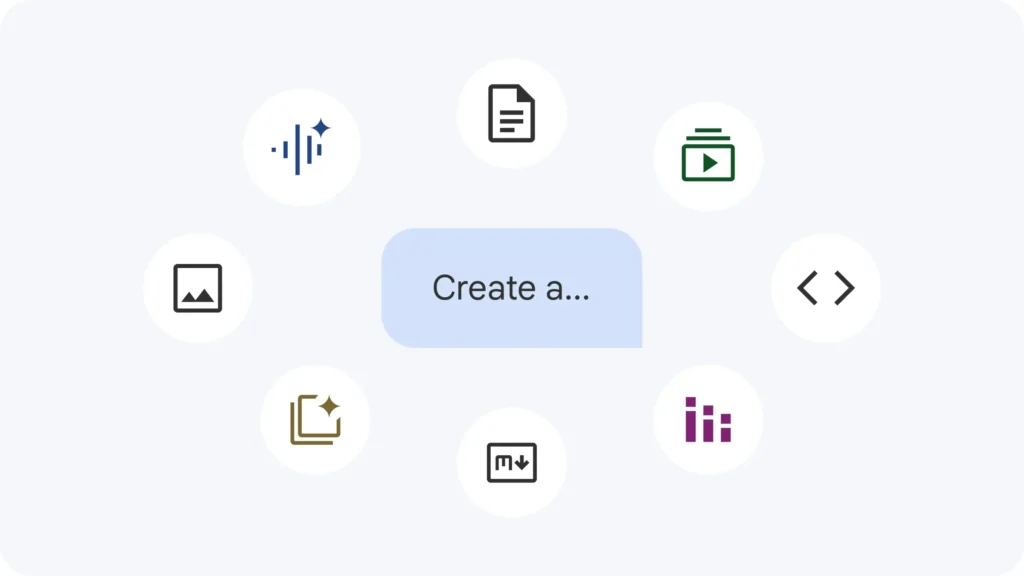
The update significantly enhances export formats. NotebookLM can now generate and export graphics in PNG or SVG, PDF, DOCX, Markdown or text documents, images created by Nano Banana, CSV or JSON files, Excel spreadsheets, and PowerPoint presentations.
This diversity transforms the nature of the tool.
Rather than only producing responses or summaries, NotebookLM can now turn research into directly usable deliverables.
Increased Transparency in Responses
Google has also added an important element: the ability to display the steps NotebookLM took to arrive at a response. This approach allows users to verify the reasoning, sources, and structure of the analysis.
In a context where hallucinations remain one of the main challenges of generative AIs, this transparency could become a decisive advantage, especially for professional or academic uses.

Still Limited Availability
These new features are initially available to Google AI Ultra subscribers and Workspace Business customers with access to AI Ultra or AI Expanded. However, Google plans to gradually expand availability to other users.
Google Aims to Make NotebookLM a Complete Work Tool
With this update, NotebookLM expands its capabilities. The tool now goes beyond merely reading documents; it can search, organize, explain, generate, and export. This shift reflects the direction of the most advanced AI assistants: moving from merely answering questions to complete production.
In this transition, Google appears to aim to make NotebookLM one of its most serious offerings for researchers, students, analysts, and knowledge professionals.



