
iOS 27: Apple strengthens parental control with new safety tools for children
As governments worldwide implement various initiatives to better protect minors online, Apple takes advantage of WWDC 2026 to unveil an ambitious redesign of its parental control tools. With iOS 27, iPadOS 27, and macOS 27, the Cupertino company aims to empower families in facing modern digital challenges.
From app management, contact control, web filtering, and new screen time recommendations, Apple is striving to provide a more adaptable framework tailored to each child’s age.
Enhanced Control from Device Setup
One of the key innovations presented during WWDC 2026 focuses on the initial setup of devices intended for younger users.
Apple is introducing a new setup assistant that allows parents to precisely choose the level of access granted to their child from the very first use.
Three approaches are offered:
- allow essential applications only
- select a set of apps recommended by Apple
- manually choose each available application.
This approach enables a gradual adaptation of the digital experience as the child gains autonomy and maturity.
“Ask to Browse”: Web Under Parental Supervision
Following “Ask to Buy,” which requires parental approval before downloading an app, Apple now introduces “Ask to Browse.” The concept is straightforward: when a child wishes to visit a new website via Safari, they must obtain parental permission before accessing it.
This feature will be enabled by default for children under 13, but it can also be employed for teenagers if families choose.
This measure addresses the growing concern regarding minors’ early exposure to certain freely available content on the Internet.
Tighter Management of Contacts
Apple is expanding parental control to communications. Children will start with a limited circle of approved contacts, typically consisting of close family members. Any new contact addition request will require parental approval.
This strategy aims to limit unwanted interactions with strangers and enhance the safety of young users on communication platforms.
Screen Time Becomes Smarter
The time spent in front of screens remains a significant concern for parents. With iOS 27, Apple modernizes its Screen Time tool by introducing recommendations based on the child’s age.
These suggestions cover several categories: entertainment, video games, and social networks. The recommendations have been developed in collaboration with child development experts and the American Academy of Pediatrics.
Parents, however, maintain the final say and can adjust the limits as needed for their household.
Schedules Tailored to Each Part of the Day
Apple is also improving usage planning. Families will be able to create different time profiles based on:
- school days;
- weekends;
- specific time slots.
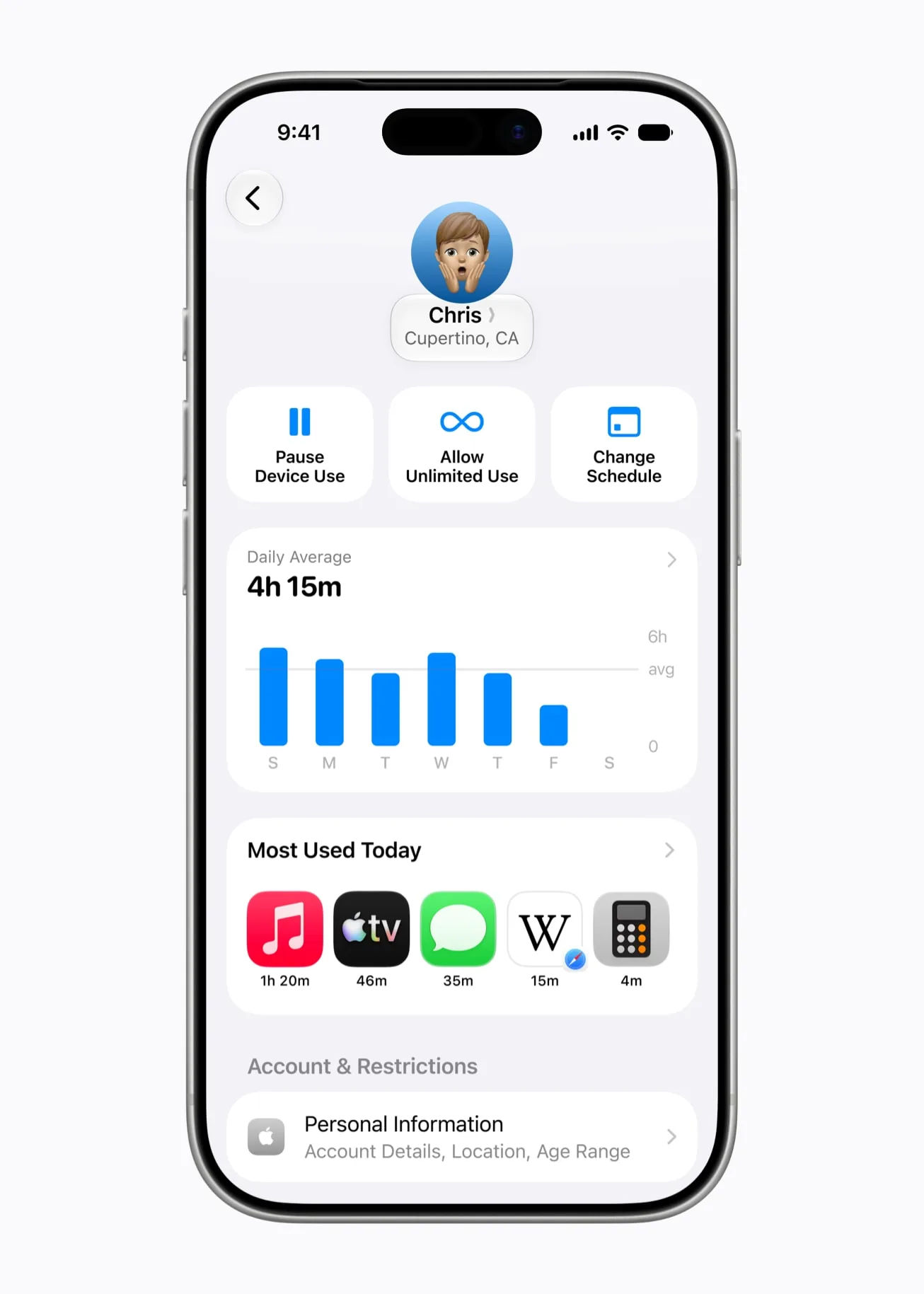
In practice, certain applications will only be accessible after school or during times specified by parents.
The goal is to integrate digital devices more naturally into children’s daily rhythms.
Comprehensive Protection Against Sensitive Content
The Communication Safety feature is also receiving a significant update. Previously, it primarily focused on content involving nudity. Now, the system will also analyze images and videos that may contain violent or graphic scenes.
Before displaying such content, the child will receive an age-appropriate warning, providing an extra layer of protection against potentially traumatic material.
Apple Aligns With a Global Trend
This announcement comes at a time when regulators worldwide are increasing pressure on tech platforms. In this context, Apple is adopting an approach that emphasizes the role of parents rather than imposing uniform restrictions on all users.
Beyond the technical features, this evolution reflects a deeper change in how tech giants address the issue of digital childhood.
Apple is not looking to ban or unnecessarily restrict usage. Instead, the company aims to provide families with the tools needed to gradually build a healthy relationship with technology.
As smartphones become the primary digital companions for new generations, the question is not just how much time children spend in front of a screen, but under what conditions they discover the Internet. With these new tools, Apple aims to ensure that this discovery occurs under the supervision of those who know them best: their parents.