


Microsoft abandons SMS in Entra ID and mandates the transition to passkeys
SMS has long been the simplest gateway to two-factor authentication. Microsoft now believes that this simplicity has become a weakness: in the face of increasingly automated phishing campaigns powered by AI, Entra ID will gradually favor passkeys, with the native provisioning of SMS and voice codes discontinued by Microsoft in February 2027.
Microsoft aims to move away from SMS codes
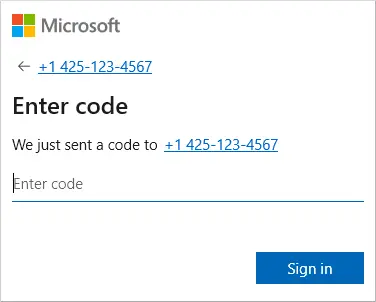
Microsoft is accelerating its transition to phishing-resistant authentication. Starting September 1, 2026, users of Microsoft Entra ID who are currently allowed to authenticate via SMS or voice calls will automatically be eligible for passkeys and may be prompted to register one during their login.
The change will become significantly more important on February 1, 2027. On this date, Microsoft will stop natively providing SMS and voice call routing used for multi-factor authentication in Entra ID. Users relying solely on these methods will need to register a passkey before they can continue their login.
For Microsoft, the verdict is clear: SMS and voice calls should no longer be considered secure enough to protect professional identities. Instead, the company is advocating for cryptography-based technologies like passkeys, Windows Hello, or FIDO2 security keys.
This is not merely an added option in Entra; Microsoft aims to shift the security standard itself.
AI adds a new dimension to phishing
This decision comes as artificial intelligence significantly simplifies the creation and automation of phishing campaigns. Microsoft explains that cyberattacks are becoming more automated and increasingly fueled by AI. According to data cited by the company in its Security Blog, some AI-powered phishing campaigns can achieve click rates as high as 54%.
AI does not directly “hack” an SMS, but rather lowers the cost and difficulty of the operations leading up to account theft.
Attackers can quickly generate credible emails, tailor their messages to specific targets, automate certain interactions, or mimic the tone of a legitimate service. When a user eventually shares their password or a one-time code, the effectiveness of the second layer of security collapses.
Additionally, there is the threat of SIM swapping, where an attacker is able to transfer a victim’s phone number to a SIM card they control.
Microsoft emphasizes that passkeys are designed to be resistant to phishing, SIM swapping, and replay attacks. Unlike a code that a user might copy onto a fake page, passkeys utilize cryptographic keys associated with the legitimate service.
Passkeys profoundly change the security model
The principle of a passkey is relatively simple for users. Instead of entering a password followed by a code received via phone, authentication can be done using the mechanism already used to unlock a device: facial recognition, fingerprint, or local PIN.
However, beneath this familiar interface lies a very different architecture.
The passkey uses a pair of cryptographic keys. The private key remains protected on the device or in a synchronized credential manager, while the service retains the public part necessary for verification. This architecture primarily eliminates one of the fundamental drivers of phishing: users no longer possess a reusable secret that they could accidentally share with an attacker.
Microsoft Entra ID now supports both synchronized passkeys across multiple devices and device-bound passkeys, particularly through Microsoft Authenticator, Windows, or certain FIDO2 security keys.
A two-step timeline for businesses
For IT administrators, the first important date is September 1, 2026. Users permitted to use SMS or voice calls in Entra’s authentication method policy will automatically be enabled for passkeys. Microsoft will also place the affected registration campaigns in a managed mode to progressively encourage users to migrate.
However, Microsoft plans to allow a temporary disablement of this automatic migration between September 2026 and February 2027, giving organizations time to adapt their infrastructure.
The critical turning point will occur on February 1, 2027. From this date, the SMS and voice call service provided directly by Microsoft will vanish from Entra ID. There will be no option to postpone this deadline to continue using Microsoft’s native telecommunication service.
Nevertheless, an important nuance must be noted: this does not mean that all professional use of SMS will become technically impossible. Microsoft will provide a solution for organizations with specific regulatory or operational requirements. They will be able to rely on a telecom provider managed by the client via the Microsoft Security Store to continue using SMS or voice in certain scenarios.
In short, Microsoft is not entirely banning the phone channel: it is simply ceasing to make it a native and recommended method in Entra ID.
Personal Microsoft accounts are following the same direction
This strategy is not limited to businesses. Microsoft has also begun to gradually eliminate SMS codes from authentication and account recovery for personal Microsoft accounts. The company now presents SMS as a significant source of fraud and is directing users towards passkeys and verified email addresses.
This potentially affects accounts used for services like Outlook, Xbox, or certain Windows logins.
However, Microsoft does not currently provide a general timeline equivalent to February 1, 2027, for all personal accounts in its public documentation. The transition is well underway, but its timeline should not be confused with that of Microsoft Entra ID.
Microsoft no longer wants to secure passwords: it wants to bypass them
This evolution reflects a broader transformation of digital identity. For years, the industry has attempted to strengthen passwords by adding a second verification: SMS codes, smartphone notifications, or authentication apps.
The introduction of passkeys reverses that logic.
Rather than multiplying barriers around a secret that can be stolen, industry players are striving to gradually eliminate that secret altogether. Microsoft has stated that it has already removed the weakest authentication methods from its internal environment and deployed phishing-resistant solutions for almost all its users and devices.
The rise of AI accelerates this transition. As attackers can produce more credible messages, automate their campaigns, and personalize their social engineering techniques, security can no longer rely solely on a user’s ability to recognize a fraud attempt.
Therefore, Microsoft’s response is to make certain secrets impossible to disclose, even when users are deceived. And this may be the real change: in a world where phishing becomes more convincing, the best authentication may be one that no longer requires users to distinguish between truth and falsehood.



