

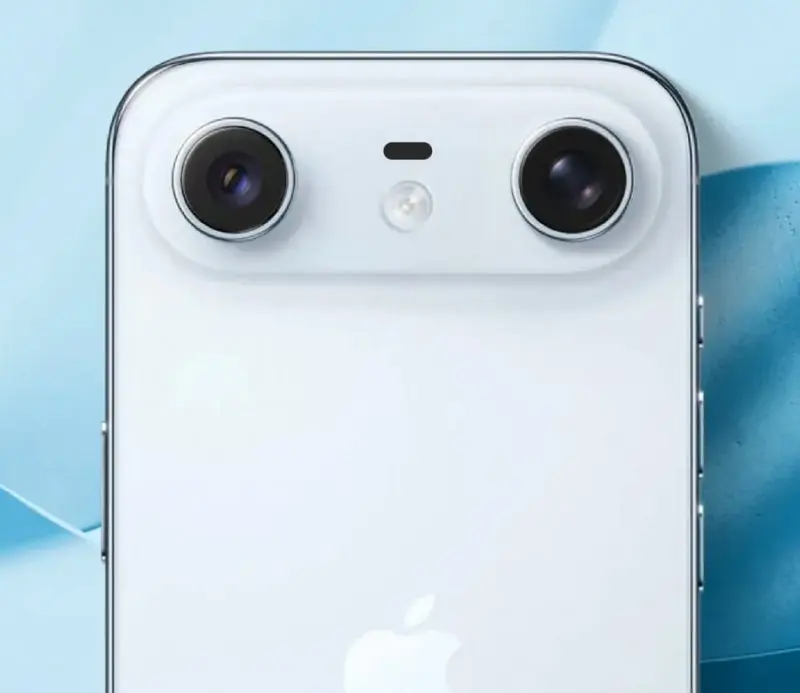
iPhone Air 2: Apple could adopt a surprising dual camera setup to save its ultra-thin iPhone
The iPhone Air was expected to mark a new chapter in Apple’s lineup, emphasizing a spectacularly slim smartphone over technical specifications. However, due to a lukewarm commercial reception, Apple is reportedly preparing a second generation that is more versatile, particularly with the addition of a second camera sensor.
This evolution may require a rather unusual design.
Apple aims to address the compromises of the iPhone Air
By replacing the Plus model with the iPhone Air, Apple made a significant choice: prioritizing thinness and lightness at the expense of certain hardware features. This approach resulted in an exceptionally slim iPhone but came with notable compromises, including a single rear camera and an extremely constrained internal architecture.
According to information leaked by Korean tipster Yeux1122, Apple is now considering two rear cameras for the iPhone Air 2. However, this information should be taken as a rumor, as no definitive design has been confirmed by Apple.
The stakes are clear. Adding a second module would enable the iPhone Air to better align with the expected photographic versatility of a premium smartphone, all while maintaining its primary appeal: extreme thinness.
Two cameras… but not necessarily side by side
This is where things get interesting. The available space inside such a slim smartphone is extremely precious. The battery, motherboard, camera system, speakers, antennas, and thermal components must coexist within a few millimeters of thickness.
According to the leak, Apple might therefore physically separate the two cameras at the ends of the rear camera strip, rather than clustering them together as seen in other iPhone models. The LED flash would then be positioned between the two lenses.
A conceptual rendering based on this hypothesis shows an almost symmetrical architecture: one camera on the left, another on the right, and the flash in the center. Visually, this arrangement would differ significantly from the aesthetic language Apple typically presents.
However, beneath this potentially odd configuration may lie a genuine engineering logic.
Why Apple may need to completely rethink its camera module
A modern camera module takes up significantly more space than just a visible circle on the exterior of the smartphone. Behind each lens are the sensor, lenses, stabilization mechanisms, and various electronic parts.
In a conventional phone, engineers can make better use of the chassis’s thickness. With the iPhone Air, this margin is almost entirely absent. Relocating the second sensor to a different part of the camera strip could allow Apple to distribute internal components more evenly rather than concentrating two substantial modules in one location.
This challenge is even more critical if Apple aims to simultaneously increase the battery capacity for this second generation, as some rumors suggest.
The challenge for the iPhone Air 2 could thus boil down to a particularly complex equation: maintaining an ultra-slim profile while incorporating a larger battery and a more comprehensive camera system.
The iPhone Air 2 must also find its purpose
Beyond this supposed design, the second generation raises a more strategic question. With the iPhone Air, Apple sought to sell a different experience: not the maximum performance or features, but a technological object whose thinness itself constitutes a premium characteristic.
The issue is that consumers must accept multiple compromises to enjoy this silhouette.
Adding a second camera and improving battery life could thus allow Apple to narrow the gap between aesthetics and functionality. The iPhone Air 2 could become less experimental and more suited for everyday use without overly visible compromises. However, Apple must be cautious not to sacrifice what makes this lineup unique.
Unlike the Pro models, where the prominent camera block contributes significantly to their identity, the iPhone Air relies heavily on a promise of minimalism. A clumsy camera arrangement could contradict this philosophy directly.
A leak to be considered with caution
Currently, there is no concrete evidence that the iPhone Air 2 will adopt this layout. Renders circulating about future smartphones are often based on incomplete information, industrial schematics, or simply interpretations of leaks. Several prototypes may also be evaluated before a manufacturer settles on the final version.
Apple might find a different solution to house its second camera without drastically altering the back of the phone.
However, the hypothesis remains indicative of the constraints the company faces. After pushing thinness to its limits with the first generation, it must now figure out how to pack more smartphone into the iPhone Air without compromising what makes it distinct.
Ultimately, the future of this lineup may hinge on the fact that the iPhone Air 2 must not only impress when held but also convince once put to use.



