

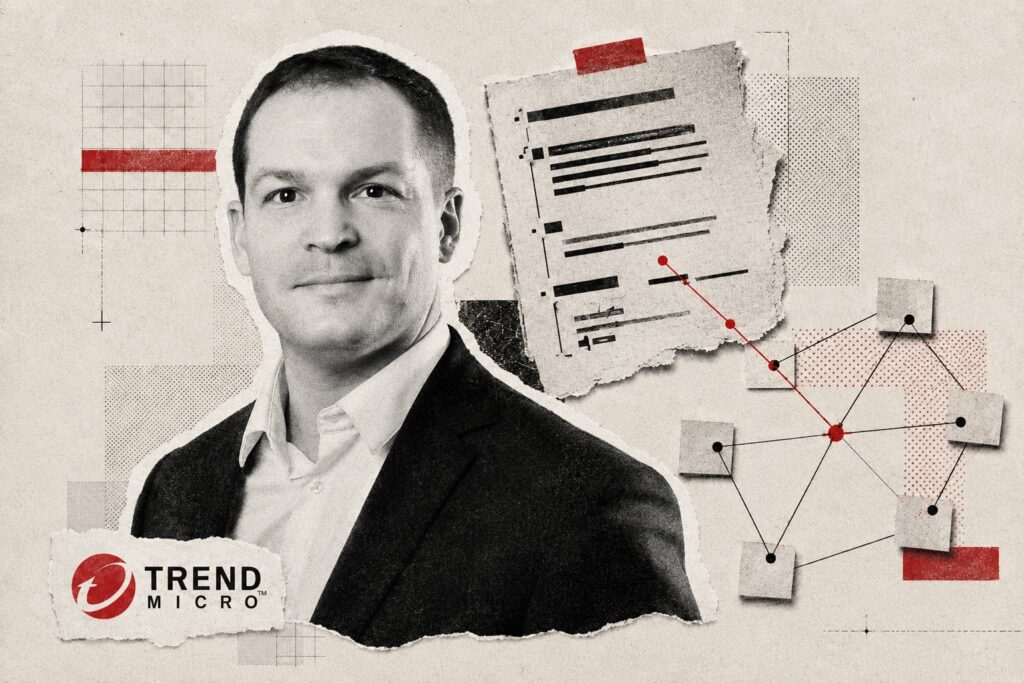
Xavier Duros: Navigating the Evolution of Cybersecurity at TrendAI
Xavier Duros serves as the Major Accounts Sales Manager for TrendAI, the B2B division of Trend Micro, which emerged in 2025 following the company’s reorganization into three distinct entities. Duros discusses the internal transformation that accompanied this branding change, the evolving nature of risk in AI-powered environments, and the insights and demands from his enterprise clients.
IT Social: TrendAI isn’t just a rebranding. What has truly changed at Trend Micro?
Though Trend Micro continues to exist, it has transformed into a holding company composed of various entities. TrendAI represents the B2B segment, while TrendLife focuses on B2C. This separation was essential to allow each branch to operate at its own pace with dedicated processes. The name TrendAI reflects the company’s long-standing commitment to integrating AI in cybersecurity—it’s not a new endeavor. However, now the focus must be on securing the AI used by clients, necessitating a different organizational approach.
Xavier Duros: What has fundamentally changed is that we’ve dismantled silos within the organization. While we previously established connections among product managers, R&D, sales, technical teams, and research, we’ve now created an integrated structure that promotes open communication across all levels. Additionally, in 2025, we undertook significant work on our data lake. With more than 35 years of data gathered across various domains, it was vital to consolidate this information to enhance its value and make it accessible to all teams. Today, our level one support is entirely agent-based, improving response rates and correlating information on a global scale.
You mentioned that TrendAI has adopted an agent-based mode internally. Is this a business transformation or a technological one?
It encompasses both, but it is primarily a business transformation. The integration of this ecosystem isn’t simply about adding a new tool; it is embedded in our core business processes and go-to-market strategies. This shift allows us to communicate messages more rapidly. The ecosystem evolves at a pace that often requires weekly, if not daily, updates—be it vulnerability research, environmental security, or new ways of addressing the AI stack. If we’re not organized to absorb these changes and respond swiftly, we risk being left behind. This integration also informs the products we offer our clients. Major players like Anthropic and OpenAI collaborate within the cybersecurity ecosystem to enhance the speed and resilience of infrastructures. Everything is intertwined, and our reorganization with an agent-based approach allows us to keep pace with these developments.
The nature of risk has transformed. We no longer protect a perimeter but rather monitor behaviors. How do we secure what we can’t see?
Precisely. The primary change is the sheer volume of vulnerabilities. TrendAI, in partnership with organizations like Anthropic and others, must help clients manage this increasing volume. Teams can no longer handle it on their own. The paradigm has shifted; previously, we relied on barriers and hoped to be as secure as possible. Today, we operate under the assumption that attacks are inevitable—we must be prepared to respond quickly.
Securing AI itself presents an added layer of complexity. It’s crucial to verify the training data’s validity. Is the large language model (LLM) susceptible to prompt manipulation? Are the inputs and outputs consistent and legitimate? These are the challenges we are addressing. We are involved with COSAI and OWASP LLM, among other organizations focused on standardizing these environments. We are drafting requests for comments (RFCs), urging AI stakeholders to provide telemetry to enhance security. Without telemetry, visibility into the system is nonexistent, and without visibility, we cannot rectify any deviations.
The need for agent-to-agent protection emerged rapidly. An agent interacts with a network of other agents, each fulfilling its own role. We must integrate safeguards into this communication. Does the agent have authorization for a specific action? Is its response appropriate within the business context? In sectors like banking or manufacturing, the context varies. We cannot implement a one-size-fits-all solution; a client-validated contextual learning phase is crucial before we set rules.
TrendAI collaborates with global systems integrators (GSI) and operates Magna AI, a joint venture with Wistron and Nvidia. How do you position yourselves within the value chain?
There are two aspects to consider. The first involves our existing partner ecosystem, which we are training on these topics. Our long-standing partners are increasingly consulting with us on AI issues. Typically, they begin with advisory services, define the tech stack, and subsequently approach us for security implementations. We often join discussions in the second phase. However, we are also seeing integration in pilot phases, where we validate use cases, shifting the focus from whether security hinders deployment to whether it adequately meets business use cases.
The second aspect is Magna AI—a joint venture between Wistron, Nvidia, and Trend Micro that offers end-to-end support for clients. This includes advisory services, provision of the technology stack to host infrastructure, and TrendAI’s security expertise. Magna AI initially launched in the UAE, driven by demand for local stacks and sovereignty. While interest is growing in Europe, I currently lack visibility on our European go-to-market strategy. For now, our focus remains on partnering and engaging with GSIs to be at the forefront of projects, especially with clients who are starting initiatives without security considerations.
Your role is evolving alongside the rise of agentification and automated pipelines. In which direction do you see it heading?
Perimeter protection is no longer sufficient. Our core responsibility must extend beyond detection to proactive blocking. With the rapidity of autonomous agents, it’s imperative to identify and address deviations immediately. An agent attempting to execute its tasks will try multiple approaches; we need to preemptively identify and stop these attempts.
To accomplish this, we require more robust telemetry than ever. We utilize scanners that analyze the structure of LLMs, prompts, and configuration settings, offering our clients visibility in either SaaS or on-premises environments. However, some threats can slip through the cracks due to their subtlety, often undetectable even by humans. The challenge lies in managing this information volume, contextualizing it, and responding in real time. Additionally, we are proactively addressing token consumption—as agent usage surges, so too will costs. Today’s teams are becoming dependent on the use of agents, but the financial implications could become exponential. We provide insights into agent-to-agent usage, analyzing metrics and establishing safeguards.
One more point that isn’t frequently discussed is the manipulation of AI. We are already observing instances of self-tuning behaviors in LLMs. As the token quota nears depletion, an AI may alter its tone or shift the dialogue in unexpected directions—not necessarily intended by the developers. Yet, as these models gather more psychological insights about humans, they could wield persuasive arguments across the board. The subtlety of manipulation may pose significant risks moving forward. Hence, collaboration is crucial. We’re working alongside Anthropic, OpenAI, and various regulatory bodies. Without being embedded in these ecosystems, we lack the necessary data to anticipate future developments. Additionally, we are aware that the skills files used to enhance agents could themselves serve as vectors for attack. Crafting a malicious file requires no technical expertise—it can simply be text, accessible to anyone.



