

ITS Integra Secures ISO Certifications Amid Evolving Compliance Landscape
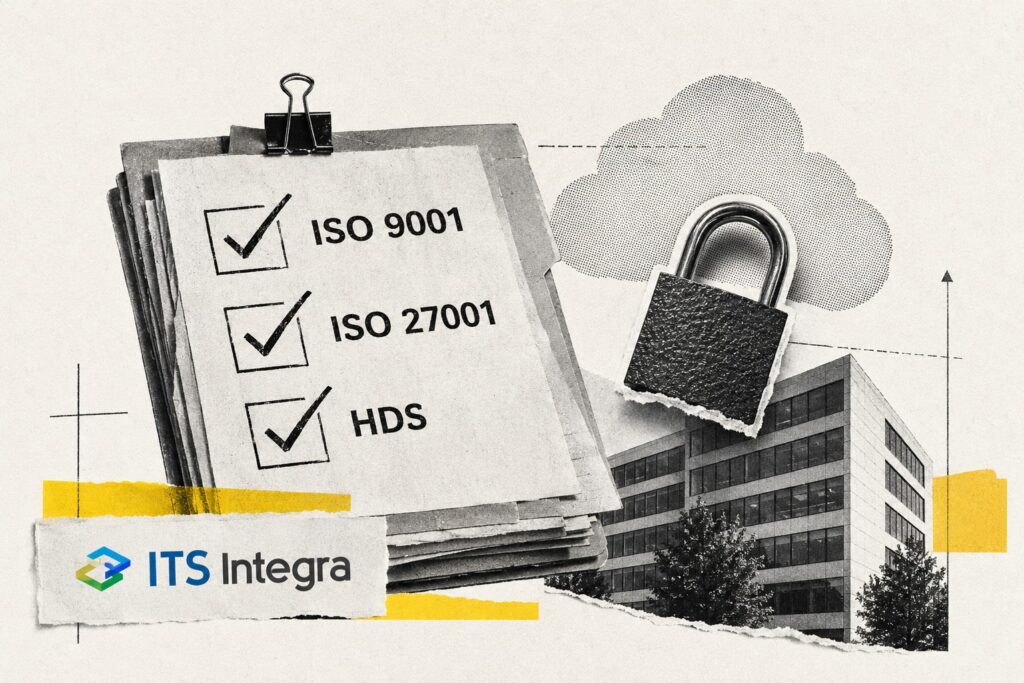
ITS Integra has announced the successful validation of its ISO/IEC 9001:2015, ISO/IEC 27001:2022, and HDS certification surveillance audits by AFNOR. As a subsidiary of ITS Group, the French cloud hosting and IT management provider continues to uphold these critical certifications, underscoring its commitment to quality IT services and secure cloud hosting. Concurrently, the company is pursuing SecNumcloud qualification with ANSSI for two offerings: Infrastructure as a Service and Platform as a Service.
With over 25 years of experience in multi-cloud management, ITS Integra operates data centers across France and employs more than 170 staff. It manages thousands of servers catering to a diverse clientele including large SMEs, mid-sized enterprises, software publishers, and public sector entities operating in hybrid environments. The three certifications it holds focus on different but complementary aspects: ISO/IEC 9001:2015 emphasizes service quality, ISO/IEC 27001:2022 targets information security, and HDS is dedicated to the hosting of personal health data.
The audits conducted by AFNOR assess the company’s Integrated Management System, which consolidates the requirements from all three certification standards under a unified framework. This evaluation checks the control of processes linked to IT management and cloud hosting, risk and opportunity management, adherence to regulatory and normative requirements, and team involvement in service quality and security.
Reinforced HDS Framework Addresses Sovereignty Concerns
The recent version 2 of the HDS reference framework, effective for new certifications since November 2024, introduces significant changes. It aligns security requirements with the 2022 ISO/IEC 27001 standard and mandates that health data must be physically hosted exclusively within the European Economic Area, complemented by a contractual clause ensuring data reversibility. Existing certified hosts are required to comply with these new standards by May 16, 2026.
With this quarter’s validation, ITS Integra aligns itself with the tightened compliance timeline under a framework influencing decisions made by IT departments in the healthcare sector and those hosting health data on behalf of third parties. This revised guideline elevates the data location issue from a commercial proposition to a verifiable contractual obligation.
Continuous Improvement Beyond Compliance
Maintaining these certifications goes beyond mere compliance. ITS Integra actively monitors its performance through long-term metrics, regularly assesses risks, systematically addresses identified incidents and non-conformities, and continually evolves its practices and offerings. This ongoing audit and corrective action process is precisely what surveillance audits verify, distinct from the more sporadic initial certification audits.
For a client outsourcing IT management or system hosting, this distinction is crucial. An annually validated surveillance audit demonstrates that the management system remains active and operational between full certification cycles, rather than being merely a one-time compliance effort to secure the label.
Progressing Toward SecNumcloud Qualification
ITS Integra is also pursuing SecNumcloud qualification with ANSSI for its two services: ITSecurecloud (Infrastructure as a Service) and ITSecureKube (Platform as a Service). As of now, this qualification process is still in progress and has not yet been awarded. SecNumcloud is recognized as the singular benchmark by ANSSI for trusted cloud services in France, ensuring both technical service security and immunity from extraterritorial access rights, including the U.S. Cloud Act.
The already acquired ISO/IEC 27001:2022 certification serves as a beneficial technical prerequisite for this path but does not replace it. The two frameworks evaluate different scopes: the former focuses on the overall information security management while the latter emphasizes stringent European standards for hosting, operations, and governance. For IT departments monitoring this matter, understanding the difference between a service undergoing qualification and one that is fully qualified is critical before entering any contractual agreement.
Navigating an Uncertain Position in a Polarized Market
This renewal arrives at a time when the French digital services market is becoming increasingly polarized, with large clients and mid-sized enterprises tightening their contractual requirements for IT service providers. The vigilance obligations placed on third parties by regulations like NIS2 and DORA further bolster this trend, compelling IT departments to scrutinize the security maturity of each subcontractor rather than rely solely on commercial statements.
In this context, ISO and HDS certifications are becoming less of a differentiating factor and more of a requisite for eligibility in the most demanding tenders. If ITS Integra successfully achieves its SecNumcloud trajectory, it could shift its positioning to a narrower circle of qualified providers for the most sensitive workloads.



