

iPhone Fold: Apple prepares a hybrid version of iOS with iPad features
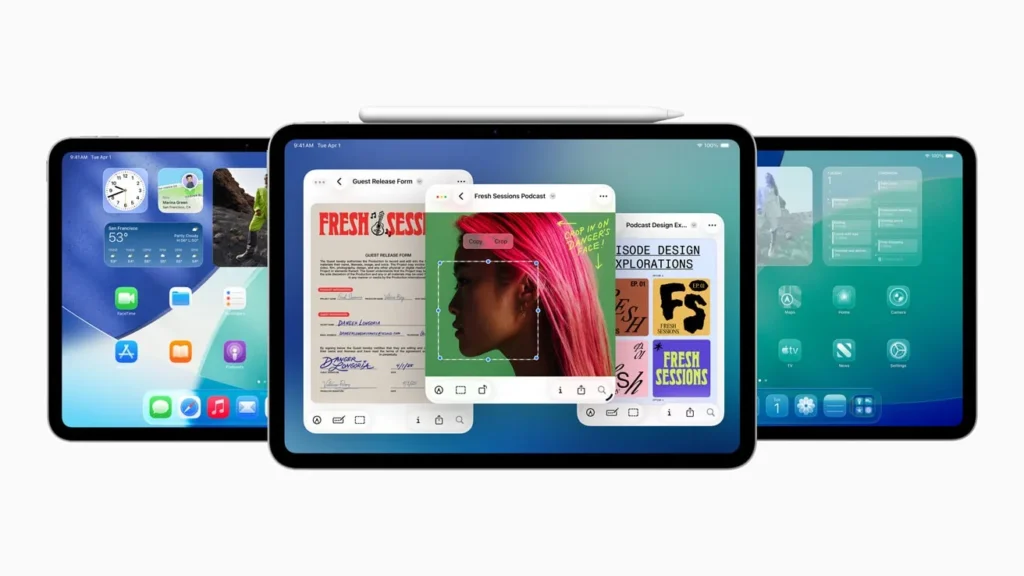
Apple is not planning to launch its first foldable iPhone solely equipped with a hinge and a flexible display. The true “Apple moment” will occur in the software. According to Bloomberg, the iPhone Fold (expected in the fall) will indeed run on iOS, but with redesigned interfaces to utilize the width of the internal screen: apps will shift from a compact display on the external screen to a layout with a sidebar on the internal screen, similar to the iPad.
The key change: iPad-style sidebars in iPhone apps
The essence of the report is clear: Apple is working on new iOS layouts and a redesign of its native apps to incorporate sidebars on the left — just like many iPad apps (Mail, Notes, Files, etc.).
Underlying this is a philosophical shift: historically, the iPhone interface has been “page after page.” With a foldable format close to a mini tablet, Apple aims to make the system more “navigable” and less linear — thus more productive.
A trajectory that resembles Android… but in a mandatory way
The comparison with Android is pertinent, and it is particularly interesting as Google has just tightened the rule: on large screens, apps will no longer be able to “opt-out” of adaptive layouts. In Android 17, the temporary ability to opt-out of orientation and resizing restrictions on large screens will disappear: the system will ignore these limitations to promote genuinely resizable apps.
Google started this “quest for the big screen” with Android 12L, explicitly presented as a version designed for tablets and foldables. Apple is arriving later to the foldable hardware scene but seems intent on avoiding the common pitfall: treating a large screen as just an stretched iPhone.
Multitasking: no iPad-style windowing, but split-screen with two apps
Bloomberg adds nuance: the iPhone Fold will not support “multiple windows” like an iPad mini, but it could display two apps side-by-side. This aligns with what is already offered by Samsung/Google/OPPO in the foldable smartphone space. The notable exception is OnePlus and its Open Canvas, which allows for a three-app logic (with a third narrow and quickly extendable window).
Thus, Apple would choose an “Apple-like” compromise: enough multitasking to justify the internal screen, but without turning the iPhone into a mini iPad in terms of paradigm.
Hardware: a size close to the iPad mini, and biometric features dictated by physics
According to Bloomberg (and consistent with other recent leaks), the internal screen will measure approximately 7.7 inches when opened, making it very similar in size to the iPad mini. Additionally, Apple is expected to sacrifice Face ID in this format — not by ideological choice, but due to thickness constraints — in favor of a fingerprint sensor in the side button (Touch ID “iPad-style”).
Android foldables have already normalized the concept of split-screen and adaptive interfaces. Where Apple can set itself apart is in coherence: a user interface that smoothly transitions between external and internal screens, exemplary system apps, and clear guidelines for developers.
If Apple succeeds in making the transition from “iPhone to mini-tablet” seamlessly, the iPhone Fold could become less of an exotic device and more like an iPhone… that unfolds into an iPad. This is likely the only definition of a foldable that aligns with Apple’s design philosophy.



