

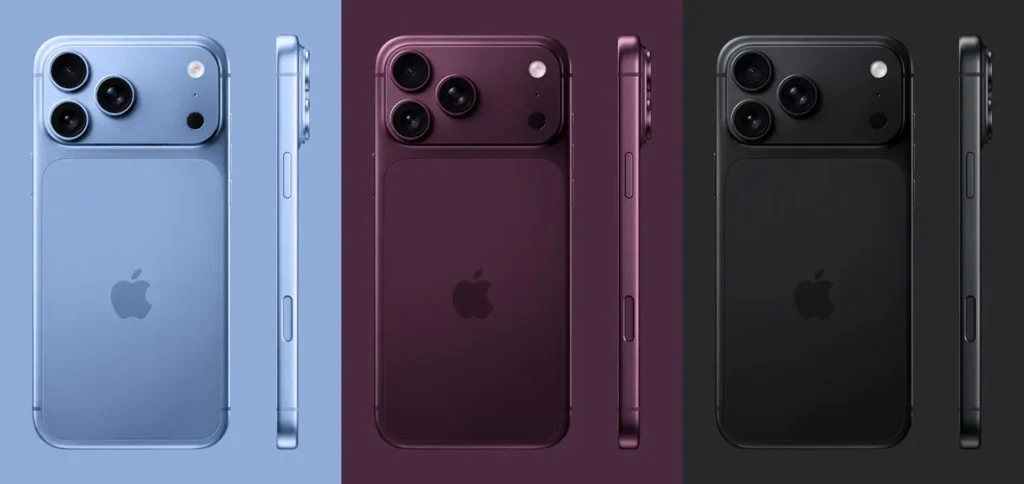
iPhone 18 Pro and iPhone Ultra: Initial Price Leaks Indicate a More Measured Increase Than Expected
With less than a week until the highly anticipated unveiling of the iPhone 18 Pro, iPhone 18 Pro Max, and Apple’s first foldable iPhone, the price remains one of the last major uncertainties. New leaks emerging from Egypt and Australia, however, provide a preliminary insight into the pricing strategy, particularly for the iPhone Ultra.
These figures should be approached with caution, as they stem from temporary listings and market estimates. Nevertheless, they suggest a common hypothesis: Apple may indeed increase its prices significantly, but not to the most pessimistic scenarios discussed in recent months.
The iPhone Ultra Could Approach $2,000
Initial rumors set the price of the upcoming foldable iPhone between $2,000 and $2,500 in the United States. Recent leaks, however, seem to lean towards the lower end of this range.
A listing attributed to Vodafone Egypt briefly displayed the iPhone Ultra at 155,750 Egyptian pounds (approximately 2,629 euros in direct conversion), compared to 88,799 pounds (about 1,500 euros) for the iPhone 17 Pro. This comparison suggests a price gap of around 75% between the two devices, although a direct conversion from Egyptian pounds to dollars could be misleading due to taxes, local fiscal policies, and currency exchange rates.
Another leak, this time from Vodafone Australia, mentions a price of 3,699 Australian dollars (approximately 2,294 euros in direct conversion). Again, the comparison with the local iPhone 17 Pro is more insightful than a direct conversion: the price difference would be close to 85%.
If Apple were to apply a similar logic in the United States, a starting price around $1,999 might become plausible.
TrendForce Predicts a Starting Price of $2,099
An estimate published by TrendForce is slightly more pessimistic, suggesting a potential starting price of $2,099 for the first foldable iPhone, which is approximately 91% higher than that of the previous-generation iPhone 17 Pro.
The difference between $1,999 and $2,099 may seem small for such an expensive product, but it could significantly impact the launch’s perception. The symbolic threshold of $2,000 is particularly sensitive, even in the ultra-premium segment.
Apple might also consider offsetting a high price with more base storage, a more sophisticated build, or features specific to the foldable format. However, at this point, there is nothing to confirm this strategy.
The true price will only be confirmed at the official announcement.
The iPhone 18 Pro May See an Increase of Around $100 to $200
The traditional Pro models also appear to be heading for an increase. A leak regarding the Egyptian market suggests a price of about 98,000 Egyptian pounds (approximately 1,655 euros in direct conversion) for the iPhone 18 Pro and 105,000 pounds (around 1,775 euros) for the Pro Max. Compared to local prices for the previous generation, this would represent an increase of approximately 10 to 11%.
If Apple applies a similar progression in France, the increase could reach around 300 euros. TrendForce, however, anticipates a larger increase between $149 and $200 depending on the models. Even in this scenario, it falls short of previous forecasts suggesting price hikes of up to $300.
Thus, the general trend seems clear: Apple is expected to raise its prices, but likely in a less dramatic manner than initially estimated.
An iPhone 18 Pro Max at $1,299 Would Change Little in the Market Balance
In the event of a $100 increase, the iPhone 18 Pro Max could start around $1,299. This price point would directly position it against Samsung’s Galaxy S26 Ultra, prior to any expected price adjustments with the upcoming Galaxy S27 generation.
Thus, Apple would not necessarily be exiting the traditional premium flagship market. Even with a price increase, the Pro models would remain in a pricing zone familiar for high-end smartphones.
This is an important point, as the iPhone 18 Pro is expected to benefit from several hardware upgrades, including the new A20 Pro chip expected in 2nm, graphical enhancements, and other features yet to be confirmed.
A moderate price increase can be more easily absorbed if Apple presents sufficiently compelling hardware arguments for renewal.
The iPhone Ultra Will Face Stiffer Competition
The situation will be different for the foldable model. At around $2,000 or more, the iPhone Ultra would face competition from already advanced devices like the Galaxy Z Fold 8, which is priced around 1,600 euros for its base configuration.
Samsung has a significant advantage in terms of format maturity. Multiple generations of foldables have allowed it to enhance hinge designs, screens, software, and multitasking, while Apple would be entering the market with an entirely new product.
Other competitors are also in the field, with Google and Motorola models sometimes priced lower.
Apple cannot rely solely on the foldable format as a differentiating argument. The integration of iOS, software optimization, and design quality will need to justify any potential price premium.
The iOS Ecosystem Remains the Most Difficult Advantage to Replicate
However, Apple holds a unique advantage that its Android competitors cannot easily replicate: access to iOS and its entire ecosystem. For users already equipped with an iPhone, Mac, Apple Watch, or AirPods, the iPhone Ultra could represent the only way to access a large foldable format without completely changing their digital environment.
This ecosystem loyalty could allow Apple to set a higher price than that of some competitors without necessarily jeopardizing the launch.
This effect will likely be particularly strong during the first generation when the novelty of the format and the curiosity of the most engaged users will be at play.
The real question will be whether this demand remains strong enough after the initial launch effect.
Apple Can Afford to Further Segment the Premium Market
The introduction of an iPhone Ultra priced around $2,000 would allow Apple to create a new pricing tier above the Pro models. The company already applies this logic across various ranges: the MacBook Pro does not replace the MacBook Air, the Apple Watch Ultra does not replace the standard Series, and a foldable iPhone could follow a similar model.
In this scenario, the iPhone Ultra would not be intended to become the new default iPhone. Instead, it would act as a technology showcase for users willing to pay more for a new format. This would enable Apple to keep the iPhone 18 Pro in a more accessible price range while exploring an even more lucrative premium segment.
Thus, a high price would not necessarily pose a problem if the expected volumes remain relatively limited.
The Real Challenge Will Be Perceived Value, Not Just Price
A difference of $100 or $200 on an iPhone Pro is significant today, but it likely won’t completely change Apple’s commercial dynamics. However, breaching the $2,000 mark with the iPhone Ultra sets a different expectation.
At that price point, the product must excel in almost every area: display, battery life, hinge quality, photography, software, and durability. A compromise deemed acceptable at $1,200 becomes much harder to defend as the price approaches that of a high-end laptop.
Apple has the brand and ecosystem to attempt this positioning, but the foldable market has matured enough that the logo alone may no longer be sufficient.
As the presentation approaches, the first leaks outline a less alarming scenario than expected for the iPhone 18 Pro but a much more ambitious one for the iPhone Ultra. If the final price hovers around $2,000, Apple will not only be launching its first foldable; it will also be testing how far its customers are willing to follow the brand’s upward trajectory in iPhone value.



