

Belkin SureFind: Four Trackers Compatible with Apple Find My and Google Find Hub
Belkin expands its catalog beyond accessories for AirTag with a new family of trackers named SureFind. Their uniqueness lies not only in their compatibility with the location networks of Apple and Google but also in their design: each model has its own attachment system built in, whether it be a ring, a loop, or a card format.
The range includes four products, from the basic SureFind Spot at €19.99 to the Support with integrated cardholder SureFind at $39.99. Belkin aims to solve a well-known issue with Bluetooth trackers: the need to buy an additional accessory before you can attach them to keys, a bag, or a wallet.
Trackers Designed for Both Apple and Android
Belkin states that its new SureFind trackers can work with Apple Find My or Google Find Hub, depending on the ecosystem used. This is important since the tracker market is still highly fragmented. AirTags are deeply integrated into the Apple ecosystem, while Google is developing its own location network around Android and its new Pixel accessories.
Belkin adopts a more agnostic approach. Instead of building a proprietary network, the brand leverages infrastructures that are already massively deployed by Apple and Google.
This strategy allows it to target a much wider audience while avoiding the need to convince users to adopt an additional app or location system.
SureFind Spot: The Basic Model at €19.99
The Belkin Spot SureFind is the entry-level model. Priced at €19.99, it comes with a metal ring, allowing it to be immediately attached to keys, a bag, or any compatible item. This detail may seem trivial, but it addresses one of the most frequent criticisms of the AirTag: Apple’s tracker lacks an integrated hole or loop. Users often have to buy an additional keychain or case.
Belkin eliminates this step.
The Spot thus embraces a very simple philosophy: to offer the essential function of tracking in a product ready for immediate use.
The Geolocation Device with Cable Transforms Its Loop into a USB-C Cable
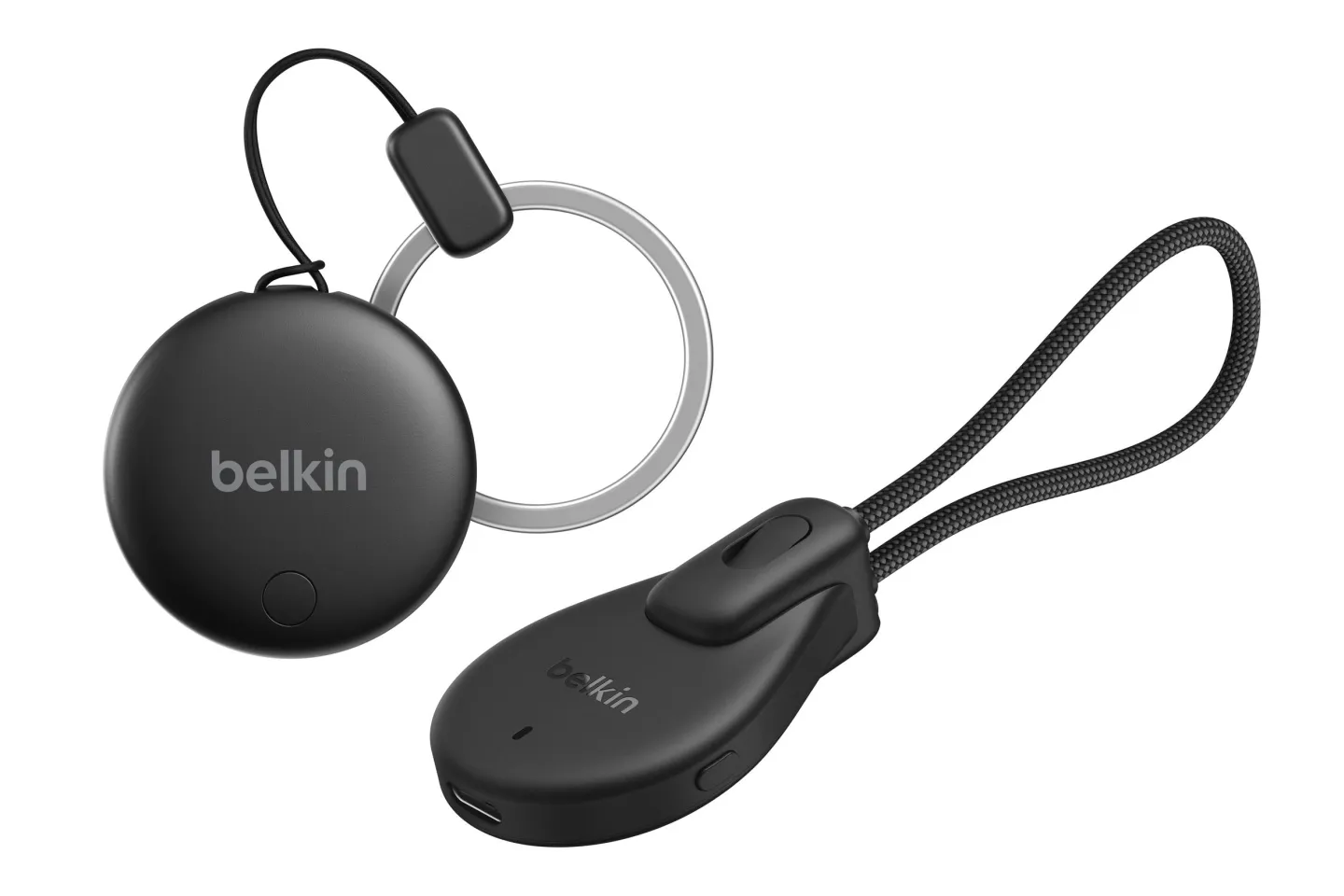
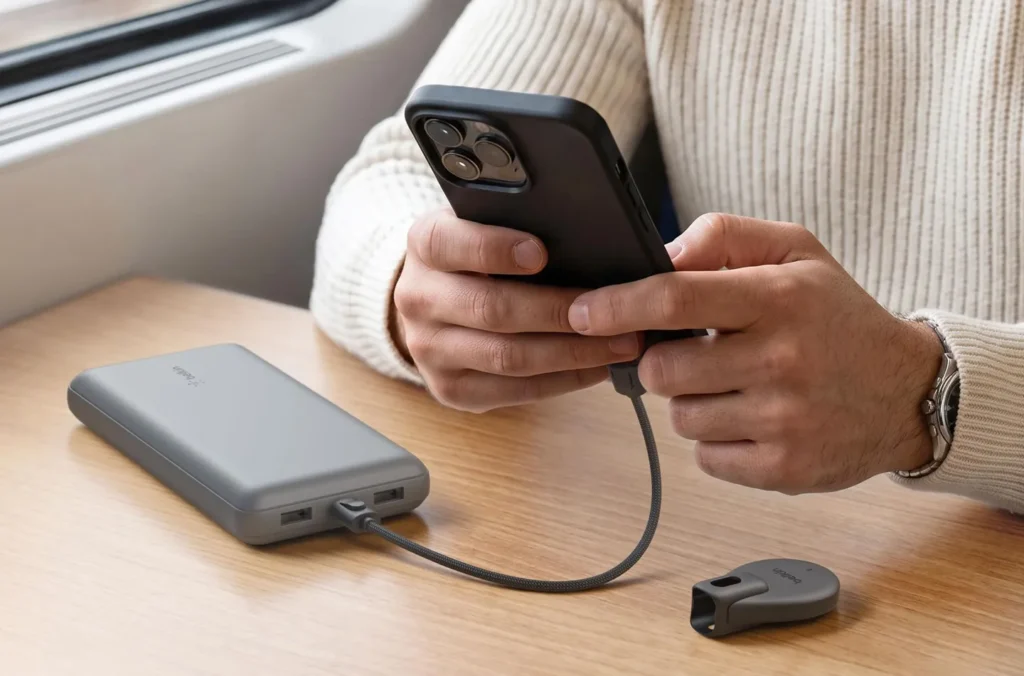
The SureFind Geolocation Device with cable, priced at $24.99 (the price in France is not yet known), adopts a more innovative approach. Its transport loop can also serve as a short USB-C to USB-C cable. This means the same element can attach the tracker to an item and then be used occasionally to connect or charge a compatible device.
This is an interesting example of a multifunctional product that does not try to add an impressive feature but instead makes useful a part that would otherwise have been purely mechanical.
For a user already carrying multiple cables and accessories, this integration can help eliminate an extra item in their bag. The Geolocation Device with cable SureFind is expected to be available later this month.
Card SureFind Aims Directly at Wallets
For users looking to track a wallet without adding a bulky piece, Belkin offers the Card SureFind at €29.99. Its format resembles that of a credit card so that it can easily slide into a conventional slot. This design is better suited for wallets than a traditional circular tracker, whose thickness can quickly become cumbersome.
The Card SureFind also features an IP68 certification, providing it with high protection against dust and immersion in water.
Belkin claims it can withstand prolonged immersion, although Bluetooth tracking obviously won’t function properly underwater. In this scenario, users will primarily need to rely on the last recorded position before losing the connection.
The Support with Integrated Cardholder Combines Tracker, Stand, and RFID Protection
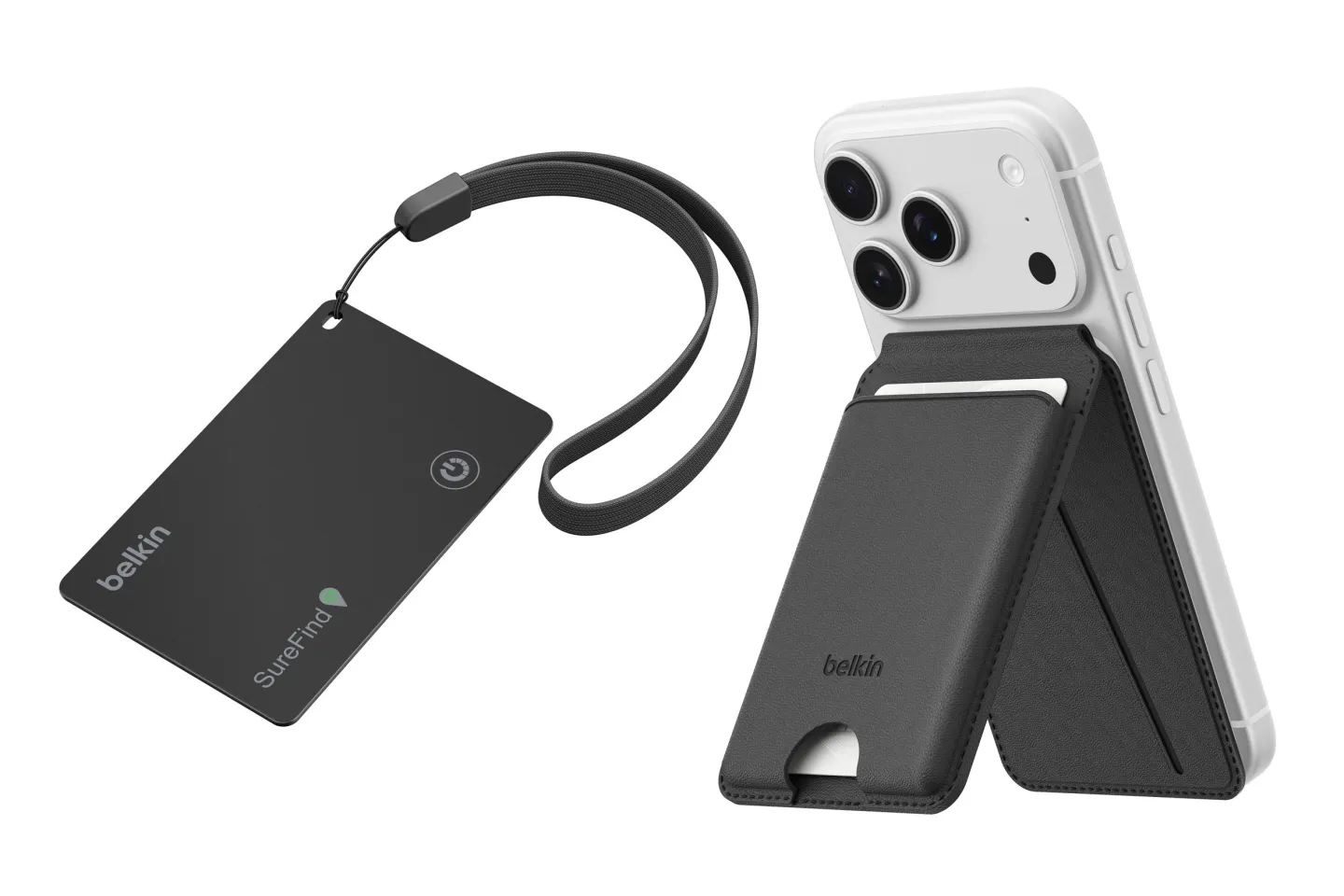
The most comprehensive product in the range is the Support with integrated cardholder SureFind, priced at $39.99 (the price in France is not yet known). It magnetically attaches to the back of a compatible smartphone and can unfold to serve as a stand.
Belkin also adds an RFID blocking feature aimed at protecting the credit cards stored in the accessory from unwanted contactless readings.
This product effectively combines three uses: magnetic wallet, smartphone stand, and location tracker. This combination explains its higher price point. However, unlike the other three models, it won’t be available until October.
Belkin Addresses a Clear Weakness of AirTags
The true appeal of the SureFind range is less technological than ergonomic. Modern Bluetooth trackers are already extremely simple to use once integrated into their location network. However, their form remains sometimes impractical. The AirTag is perhaps the most obvious example: its compact design works very well in a bag but requires an accessory to be attached to a keyring.
Belkin is well aware of this issue since it has long offered mounts for AirTags. With SureFind, it essentially transforms this experience into an integrated product.
Users no longer buy a tracker and then its accessory; the two are directly combined.
Cross-Compatibility Becomes a Strategic Advantage
Choosing to work with both Apple and Google networks could also become a real competitive advantage. Households are not always entirely composed of iPhones or exclusively equipped with Android. A family might use multiple platforms, change smartphones over the years, or share certain items among users of different ecosystems.
A tracker available in versions compatible with both major networks simplifies this transition. Belkin can thus sell the same family of products to nearly the entire mobile market without needing to develop its own community network.
This is a very different strategy from that of Apple or Google, which use their trackers precisely to enhance the value of their respective platforms.
The Pixel Tag Intensifies Competition in This Market
The recent launch of the Pixel Tag confirms that trackers are becoming increasingly strategic elements in mobile ecosystems. Google aims to replicate on Android an experience similar to that which Apple has built around Find My.
For accessory manufacturers like Belkin, this evolution opens up new possibilities. They can now offer products built around established networks rather than relying on a proprietary app with limited coverage.
The outcome is likely to intensify competition regarding pricing and formats. Trackers no longer need to be simple circular discs; they can become cards, cables, stands, or integrated accessories.
Pricing That Encourages Multiple Uses
Belkin also adopts a fairly aggressive pricing strategy. The Spot at €19.99 can easily be bought in multiple copies to outfit different items, while the Card and Support with integrated cardholder both remain below $30. This strategy makes sense for a category where interest increases with the number of trackers used.
One device can secure keys. Multiple ones can cover a bag, a suitcase, a wallet, or various frequently misplaced items. The difference will thus depend as much on the price as on the ease of installation.
And this is precisely where Belkin’s integrated attachments can make a difference.
The SureFinds do not introduce a radically different location technology. They rely on the existing networks of Apple and Google and utilize a now well-known function: finding a lost object using nearby devices.
However, Belkin optimizes everything surrounding it. A ring that’s already in place, a loop that also serves as a cable, a card format, or a magnetic wallet may seem secondary on a technical sheet. In everyday use, these small choices determine whether a tracker remains practical after several months.
Belkin seems to have chosen a very pragmatic approach: not to reinvent the location network but to make the tracker itself more user-friendly.



