

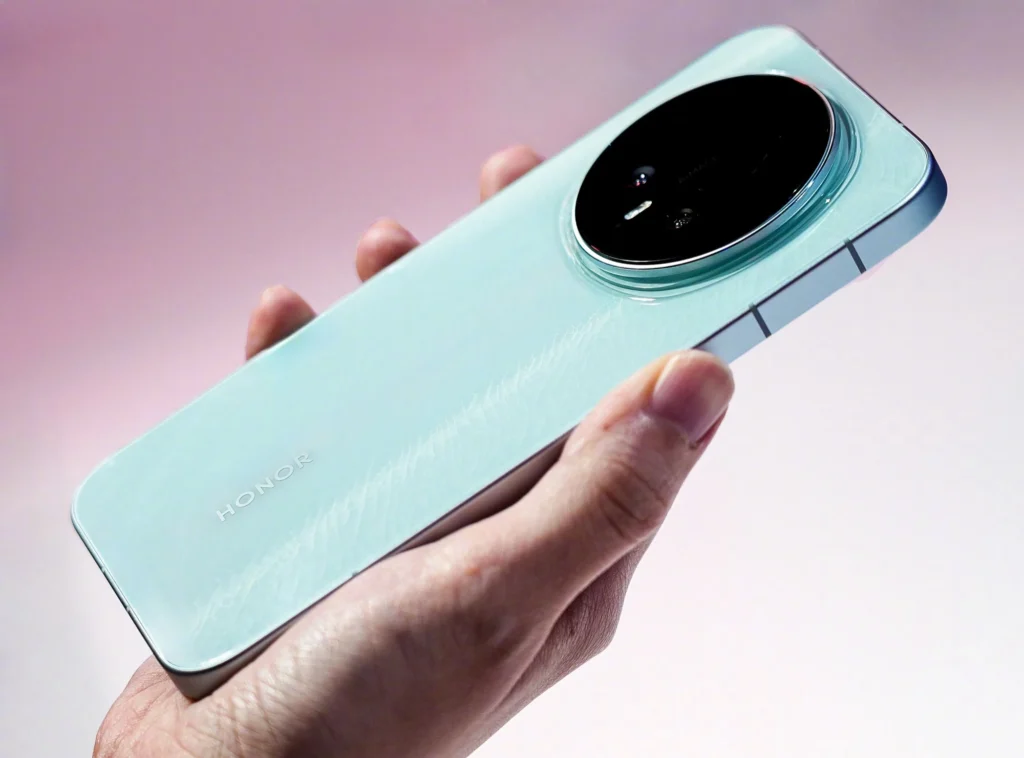
Honor Magic 9 Pro: Square Selfie Camera and Dual 200 Megapixel Sensors in the Works
Honor may be gearing up to launch one of the most unique photography smartphones of 2026. Recent leaks surrounding the Magic 9 Pro suggest an ambitious camera system, featuring dual rear sensors of 200 megapixels and, notably, a square-format selfie camera with a 1:1 aspect ratio, which could become a first for Android.
While the concept might sound unusual at first, it addresses a practical use: allowing users to frame selfies and videos more freely, without having to immediately consider the phone’s orientation. If Honor successfully brings this solution to market before its rivals, the Magic 9 Pro could set a new trend in the premium smartphone segment in China.
A Square Selfie Camera: A Potential First on Android
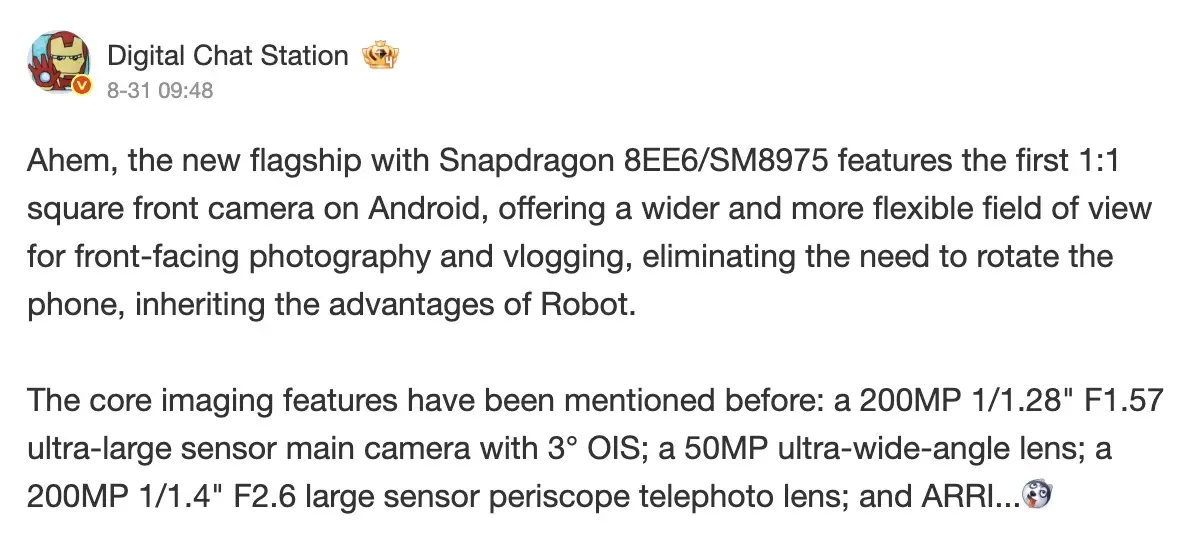
The most innovative feature involves the front camera. According to the latest leak, Honor plans to implement a perfectly square 1:1 sensor for the selfie camera. This unique geometry deviates from the traditional selfie sensor setup.
In most smartphones, the sensor is optimized for a rectangular image corresponding to a specific orientation. A square sensor provides greater flexibility for taking vertical, horizontal, or square images later on.
This is particularly advantageous for selfies and vlogging.
No Need to Choose Between Portrait and Landscape Immediately
A square sensor theoretically allows for capturing scenes with equal margins in both axes. The software can then crop the image to portrait for TikTok or Instagram, landscape for YouTube, or square for other platforms.
This means users don’t have to rotate their phone before filming, which is especially beneficial for creators who produce content in multiple formats from the same shot.
Thus, the front camera evolves into a more universal sensor rather than just a module designed for video calls.
Honor Could Outpace OPPO with This Format
This idea isn’t entirely new; leaks from spring indicated that Honor was experimenting with a square selfie sensor for the Magic 9 series. OPPO is also reportedly exploring a similar solution for its upcoming Find X10 series.
However, Honor could be the first to bring it to market. If verified, this would provide the brand with an instantly recognizable differentiator in a market where front cameras typically evolve at a slower pace than rear modules.
Vivo is Also Working on a Square Front Camera
The leaker responsible for these new insights has also mentioned that vivo is developing its own version for next year. This detail is intriguing; when only one brand tests an unusual technology, it may remain a simple prototype. However, when several manufacturers simultaneously explore the same concept, it signals an emerging trend.
The square front sensor could thus become one of the next experimental frontiers in the premium Chinese smartphone market.
The Technology Might Partially Stem from Honor’s Robot Phone
The leak also mentions technologies developed for the mysterious Honor Robot Phone. This experimental project focuses on significantly dynamic photo and video capabilities, with a strong emphasis on AI and environmental interaction.
The Magic 9 Pro could incorporate some elements from this research without adopting the complete mechanical concept of the Robot Phone.
This particularly illustrates Honor’s ambition to integrate its innovative experiments into more traditional products.
The square selfie camera could thus be one of the first tangible outcomes of this strategy.
On the Back, Honor is Preparing Dual 200 Megapixel Sensors
The main camera system is equally ambitious. The Magic 9 Pro is expected to utilize a main sensor of 200 megapixels measuring about 1/1.28 inches with an aperture of f/1.57. It will also feature optical stabilization of around 3 degrees. This module will be paired with a 50-megapixel ultra-wide sensor.
However, the true second component will be the periscopic telephoto lens, also reaching 200 megapixels.
According to leaks, the zoom module will employ a 1/1.4 inch sensor with an aperture of f/2.6. This is particularly impressive for a telephoto lens, as periscopic modules face significantly greater optical and physical constraints than a main sensor.
Using such a large sensor could greatly enhance performance in low-light conditions. It would also provide more substantial data for digital processing when extending the zoom beyond the native focal length.
The Photography Battle Could Center on the Telephoto Lens
This is precisely where the competition becomes fiercely aggressive. Vivo, OPPO, Xiaomi, and Samsung are all investing in larger and more versatile telephoto lenses. The market has recognized that the main sensor is now excellent across most flagships.
The real distinction often comes down to zoom capabilities, whether it’s 3x or 10x. A grand periscope with 200 megapixels would allow Honor to directly compete with the top photography smartphones of its generation, potentially gaining an edge over certain rivals in low-light scenarios.
Dual 200 Megapixel Sensors Do Not Guarantee Superior Photos
However, resolution remains an argument that should be put into perspective. A 200-megapixel sensor does not necessarily yield a final image of 200 megapixels. Pixel binning typically combines multiple pixels to create a cleaner and brighter image. The real advantage thus lies more in the sensor’s surface area, optical quality, and software processing than in the number touted on the specifications sheet.
Honor will need to demonstrate that its photo pipeline effectively harnesses these enormous data volumes.
The 3 Degree Stabilization Could Be Crucial
The primary sensor is expected to feature particularly generous optical stabilization. An amplitude of about 3 degrees could greatly help mitigate hand movements. This is valuable for night photography as well as video. The more stable the image on a hardware level, the less aggressive corrections the software needs to apply.
This could yield a cleaner result and maintain a broader field of view. For a flagship designed for photography, this combination can make a significant difference.
ARRI Could Provide a New Video Identity to Honor
The Magic 9 series is also expected to benefit from the partnership between Honor and ARRI. The name holds great significance in the audiovisual industry, as ARRI is well-known for professional cinema cameras and widely recognized color science.
Honor may leverage this collaboration to enhance color, video profiles, and image processing. However, we will have to wait for the official presentation to know the extent of this integration.
A brand partnership can range from simple color adjustments to more profound work across the entire image processing pipeline.
Honor is Clearly Aiming to Elevate Its Video Capabilities
For a long time, Chinese Android smartphones have primarily aimed to outperform the iPhone in photography. Video production posed a greater challenge. Apple still maintains an excellent reputation for color consistency, stabilization, and managing transitions between lenses.
Partnerships like the one between Honor and ARRI demonstrate that manufacturers now wish to bridge this gap. The Magic 9 Pro could thus be designed equally for video and photography, with the square selfie camera fitting perfectly into this creator-oriented vision.
The Snapdragon 8 Elite Extreme Gen 6 Will Power the Phone
The Magic 9 Pro is also anticipated to feature the upcoming Snapdragon 8 Elite Extreme Gen 6, identified in leaks by the reference SM8975. Qualcomm has yet to officially detail this platform, so the name, frequencies, and performance should be approached with caution. However, the positioning is clear.
Honor aims to utilize the best SoC available to support its photo, video, and AI processing needs. With three high-definition sensors, computational power becomes critical.
The Photo Processor Will Be Nearly as Important as the Sensors
Capturing an image with a 200-megapixel sensor generates an enormous amount of data. Using two in the same system demands even more power. The image processor must handle noise reduction, HDR, multi-image fusion, autofocus, stabilization, and nearly instantaneous digital reconstruction. Add to this high-resolution video and AI processing, and the SoC becomes a central component of the camera.
Honor cannot simply install large sensors; it must also have a platform capable of utilizing them without slowdown or overheating.
The Square Selfie Camera Could Become a True Creator Argument
This is likely where the Magic 9 Pro could shine most distinctly. High-end smartphones generally have exceptional rear sensors. However, creators increasingly rely on front cameras for Stories, Reels, TikTok, livestreams, and video calls. A sensor capable of easily producing multiple formats without altering the phone’s position could become a significant advantage.
While it may not be as flashy as a 100x zoom, it could prove far more practical in day-to-day use.
The Software Will Determine the True Value of the 1:1 Format
However, success will depend entirely on software integration. If Honor simply uses the square sensor as a regular camera, the advantages will be limited. The system must allow users to easily choose between various framing options.
It must keep the subject correctly centered and may utilize AI to automatically track a face and produce multiple formats from the same feed. That’s where the concept becomes genuinely interesting.
The sensor provides flexibility, and software must convert that into simplicity.
A Square Camera Could Also Enhance Digital Stabilization
The 1:1 format offers another potential advantage: the software has more room around the subject for cropping during stabilization. With traditional video, strong stabilization often means losing a significant part of the frame. With a generously sized square surface, Honor could shift the frame in several directions without aggressively cropping the final image.
This could be particularly beneficial for walking vlogs.
The Magic 9 Pro Reveals the Direction of Mobile Innovation
The race for raw performance is reaching a point where gains become less perceptible to users. All major flagships are fast, all have excellent displays, and all offer ample memory. Manufacturers are thus seeking new ways to differentiate themselves. Honor appears to be banking on the very geometry of the photo sensor.
This approach is intriguing as it does not merely rely on a higher number. It genuinely changes the way the device can be utilized.
The Chinese Launch is Expected Around October
The Honor Magic 9 series is anticipated to launch in China around October. The exact timing has not yet been officially confirmed. Many features may still be subject to change prior to the presentation.
Honor has not validated the square sensor, the two 200-megapixel modules, or the SoC mentioned in the leaks. Therefore, these details should be regarded as provisional.
Honor Could Launch a Trend
If the Magic 9 Pro indeed arrives with this setup, the smartphone could become one of the most exciting devices of the year in terms of photography. Not merely because it would accumulate megapixels, but because Honor aims to address two very different challenges. At the back, it seeks to enhance quality and versatility with large sensors. At the front, it aims to provide much greater flexibility in framing through a square format. This latter idea may be the most significant.
Smartphones have been continuously improving their cameras but have maintained nearly identical front sensor logic for years. Honor might be on the verge of demonstrating that a slight shape modification can sometimes unlock far more possibilities than simply having an even more defined sensor.



