

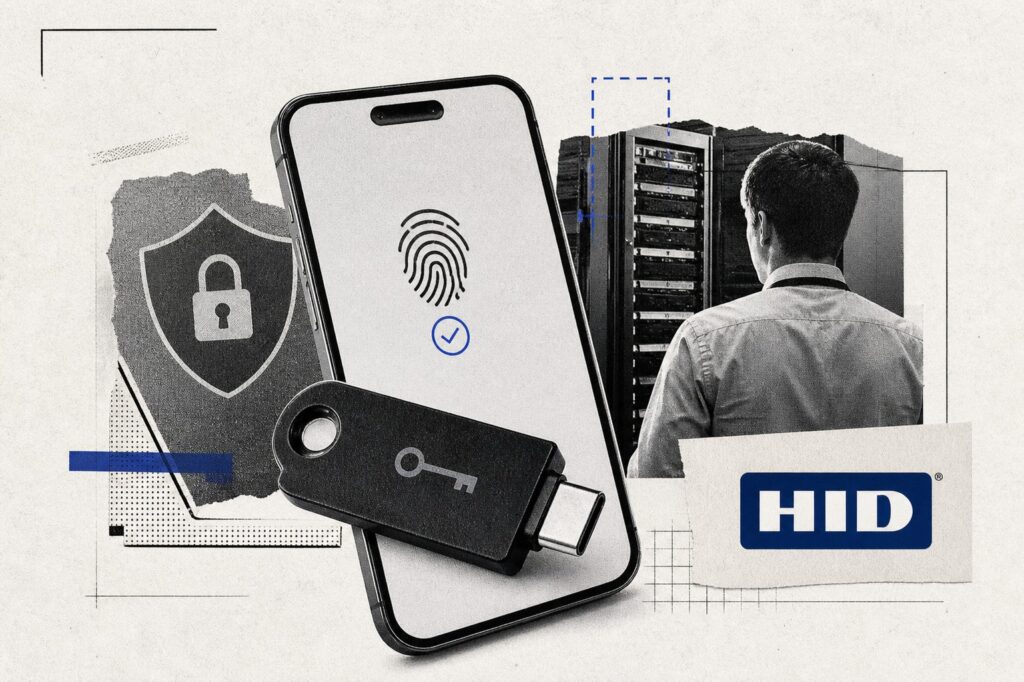
HID has launched Enterprise Attestation within its Crescendo FIDO authenticators lineup, which includes FIDO2-certified smart cards and security keys. This new feature empowers IT teams to enforce the registration of passkeys exclusively on devices issued and managed by their organization, all without disrupting the user login experience. According to the FIDO Alliance’s report on the State of Passkey Deployment in the Enterprise, nearly 20% of organizations cite regulatory compliance as a significant barrier to deployment.
Passkeys have transformed the landscape of passwordless authentication. By eliminating reusable credentials, they reduce the attack surface commonly exploited by sophisticated phishing schemes. The adoption of passkeys in enterprises has surged over the past two years, spurred by integration into major identity platforms. However, mass deployment has unveiled a critical blind spot identified by security teams: control over the devices generating these credentials. A passkey’s security is intrinsically linked to the device it resides on, raising concerns about managing the inventory of authenticators effectively.
In the absence of a device provenance verification mechanism, employees could register personal authenticators on corporate accounts. Without a centralized IT policy, organizations struggle to differentiate personal devices from internally issued equipment, leading to a porous boundary between managed and personal assets—precisely where protection is needed. Enterprise Attestation bridges this gap by shifting the focus from user identity to device identity.
### A Verification Touchpoint Before Credential Registration
The Enterprise Attestation mechanism activates precisely when a device requests to register a passkey on a corporate account. Before accepting the identifier, the system verifies that the authenticator can present valid attestation data, confirming its origin. If the device fails this verification, the registration is blocked by policy. This approach emphasizes front-end verification rather than post-hoc anomaly detection.
This strategy stands in stark contrast to systems that permit any authenticator registration and later attempt to identify discrepancies through behavioral analysis or periodic audits. By enforcing control at the registration stage, organizations can mitigate their exposure without introducing friction into application workflows. Applications themselves do not require modification, as policies apply at the authenticator level.
IT teams benefit from an auditable, verifiable registry of every device granted access. Meanwhile, users face no additional steps in their login process. HID positions this dissociation as a central advantage of the feature, ensuring that organizational control and user experience coexist harmoniously.
### Regulatory Obligations as a Driving Force
Sectors bound by European regulatory mandates find in Enterprise Attestation a direct method to meet equipment auditability and traceability requirements. The NIS2 directive compels affected organizations to manage risks related to information systems and digital access. Similarly, the DORA regulation mandates digital operational resilience and documented access traceability for financial institutions. Enterprise Attestation provides the necessary controls to support compliance with both frameworks, making trust in devices explicit and defendable during audits.
For industries such as finance, healthcare, and critical infrastructure, the stakes extend beyond simply reducing phishing risk. The ability to prove, during checks, that each registered identifier originates from an organization-issued device stored in a central registry is paramount. According to the FIDO Alliance report, 20% of organizations cite strict regulatory compliance as a key hurdle to their passkey deployment. Enterprise Attestation addresses this challenge by ensuring audit-friendly traceability.
Zero Trust strategies also find a direct application here. A Zero Trust architecture operates under the assumption that no device is inherently trustworthy. Enterprise Attestation provides a mechanism to enforce this principle at the authenticator level, clarifying what access policies could previously only approximate.
### Open Governance with No Vendor Lock-In
Enterprise Attestation is built on the open specifications from the FIDO Alliance, including WebAuthn and CTAP (Client to Authenticator Protocol), and receives active support from the FIDO Alliance Enterprise Deployment Working Group. This standardized foundation ensures interoperability with market identity platforms supporting these protocols, such as PingOne. Organizations implementing this functionality do not fall into a proprietary authentication flow or depend on a single vendor.
The governance policy for devices applies across target applications without requiring changes to existing workflows or migrating current authenticators. Deployment can be gradual, avoiding disruption in production environments.
### Retail as an Initial Testing Ground
HID cites a large retail group that was already limiting passkey registration to approved authenticator models. With Enterprise Attestation, this restriction now transitions from a declarative level to a technical one. When a device attempts to register, the system checks for a certificate confirming that the authenticator was issued by the organization. If this certificate is absent, registration is blocked. The group now maintains an auditable and verifiable record of every device that has accessed its systems.
Large-scale passkey deployments frequently encounter the gap between declared IT policy and actual ground-level application. Organizations that have deployed passkeys without attestation control end up with a mixed inventory of authenticators, comprising both managed devices and personal equipment, without a reliable audit capability. Enterprise Attestation enables a resolution without imposing forced migrations on existing users.
HID Crescendo authenticators with Enterprise Attestation are now available in France and internationally. The feature is compatible with identity platforms adhering to FIDO2 and WebAuthn standards. HID has not provided separate pricing for Enterprise Attestation, as it is integrated into the existing Crescendo lineup.



