

Redmi Note 17 Pro: Xiaomi focuses on a massive 8,340 mAh battery starting at $400
Xiaomi officially announces the Redmi Note 17 Pro for international markets, alongside an even more ambitious Redmi Note 17 Pro Max. This new generation doesn’t revolutionize the display or photography, but it significantly rethinks two core elements in the mid-range segment: battery life and energy efficiency.
With a silicon-carbon battery of 8,340 mAh, 67 W charging, and a new Snapdragon 6s Gen 4 processor, the Redmi Note 17 Pro aims to provide exceptionally long-lasting performance without inflating its weight or price. It starts at $400.
A Battery of 8,340 mAh in a Smartphone Under 8 mm
Undoubtedly, the battery is the standout feature. The Redmi Note 17 Pro boasts a battery capacity of 8,340 mAh, a figure that was once unimaginable in a relatively standard smartphone. Xiaomi employs silicon-carbon technology, which has become a key advancement in the Android market in 2026, allowing for increased energy density without proportionately thickening the chassis.
As a result, the smartphone maintains an approximate thickness of 7.9 mm and weighs 183.7 grams. On paper, this might be one of the most impressive aspects of this generation.
Up to 28 Hours of Video Playback Announced
Xiaomi claims up to 28 hours of video playback on a single charge. As always, this figure will vary based on usage conditions, screen brightness, network, and applications in use. However, even considering these variables, a battery exceeding 8,000 mAh should provide a significant advantage over traditional smartphones that have 5,000 to 5,500 mAh capacities.
The Redmi Note 17 Pro could easily support a full day of intense use, or even more for lighter users.
This evolution also highlights how battery life has become a new battleground in the Android arena.
67 W Charging and 22.5 W Reverse Charging
Wired charging reaches 67 W. While this isn’t the highest level offered by Xiaomi, it remains consistent with the model’s positioning. The battery can also provide up to 22.5 W in reverse charging. This function effectively turns the phone into a power bank.
Users can now charge earbuds, a smartwatch, or even another smartphone using the Redmi Note 17 Pro. With over 8,000 mAh available, this feature makes much more sense than in a conventional phone.
The Snapdragon 6s Gen 4 Replaces the Previous Generation
Xiaomi has also adopted a new Qualcomm platform. The Redmi Note 17 Pro is powered by the Snapdragon 6s Gen 4. This chip doesn’t aim to compete with the Snapdragon 8 Elite, but rather seeks to balance performance, consumption, and cost.
It is paired with 6, 8, or 12 GB of LPDDR4X RAM. The storage capacity can reach 512 GB. The 256 and 512 GB versions use UFS 3.1, while the 128 GB variant is limited to the slower UFS 2.2.
This distinction should be considered when choosing a configuration.
The Display Changes Little but Remains Competitive
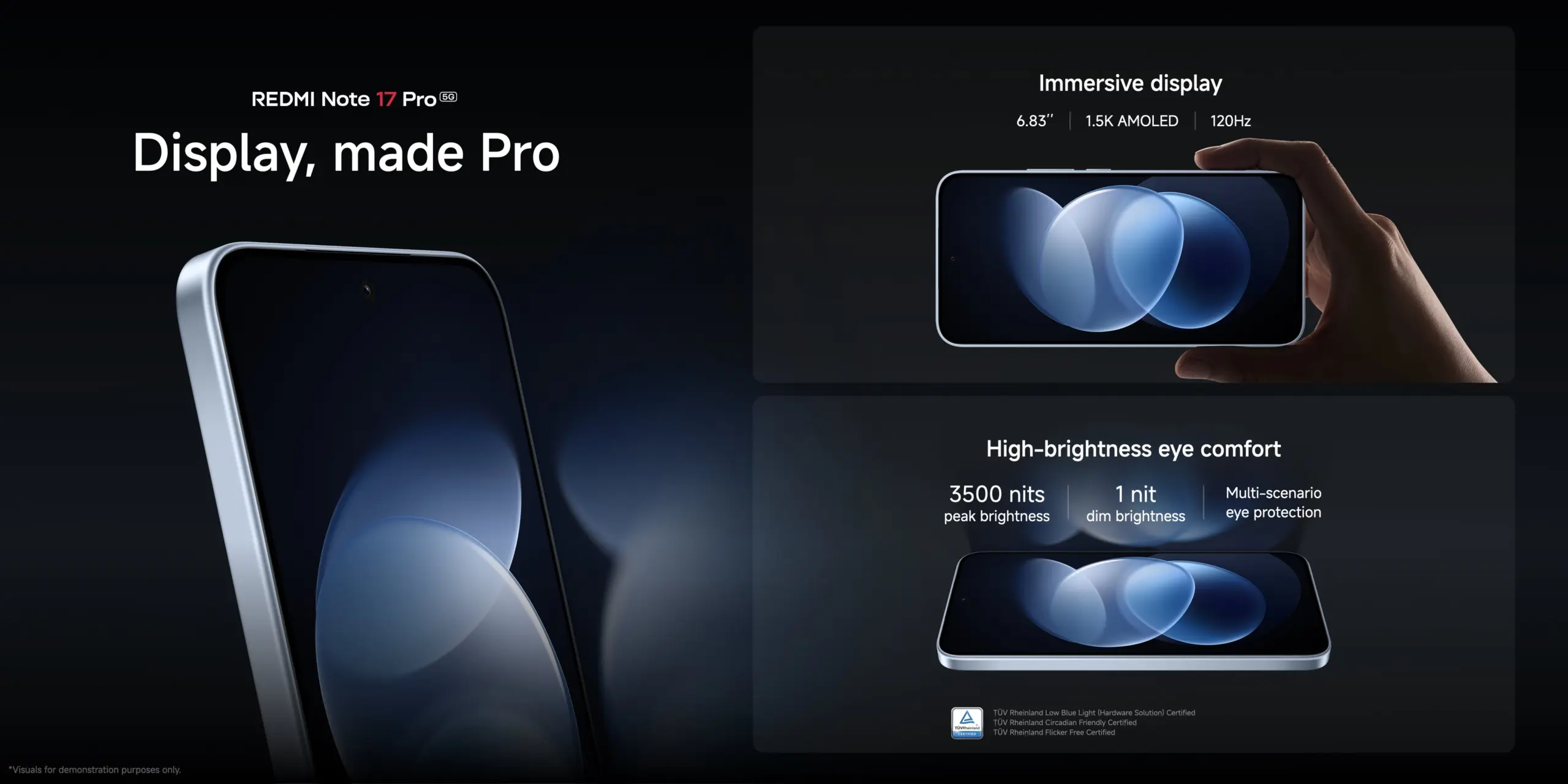
The display undergoes minimal changes. The Redmi Note 17 Pro retains a 6.83-inch OLED panel with a resolution of 1,280 x 2,772 pixels, a refresh rate of 120 Hz, and supports a 12-bit color depth with a maximum brightness of 3,500 nits under specific conditions. Protection is provided by Corning Gorilla Glass Victus 2.
Thus, it doesn’t represent a revolution compared to the previous generation, but the specifications remain very solid for a smartphone priced around $400.
Xiaomi Continues to Enhance Durability
The Redmi Note 17 Pro is also equipped with IP66 and IP68 certifications. It is resistant to dust and can withstand immersion in water according to the conditions defined by these certifications. Additionally, Xiaomi claims the device successfully passed a test of immersion at a depth of three meters for up to 72 hours. However, it is essential to distinguish these internal tests from the standard conditions covered by the IP certification.
The Pro Max model goes a step further with an IP69K certification, which is absent here. However, this is still a welcome improvement for a range historically less resilient than flagships.
A 50-Megapixel Main Camera
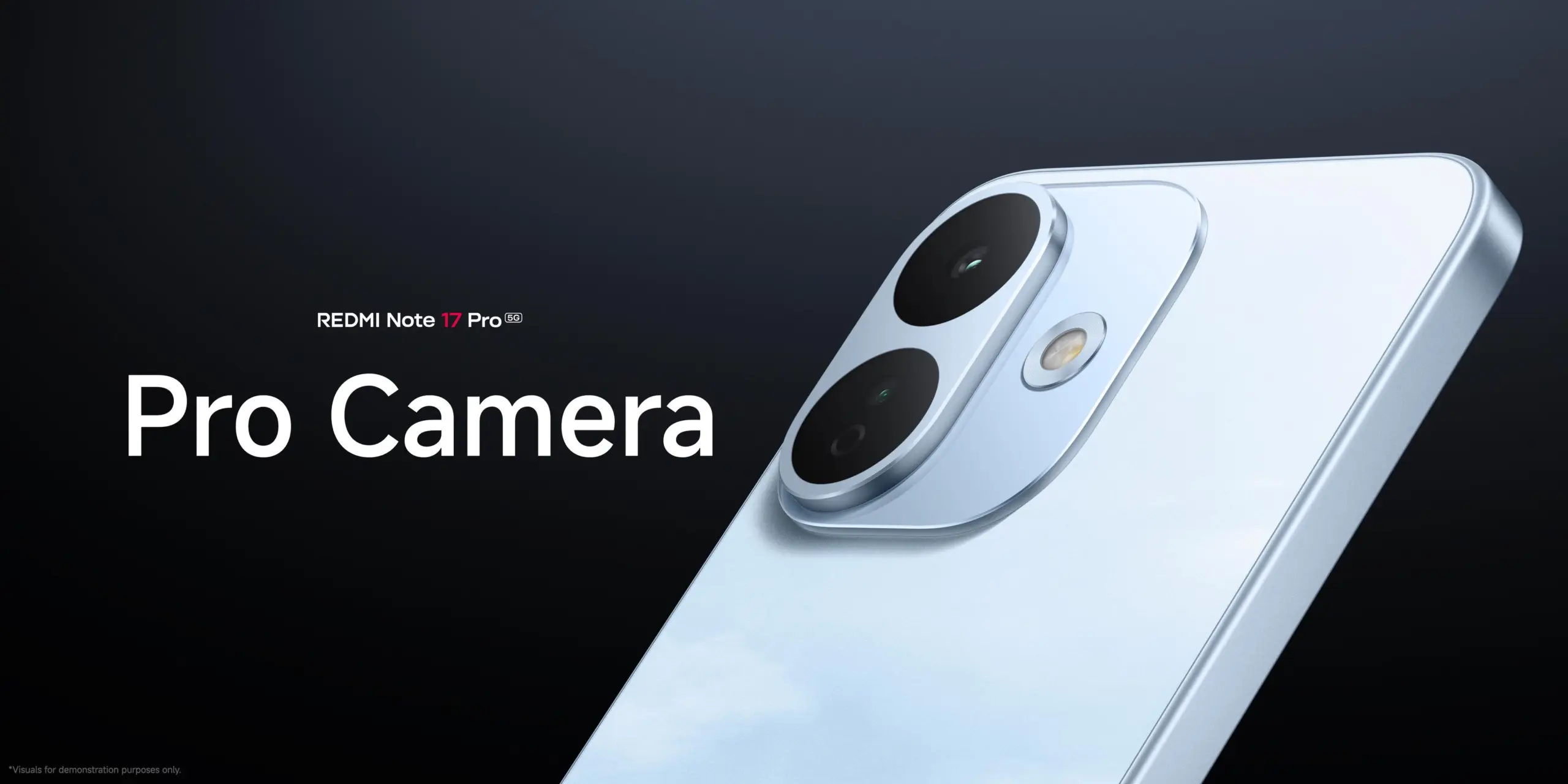
The photography department remains relatively standard. The Redmi Note 17 Pro features a 50-megapixel main sensor with optical image stabilization (OIS), accompanied by an 8-megapixel ultra-wide lens. The front camera offers 16 megapixels. Xiaomi is not attempting to turn this model into an ultra-ambitious photography phone.
The majority of the investment seems clearly directed towards the battery, efficiency, and robustness. This could indeed be a sound strategy in this segment, where buyers often prioritize battery life over the presence of four less useful sensors.
Stereo Speakers with Dolby Atmos
The audio system includes two speakers compatible with Dolby Atmos. Xiaomi also introduces a mode capable of increasing volume by up to 300%. This feature mainly targets noisy environments or use cases without headphones. However, the 3.5 mm jack has been removed, leading users to rely entirely on USB-C or Bluetooth for audio devices.
The wireless connectivity utilizes Bluetooth 5.1, which is surprisingly conservative for a device launched in 2026.
HyperOS 3 Pre-installed at Launch
The Redmi Note 17 Pro comes with HyperOS 3. Xiaomi also promises six years of security updates. This approach is significant for a mid-range device. Android manufacturers have traditionally reserved their best software commitments for flagships, but the landscape is changing rapidly.
Samsung and Google have significantly raised market standards, prompting Xiaomi to extend its support duration for more affordable devices as well. It remains to be seen how many major Android versions will be included in this cycle.
Four Colors at Launch
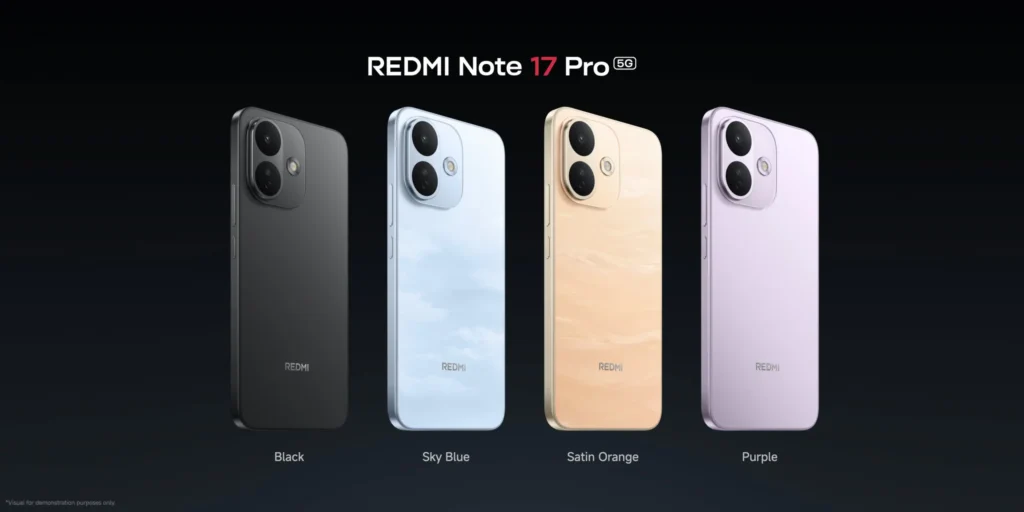
The Redmi Note 17 Pro will be available in multiple finishes. Xiaomi announces Sky Blue, Satin Orange, Purple, and Black. The range is, therefore, relatively varied, featuring two subtle options and several more expressively colored ones.
The smartphone is also available in various configurations, combining RAM and storage, allowing Xiaomi to maintain an aggressive entry price while offering more generous versions.

$400: Xiaomi Remains Aggressive Despite Rising Component Costs
The starting price is set at $400. This is where the product becomes particularly intriguing. The smartphone market is currently facing increased costs for many components, especially memory.
Yet Xiaomi manages to offer a massive battery, a 120 Hz OLED display, IP68 certification, and storage capacities reaching 512 GB—all within a price range that remains significantly lower than that of flagships.
The compromise mainly lies in the processor, the secondary cameras, and some connectivity technologies.
The Real Competition Now Lies in Battery Life
The Redmi Note 17 Pro illustrates an increasingly clear trend. For years, manufacturers competed on megapixels, display refresh rates, or charging speeds. In 2026, the new battleground focuses on energy density. Silicon-carbon batteries now allow for exceeding 7,000 or 8,000 mAh without turning the smartphone into a brick.
Several Chinese brands have already embraced this technology, and capacities continue to rise. The Redmi Note 17 Pro makes this advancement accessible to a much broader market.



