

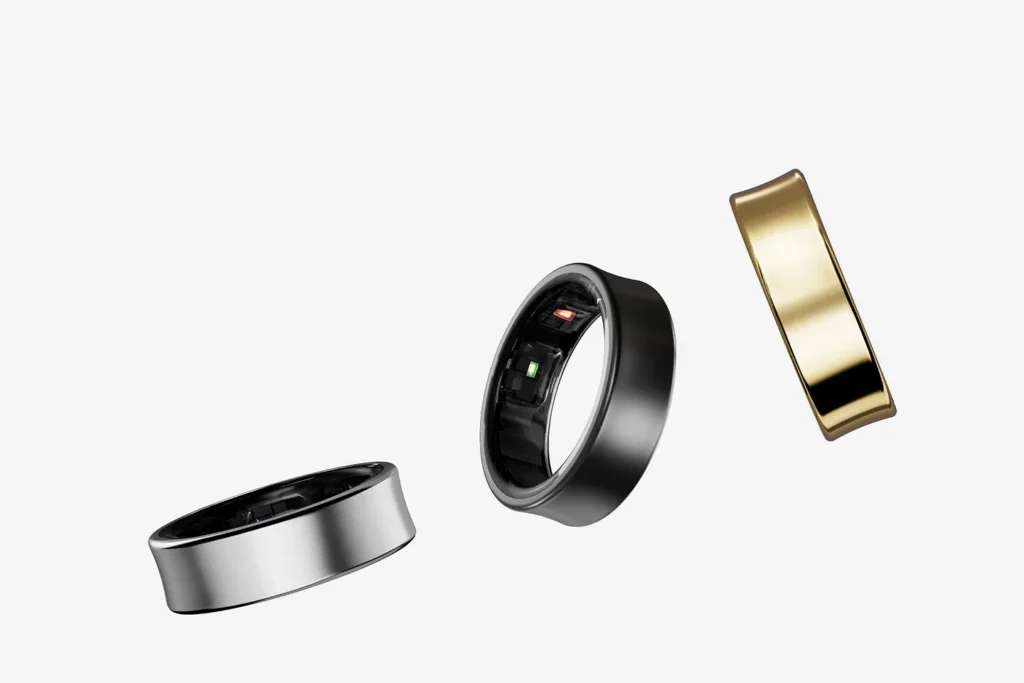
Galaxy Ring 2: Samsung preparing a thinner and more durable connected ring
Nearly two years after the launch of the first Galaxy Ring, Samsung appears to be taking its time in preparing the sequel, the Galaxy Ring 2. This delay might not just be an industrial setback, but rather a sign of a deeper rethinking of its vision for health wearables.
A Second Generation Designed to Address the Limitations of the First Model
According to latest rumors from Korea, Samsung is reportedly well advanced in the development of the Galaxy Ring 2. The goal is clear: to enhance the weaknesses of the first generation, particularly in battery life, sensor accuracy, and everyday comfort.
The new ring is said to be thinner, lighter, and more comfortable to wear, while providing superior battery life. Where the current Galaxy Ring offers up to seven days of use, its successor might reach nine to ten days, depending on the configurations.
Sleep, Cardiovascular Health, and More Accurate Sensors
Samsung aims to enhance the health aspect of its connected ring. The Galaxy Ring 2 might offer more reliable sleep analysis, improved temperature sensors, and advanced cardiovascular indicators.
There are also rumors of a potential non-invasive glucose measurement technology. However, caution is warranted: such a feature would depend on strict regulatory approvals and is far from guaranteed.
Galaxy Ring 2: Launch Delayed to 2027?
While some whispers suggested an unveiling as early as summer 2026 alongside the upcoming Galaxy Z Fold and Z Flip, this scenario now seems unlikely. Samsung is reportedly aiming for a launch in early 2027, possibly alongside the Galaxy S27 lineup.
This extended timeline could allow the brand to better position its ring within a more cohesive health ecosystem, integrating Galaxy AI, Samsung Health, and Galaxy Watch.
A Ring Designed as a Link in the Galaxy Ecosystem
Samsung’s strategy doesn’t aim to replace the smartwatch but rather to complement its role. The Galaxy Ring 2 would focus on passive tracking, sleep monitoring, and long-term health data collection, while the Galaxy Watch would remain dedicated to sports, notifications, and applications.
This is precisely where the product could fit in: less intrusive than a watch, more discreet at night, and potentially more suitable for continuous monitoring.
Samsung Still Has a Card to Play
The market for connected rings remains niche, but it is gaining credibility. With its Galaxy ecosystem, hardware experience, and ambition in connected health, Samsung has the potential to transform the Galaxy Ring 2 into much more than just an accessory.
If the first generation was a statement of intent, the second could represent a maturation of this technology.



