Chrome Android introduces approximate location sharing for enhanced privacy
For a long time limited to a binary option, location management in browsers is finally evolving. With the
Chrome: A much-anticipated feature in the Android ecosystem
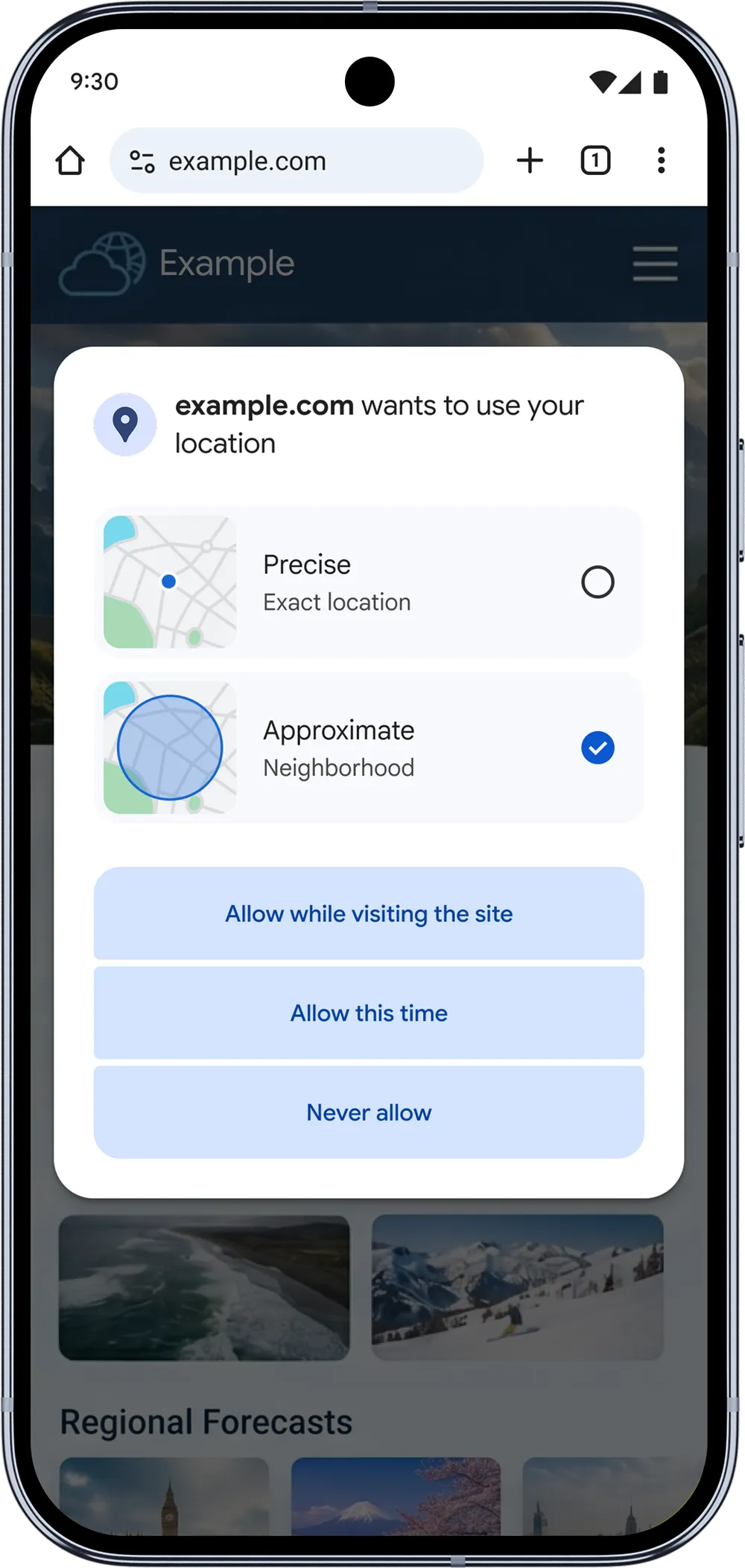
On Android, Google is rolling out a new option in Chrome: the ability to choose between precise location and approximate location when websites request access.
Previously, the process was straightforward: users either allowed sharing their exact location or completely declined. This “all or nothing” approach quickly showed its limitations, particularly for applications that don’t require pinpoint accuracy.
With this update, Chrome introduces a welcome granularity directly in the permission window. Specifically, a site can now operate using a broader location — at the scale of a neighborhood or city — without accessing exact GPS coordinates.
A logical evolution in digital usage
Behind this new feature lies a simple reality: not all services require the same level of precision. A navigation or delivery app demands accurate location data, whereas a weather site or local media might only need an approximate area.
This new setting allows for a tailored sharing experience based on actual use, thus limiting data over-collection, a recurring issue in the digital economy.
By integrating this option directly into Chrome, Google streamlines a logic already started at the Android system level, yet previously absent from the browser itself.
A discreet but strategic shift for privacy
What may seem like a simple button is actually a structural correction. Location data is among the most sensitive information accessible by a browser. For years, many websites have requested — and received — excessive precision by default.
With this update, Google empowers users with more control, while implicitly guiding web developers towards more appropriate practices.
This change happens within a broader context marked by increasing scandals related to data misuse, heightened awareness regarding malicious extensions, and growing regulatory pressure in Europe and beyond.
In this light, approximate location sharing appears less as an innovation and more as a necessary upgrade.
Towards expansion on desktop
Currently limited to Android, this feature is expected to expand to desktop versions of Chrome in the coming months. This cohesive evolution could redefine permission management standards across the web. It remains to be seen if this initiative will influence other browsers — such as Safari or Mozilla Firefox — which have already adopted a stricter privacy approach.
While this functionality does not revolutionize web browsing, Google refines a crucial balance: that between utility and privacy.
As users become increasingly aware of the value of their data, such adjustments could very well become the norm. A silent evolution, yet indicative of a web that is finally learning to measure its approach.