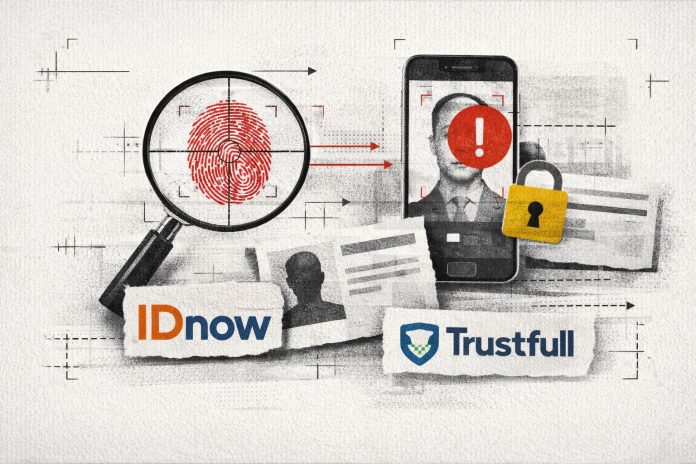
Identity verification during the onboarding process has long served as the primary bulwark against online fraud. However, this model is now outdated. European identity verification leader IDnow has partnered with Trustfull, a fraud prevention specialist, to extend risk assessment far beyond the initial engagement: now it occurs at every authentication and interaction throughout the customer lifecycle.
<p>Digital fraud has fundamentally evolved, with attacks no longer limited to sign-up moments. They exploit vulnerabilities throughout the customer journey, from creating fake profiles to account takeovers occurring weeks or months after initial onboarding. In light of this reality, traditional KYC (Know Your Customer) checks, no matter how thorough, only address a fraction of the actual risks faced by financial organizations, telecom operators, and digital platforms.</p>

<p>The partnership between IDnow and Trustfull aims to address this structural gap by combining two complementary layers of analysis. Simon Peralta, VP of Global Partners & International Sales at IDnow, articulates the integration's rationale: "The threat landscape has never been more complex, and risks can arise at any stage of the customer journey. By aggregating high-quality signals from partners like Trustfull into a single platform, we provide our clients with a consolidated view of risk to inform their decisions, eliminating the complexities associated with managing multiple vendors."</p>

<h4><strong>Real-Time Detection at Every Touchpoint</strong></h4>

<p>Trustfull contributes its real-time digital attribute analysis capabilities to the collaboration. The platform evaluates a range of signals—covering email addresses, phone numbers, devices, IP addresses, and browsing data—during each interaction. This analysis allows for the detection of compromise indicators characteristic of sophisticated fraud schemes, such as the use of disposable credentials, device spoofing, and proxies that obscure the user's true location.</p>

<p>These behavioral and technical signals continuously enrich the risk profile of each user, initially created during the identity verification at onboarding. The combination of both layers generates an evolving representation of the user, updated with every touchpoint, rather than one that remains static from the moment of initial contact. Alex Tonello, SVP of Global Partnerships at Trustfull, highlights the significance: "This partnership with IDnow reflects a growing market need for multi-layered fraud prevention, where identity verification is enhanced by broader digital intelligence to provide increased protection for organizations."</p>

<h4><strong>A Foundation for Data Integration and Correlation</strong></h4>

<p>The technical architecture of the partnership revolves around the IDnow Trust Platform, which serves as a layer for aggregation and correlation. This platform provides unified access to various identity verification methods and Trustfull's fraud signals, establishing real-time connections between them. Correlating data related to identity, behavior, and devices allows for risk decision-making tailored to each stage of the customer journey, achieving a level of granularity that single-provider approaches cannot offer.</p>

<p>For CIOs and CISOs in the financial and telecom sectors, the single-platform architecture addresses a critical operational need: reducing the management complexity associated with multiple fraud signal providers while maintaining the analytical depth necessary to detect the most sophisticated attacks. The platform is designed to integrate with existing authentication and identity management systems without significant architectural overhauls.</p>

<h4><strong>eIDAS 2.0, AMLR, PSD3: A Commitment to Ongoing Compliance</strong></h4>

<p>This partnership unfolds within a rapidly evolving European regulatory landscape. eIDAS 2.0 expands the requirements for digital identity verification to a wider array of online services and imposes high assurance levels for sensitive transactions. The AMLR, the European anti-money laundering regulation currently being phased in, strengthens customer due diligence obligations and mandates continuous transaction monitoring. PSD3, which follows the Payment Services Directive, tightens strong authentication requirements and fraud detection mandates.</p>

<p>The continuous risk assessment approach championed by IDnow and Trustfull aligns with this regulatory direction: shifting from static compliance established at onboarding to dynamic compliance that is maintained and informed with each interaction. For financial institutions and payment service providers subject to these frameworks, this capability represents a functional compliance argument as well as a tool for reducing fraud-related losses. IDnow, operating in Germany, the UK, Romania, and France, alongside Trustfull, which activates its digital intelligence at every point in the customer journey regardless of the underlying verification solution, are collectively building a response for a market where piecemeal solutions have shown their limitations.</p>