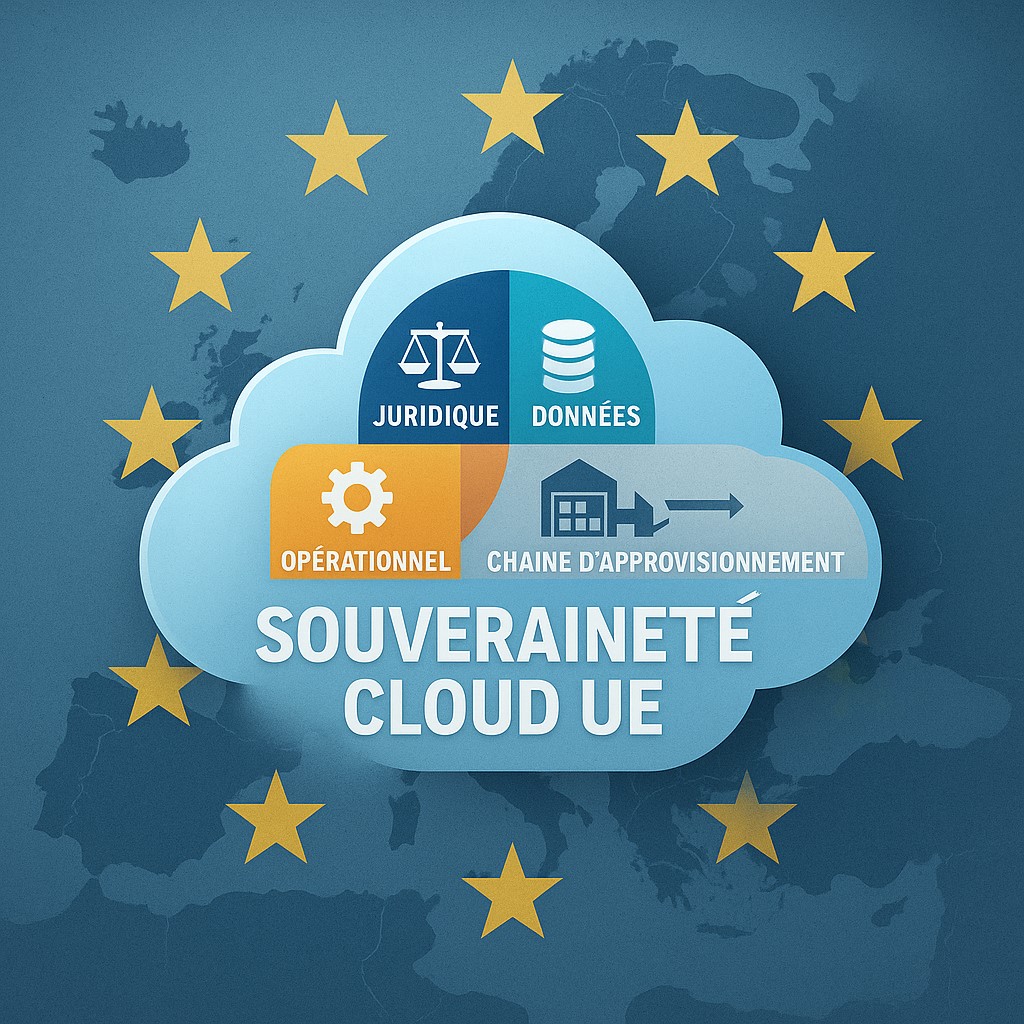
FnTC Urges European Businesses to Transition Sensitive Data to Sovereign Providers
During the recent Digital Trust Summit, the Federation of Digital Trust Third Parties (FnTC) called on companies to migrate their critical informational assets to certified sovereign providers. The organization proposed four key strategies aimed at transforming regulatory ambitions into actionable operational measures, especially in light of growing technological dependencies and regulatory fragmentation.
For over a decade, French companies have increasingly outsourced a significant portion of their strategic data to digital infrastructures largely controlled by non-European entities. This trend, driven by desires for scalability, performance, and flexibility, has reached a critical tipping point. According to a 2025 study by Cigref and Asterès, three American firms dominate more than 80% of the cloud market in Europe. A European Commission investigation launched on November 18 against two of these tech giants highlights the competitive risks posed by this concentration.
The type of sensitive information at stake includes legal archives, HR data, strategic plans, industrial research, and patents. Under the American Cloud Act, U.S. authorities can access these data without prior notification. Furthermore, the massive outage experienced by AWS in October 2025 underscored the direct operational dependency, sparking cascading effects on business continuity. The FnTC emphasizes the urgent need to relocate critical data to certified sovereign infrastructures capable of ensuring compliance with European legal standards.
A Three-Prong Regulatory Shift Still in Flux
The ongoing regulatory transformation in Europe regarding digital issues hinges on three major areas. The implementation of the AI Act, set for 2025, requires companies to prepare for obligations governing high-risk systems. However, the recently proposed Digital Omnibus Regulation suggests a gradual extension of these requirements to late 2027 or even 2028. Until the final text is adopted, businesses face prolonged uncertainty regarding timelines and compliance levels. According to KPMG, 83% of French organizations believe they lack the internal expertise necessary for effective preparation.
Additionally, the European digital identity wallet initiative, intended for rollout by late 2026, is falling behind schedule. Only about 400 organizations are participating in pilot projects, a stark contrast to the 32 million entities targeted. Lastly, the reform of electronic invoicing, set to become mandatory by September 2026 for all businesses, necessitates the establishment of certified archiving compliant with the NF Z42-013 standard. Each of these three areas highlights a common challenge: without robust, interoperable sovereign infrastructures, meeting compliance obligations becomes unrealistic.
European Initiative Struggling for Credibility
Beyond political rhetoric, the pursuit of European digital sovereignty is struggling to gain traction. A survey conducted in November revealed that only 16% of European citizens are optimistic about the EU’s ability to achieve digital autonomy within the next five years. This skepticism reflects not only technical delays but also challenges in adopting trustworthy solutions and the fragmented landscape of service providers. While the development of a sovereign provider ecosystem is advancing, it remains hampered by a lack of clear operational directives for businesses. The FnTC aims to address this fragmentation with a precise roadmap.
To catalyze progress, the FnTC has proposed four structural measures. The first is a national call for migrating critical data, underpinned by a mapping of sensitive assets and a phased transition plan leading up to 2028. The goal is to have 60% of critical data hosted on sovereign infrastructures by 2030. The second initiative involves creating a Trustworthy AI label, which would guarantee data origin, model transparency, and decision traceability. This label would rely on rigorous audits and would spotlight trusted third parties specializing in AI.
Mobilizing the French Ecosystem Before 2026
The third recommendation focuses on enhancing the visibility of the NF Z42-013 standard among approved platforms as part of the electronic invoicing reform, ensuring legal security and probative value. Finally, a national awareness campaign for the European digital identity wallet, launching in 2026, would facilitate the adoption of this vital initiative by both businesses and citizens.
By advocating for a structured yet gradual migration of informational assets, the FnTC champions a pragmatic approach to sovereignty. The objective is not to construct a theoretical pan-European cloud but to leverage existing competencies to safeguard sensitive data, secure digital exchanges, and uphold the exclusive application of European law. This strategy relies on a network of certified providers, an adapted regulatory framework, and unequivocal public sector support. The window for action is narrow: without swift momentum, the decade from 2026 to 2036 may solidify an irreversible dependency.