The European Commission has unveiled its technological sovereignty package, a comprehensive set of measures focusing on semiconductors, artificial intelligence (AI), cloud computing, and open source software. This package includes two key legislative proposals: the Chips Act 2.0 and the Cloud and AI Development Act, as well as a strategy for open source and a roadmap for the digital transformation of the energy sector. Central to the Cloud and AI Development Act is the establishment of a unique European framework for cloud and AI sovereignty, featuring four levels of assurance.
Currently, over 80% of digital products, services, infrastructure, and intellectual property used within the European Union are sourced from third countries. Notably, three American providers—AWS, Microsoft Azure, and Google Cloud—command about 70% of the European cloud market, governed by the U.S. Cloud Act, which allows American authorities to demand data regardless of where it is stored. The European Commission aims to reduce this dependency with the technology sovereignty package announced on June 3, 2026, a vision initially outlined by Ursula von der Leyen, President of the Commission, in her 2025 State of the Union address.
The package consists of four key components. The Chips Act 2.0 seeks to bolster capabilities in advanced semiconductor technologies, streamline authorization processes, strengthen partnerships with allied countries, and establish a certification label for European semiconductor regions. The Cloud and AI Development Act focuses on cloud and AI infrastructure. The open source strategy aims to cultivate open alternatives in priority areas and promote their use within government administration. Meanwhile, the roadmap for digitalization and AI in energy integrates data centers into the electrical system and outlines sovereign AI models for the sector. Collectively, these measures complement the competitiveness compass and the economic security strategy, while extending the action plan for an AI-enabled continent.
A Four-Tier Assurance Framework for Sovereignty
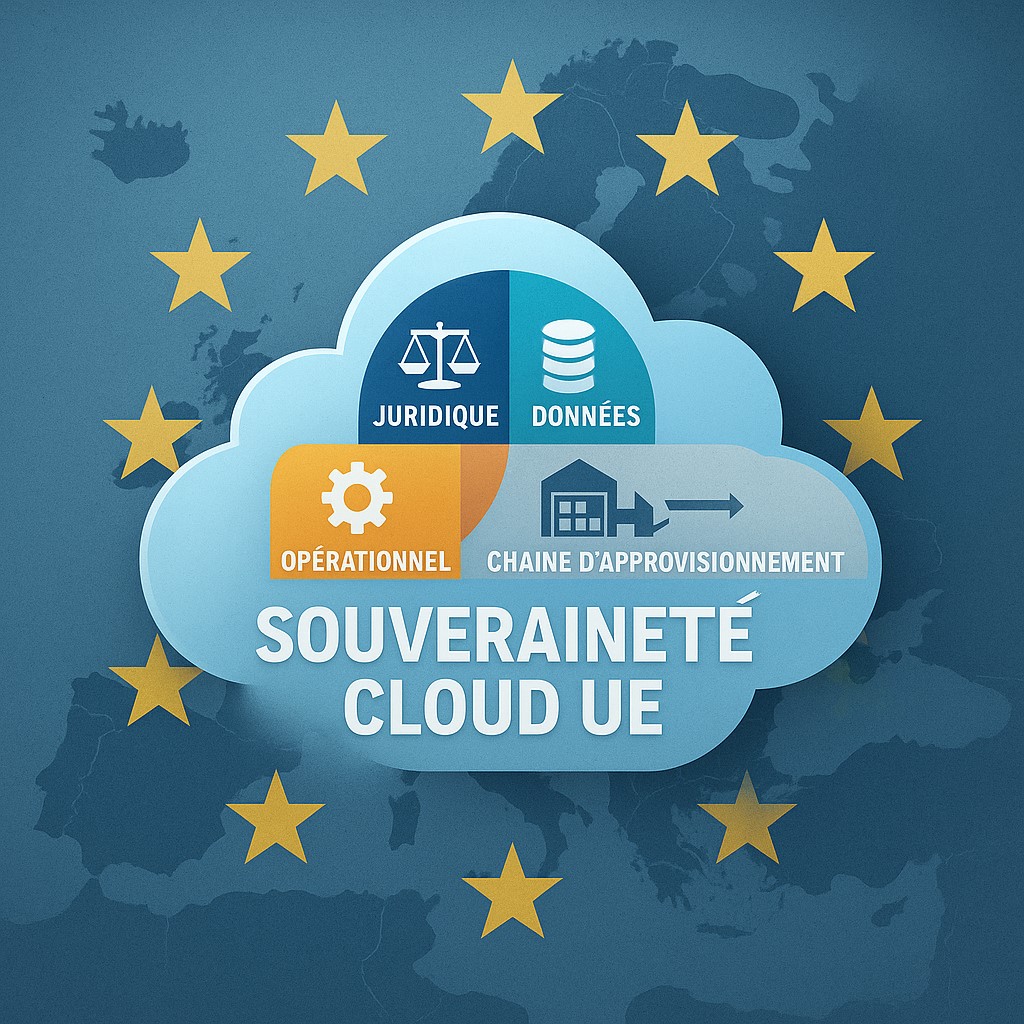
The most far-reaching provision for IT decision-makers can be found in the Cloud and AI Development Act, which defines cloud and AI sovereignty for the first time within a unified European framework with four levels of assurance. Level 1 mandates that data processing and storage occur within EU infrastructure. Level 2 requires proof of independence from third countries and transparency regarding the software supply chain. Level 3 stipulates European ownership and control over the provider, with additional criteria, such as the nationality of personnel, allowing the Commission to recognize suppliers from third countries. Finally, Level 4 demands complete transparency and control over the software supply chain, as well as no interference from third countries.
Public entities will determine the necessary level based on their risk assessments, and suppliers will be validated by member states following audits. The legislation also proposes a common framework for public procurement at the European level, aimed at pooling the purchasing power of administrations, along with sovereign risk assessments for cloud and AI service purchases in sensitive sectors like banking, healthcare, and energy. This European framework will coexist with national systems, including France’s SecNumCloud qualification from ANSSI, whose criteria for immunity to foreign laws align with the higher levels of this new framework, reigniting discussions on the relationship between these two standards, particularly in relation to the long-standing EUCS project.
Tripling Data Center Capacity in Five to Seven Years
The second pillar of the Cloud and AI Development Act addresses capacity. The legislation sets a target to at least triple the data center capacity within the EU over the next five to seven years by streamlining and expediting authorization processes, and enhancing access to energy, land, water, and financing. Lengthy authorization procedures and limited access to these resources have been identified by the Commission as major barriers to scaling up Europe’s digital infrastructure.
The research and innovation aspect supports next-generation cloud and AI technologies, particularly frontier AI, industrial AI, and physical AI, by establishing “grand challenges” to guide efforts and creating experience and acceleration centers for adoption in strategic sectors. These objectives align with initiatives already underway, such as the EuroHPC program and AI Gigafactories, and connect with recent French projects, including the 1 GW data center spearheaded by SoftBank and Sesterce in Bosquel, and the Mistral AI site in Les Ulis.
An Open Market Conditional on European Value
The Commission has clarified that the vast majority of the market will remain open to Union partners, with the acceleration of sovereign cloud and AI initiatives focusing on critical sectors. The framework rewards contributions to innovation established within the Union and aims to enhance the resilience of supply chains without shutting out foreign suppliers, who may still be recognized up to Level 3 in the framework. “We want to ensure that no one has a kill switch,” the Commission noted during the package’s presentation.
These two legislative proposals now embark on their journey through the European Parliament and the Council, with the final content contingent upon negotiations among co-legislators. For CIOs and procurement leaders, the four-level framework already provides a common language for qualifying offers, bridging the gap between marketing claims of sovereignty, the European regions of hyperscalers, and national qualifications. It remains to be seen which levels will be mandatory for specific uses, a decision that will rest with sector regulators and member states, ultimately determining the extent to which demand shifts towards European suppliers.