

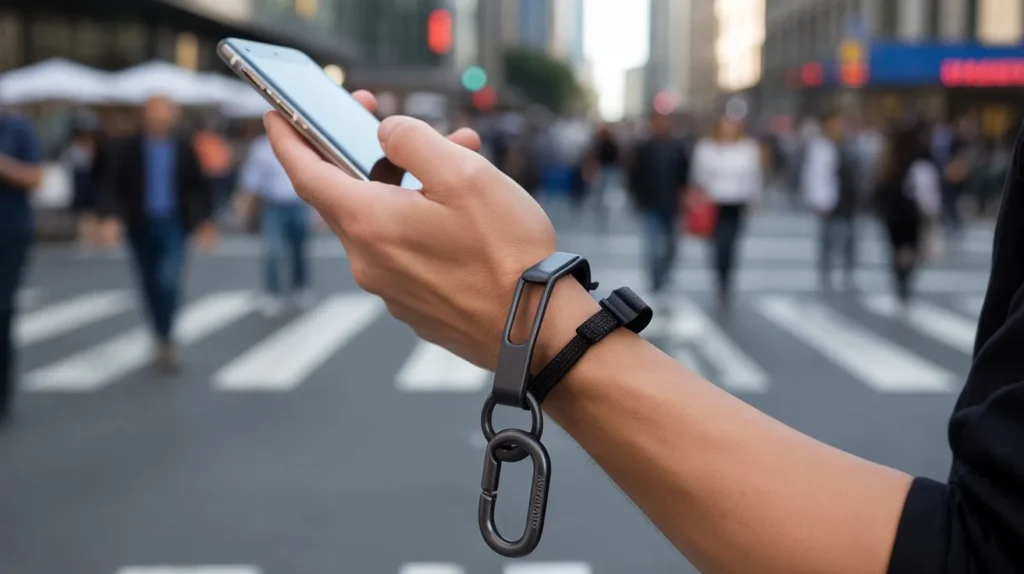
Apple prepares a smart anti-theft feature to automatically lock the iPhone
Apple is reportedly working on a new security feature for the iPhone: automatically detecting when a device is snatched from its owner’s hands and locking it instantly.
This is a direct response to one of the most problematic theft scenarios today: “snatch and run,” where a thief steals an already unlocked iPhone before fleeing.
Current protections still have a weakness
Apple already has several robust layers of security in place: Find My iPhone, Activation Lock, and Device Theft Protection. Activation Lock prevents a thief from resetting or reactivating an iPhone without the owner’s credentials. Device Theft Protection adds biometric checks and security delays for modifying certain sensitive settings when the user is outside a familiar location.
However, these systems have a limitation: if the phone is already unlocked at the time of theft, the thief has a potentially critical window of access.
This is precisely what Apple is now seeking to address.
The iPhone could detect a theft in real time
According to several clues found in iOS code, Apple is developing technology similar to Theft Protection already present on Android. This system would utilize the accelerometer, motion sensors, and potentially distance measurements with a paired Apple Watch.
The goal would be to identify certain characteristic behaviors: abrupt movements, sudden accelerations, rapid separation between the iPhone and its owner, or fleeing in an unfamiliar environment.
Once behavior is deemed suspicious, the iPhone could automatically lock, prevent critical changes, and trigger enhanced protections from Device Theft Protection.
The Apple Watch would become a key security element
The integration with the Apple Watch would be particularly interesting. If the iPhone detects a sudden distance from the paired watch in an unusual context, the system could interpret this as a potential physical theft.
This logic illustrates how Apple is progressively transforming its ecosystem into an interconnected security network: location, biometrics, proximity, behavior, and context.
The device no longer simply prompts for a password; it now attempts to understand what is happening around the user.
Why the iPhone remains a favorite target for thieves
This issue is especially sensitive for Apple. iPhones retain a very high resale value, even several years after their release. This high residual value fuels the gray market, spare parts sales, and international resale networks.
This is also why Apple has increased software barriers over the years to make a stolen iPhone increasingly unusable.
Apple pushes security towards behavioral analysis
What is emerging here goes beyond traditional anti-theft protection. Apple seems to be progressively evolving towards behavioral security capable of analyzing habits, recognizing suspicious contexts, and automatically triggering adaptive protections.
After Face ID, contextual biometrics, and security delays, the iPhone could soon become capable of understanding that it has just been stolen.
In an era where smartphones contain bank accounts, digital identities, authentication, passwords, and personal data, this could quickly become one of the most important security features of iOS.



