Vivo X500 Pro: Dimensity 9600, Sony sensor, and premium compact design
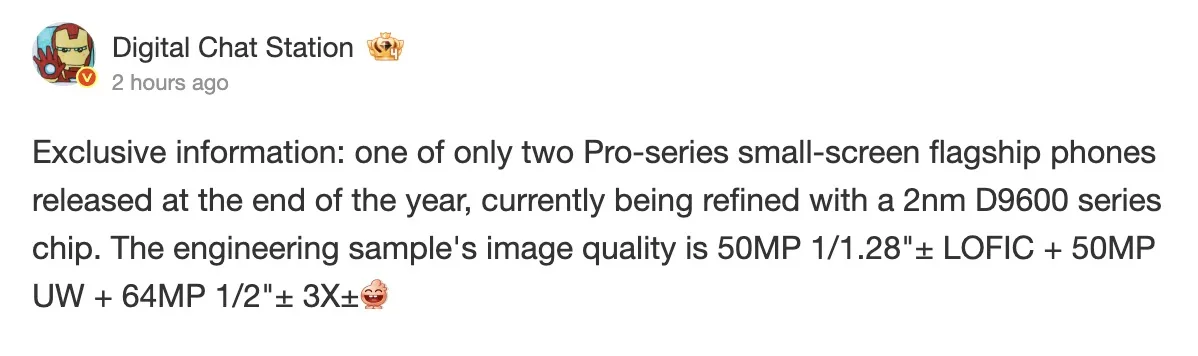
Vivo is preparing for its next high-end smartphone launch. According to recent leaks from Digital Chat Station, the upcoming vivo X500 series will include three models, one of which is the more compact vivo X500 Pro, featuring an impressive technical specification.
Vivo X500: A compact flagship featuring Dimensity 9600
The vivo X500 Pro is currently undergoing testing with MediaTek’s upcoming Dimensity 9600 chip, expected to be built on a 2 nm process. If confirmed, Vivo could deliver one of the first next-generation compact Android flagships.
The device is anticipated to sport a 6.37-inch flat OLED LTPO display with a 1.5K resolution, a notable choice in a market where premium models often exceed 6.7 inches.
A 50-megapixel main camera with LOFIC technology
In terms of photography, the prototype is expected to incorporate a 50-megapixel main sensor with a 1/1.28-inch format and LOFIC technology, designed to enhance highlights and dynamic range management.
It will be paired with a 50-megapixel ultra-wide lens and a 64-megapixel periscope telephoto lens offering approximately 3x optical zoom. Contrary to some speculation, this module will not utilize the OmniVision OV64B but instead feature a new Sony IMX06H sensor.
The 200-megapixel periscope sensor is expected to be exclusive to the vivo X500 Pro Max model.
Vivo aims to strengthen the compact flagship segment
The vivo X500 Pro may also feature a battery exceeding 7,000 mAh and run on OriginOS 7 based on Android 17. On paper, Vivo seeks to address one of the major trade-offs in the market: delivering a compact smartphone without compromising on battery life, photography, or performance.
The vivo X500 series is expected to be launched in September in China, followed by an international release later in the year. It remains to be seen whether this compact model will actually make it to global markets, where larger formats continue to dominate.