

iPhone Ultra: Cases Leak and Reveal the Design of the First Foldable iPhone
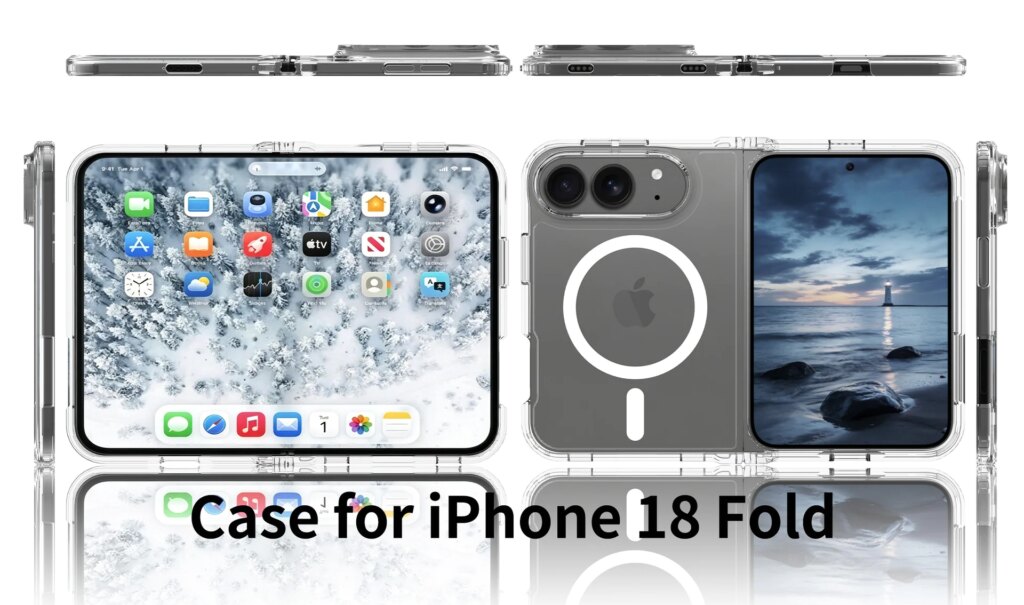
The future foldable smartphone from Apple continues to take shape. After months of rumors and CAD renders, new images of cases from accessory makers seem to confirm much of the design of the rumored “iPhone Ultra.”
Moreover, Apple appears to be preparing more than just a simple competitor to the Galaxy Z Fold.
iPhone Ultra: A Wider Format, Close to a Mini iPad
According to the latest leaks, the iPhone Ultra will feature a horizontally foldable format that is wider and more compact than current models like Samsung’s Galaxy Z Fold 7. The design is said to be more reminiscent of the Huawei Pura X, with a short and wide form factor when unfolded, striking a hybrid balance between a smartphone and a mini tablet.
Apple seems to be addressing a common issue with foldables: internal screens that are often too narrow for a genuinely comfortable tablet experience.
Touch ID Returns, Face ID Sacrificed
The case images also reveal some interesting technical choices. Face ID will be absent, likely for internal space reasons. Apple is expected to rely on a side-mounted Touch ID button, a solution already used in some iPads.
Additionally, the rear camera module will be relatively subtle, featuring two sensors aligned on a slim island, reminiscent of the iPhone Air.
The leaks also indicate two extra buttons located on the top edge when the device is unfolded—an unusual detail that could correspond to new multitasking shortcuts or contextual controls.
MagSafe Confirmed, But No Under-Display Camera Yet
The cases confirm the presence of the MagSafe system, which has become indispensable in the Apple ecosystem. However, despite initial ambitions, Apple did not manage to integrate an under-display camera in time for this first generation. The main screen will ultimately feature a simple punch-hole camera instead.
This once again showcases Apple’s philosophy: to delay technology rather than launch an implementation deemed imperfect.
Apple Arrives Late… But at the Perfect Time
The timing is particularly interesting. The foldable market is entering a new phase, with Huawei pushing larger formats, Samsung continuing to refine its Fold lineup, and various Chinese manufacturers finally reducing the thickness and visibility of the crease.
Apple is therefore entering a more mature market than it was three or four years ago. As is often the case, the company may seek not to invent the category but to simplify the user experience.
The Real Challenge Will Be the Crease
The central question remains the same: the visibility of the crease. For years, Apple has delayed its entry into the segment precisely because of this issue. If the company can significantly reduce the central mark of the screen, it could become one of the key marketing arguments for the product.
Even today, despite technical advancements, the crease still serves as a constant reminder to users that they are using an “experimental” device.
With the iPhone Ultra, Apple seems poised to turn the foldable into a premium mainstream product rather than just a technological showcase.
And that’s likely where the market could genuinely shift to a new level.



