WatchGuard Expands Its AI Agent Rai to Enhance Managed Services Security
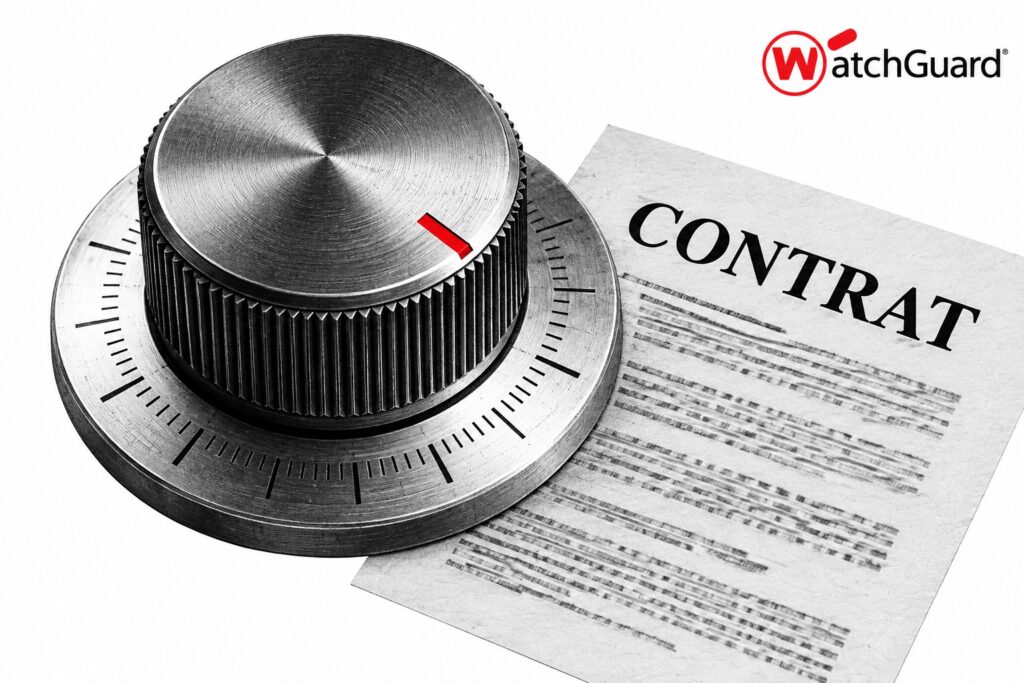
WatchGuard is taking its AI agent, Rai, a tool designed to execute security tasks within the environments of its managed services provider (MSP) partners, to the next level. The service autonomy of this agent can be configured by the provider. Consequently, clients entrusting their security to these MSPs must establish the boundaries of Rai’s capabilities within their contracts.
On October 5th, WatchGuard convened its North American partners in Nashville for its IMPACT conference, where it outlined its strategy toward managed services providers. These MSPs oversee the security of numerous mid-sized enterprises with small teams, and are increasingly offered AI agents to operate in place of human analysts. With over 25,000 MSP partners and around 1.5 million end customers, WatchGuard introduced a suite of updates for its unified security platform, which were also highlighted in Paris on October 6th.
Initially launched on May 6th during its European conference in Dubrovnik, Rai comes with three roles: Analyst, Auditor, and Administrator. Under the leadership of CEO Joe Smolarski, who joined WatchGuard from Kaseya in November 2025, the company has also acquired Perimeters.io, a cloud application security specialist, following its January 2025 purchase of ActZero, a managed detection and response firm. Competitors are making similar moves, as N-able launched its MCP server in April, Kaseya unveiled digital specialists in June, and ConnectWise debuted its agents in July.
Rai: An Agent Serving Clients
The October updates expand the functionalities of Rai. The new “Hey Rai” feature introduces a natural language interface, while Rai Analyst investigates and prioritizes incidents. Rai Auditor continuously evaluates security posture and compliance. Meanwhile, Rai Customer Success assists the provider in identifying risks for each client and demonstrating the value of their services. Additionally, integration of the MCP, which connects agents to tools via an open protocol, is set to enhance WatchGuard’s capabilities with major AI platforms, although specific names have not been disclosed.
Smolarski advocates for a security model that natively incorporates AI within platforms rather than relying on a patchwork of products. However, a timeline for these advancements remains unclear. WatchGuard has announced availability starting in October but has not specified dates or pricing for individual products. Initially, Rai Analyst was set to be available on May 6th, later adjusted to June 25th, but the Administrator role, originally designed to manage patch schedules and renewal of certificates, is no longer mentioned in communications.
Autonomy Configured by the Provider
According to Rai’s documentation, the MSP retains control over critical decision-making. However, actions are carried out based on automation policies configured by the provider—which are executed without human validation, such as automatically deleting files during a critical incident. WatchGuard notes that the agent operates under control modes selected by the partner, and the action log records activities for a 24-hour period.
This autonomy is determined by the MSP, which the end client may not always observe in action. In contrast, Kaseya requires technician approval for executions, while Arctic Wolf claims its operational center autonomously handles over 60% of cases under a trusted module’s oversight. The agent offers clients faster, continuous responses, day or night. This advantage, however, hinges on the client’s understanding of the agent’s capabilities within their information system.
The Economic Argument for the Channel
WatchGuard promises MSPs that they can serve more clients and manage more environments without expanding their workforce. The company is introducing an intermediate suite, the Prime Security Suite, which includes an unauthorized AI usage dashboard at no additional licensing cost. This dashboard cross-references OAuth permissions, email metadata, and data from workstations and firewalls. The CloudDR service, stemming from the acquisition of Perimeters.io, enhances this offering by detecting misconfigurations and suspicious connections across more than forty cloud applications, including Microsoft 365, Salesforce, Google Workspace, and OpenAI.
This solution addresses a pressing need; a survey by WatchGuard in April 2026 found that 64% of employees reported using unauthorized AI tools, based on a study involving 684 employees across eight countries—including France, released in July. For providers, the agent and dashboard represent a more marketable offering, while clients gain valuable insights into their AI usage that often lacked clarity in their policies.
While the firewall remains central to WatchGuard’s offerings, the company challenges the notion of its obsolescence. WatchGuard has introduced the Firebox T175, equipped with 10 Gbit/s ports, alongside network management console capabilities and risk application analysis. Additionally, it combines its strong authentication service, AuthPoint, with remote access (FireCloud) into a single application for a streamlined user experience when accessing resources.
Contractual Clarity on Authorized Actions
When a company entrusts its security to an MSP utilizing Rai, it benefits from quicker incident responses. However, it is crucial for the organization to specify in the contract which actions the agent can execute autonomously and which require human approval. Contracts should also define how long logs are retained and grant client access to these logs. The MSP is then accountable for the settings applied to the agent, just as it is for its own interventions.
Three questions remain open between the provider and WatchGuard: the AI model used by Rai, the rights granted to third-party AI platforms via MCP integration, and the actual availability timeline for each function in Europe.