

Google may have revealed a mysterious Fitbit wristband with a screen in Pixel 11 ads
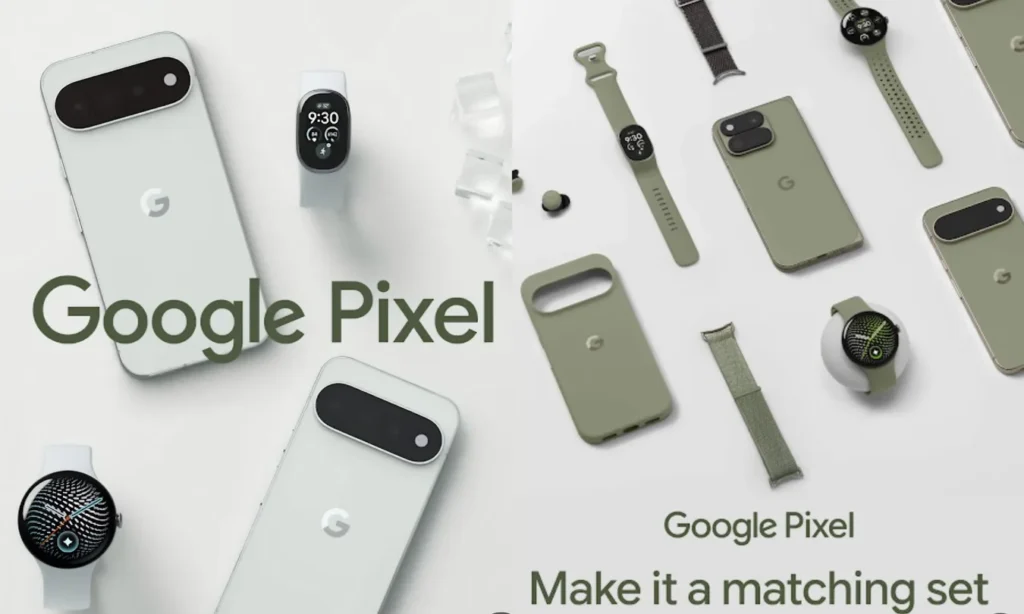
Google may have inadvertently showcased a product that was not yet ready for announcement. Several ads for the Pixel 11 series feature a small connected wristband with a screen, distinct from both the Pixel Watch 5 and the recent Fitbit Air. Is it just a graphical element or the first look at a new Fitbit tracker?
An Unknown Device Appears in Pixel 11 Ads
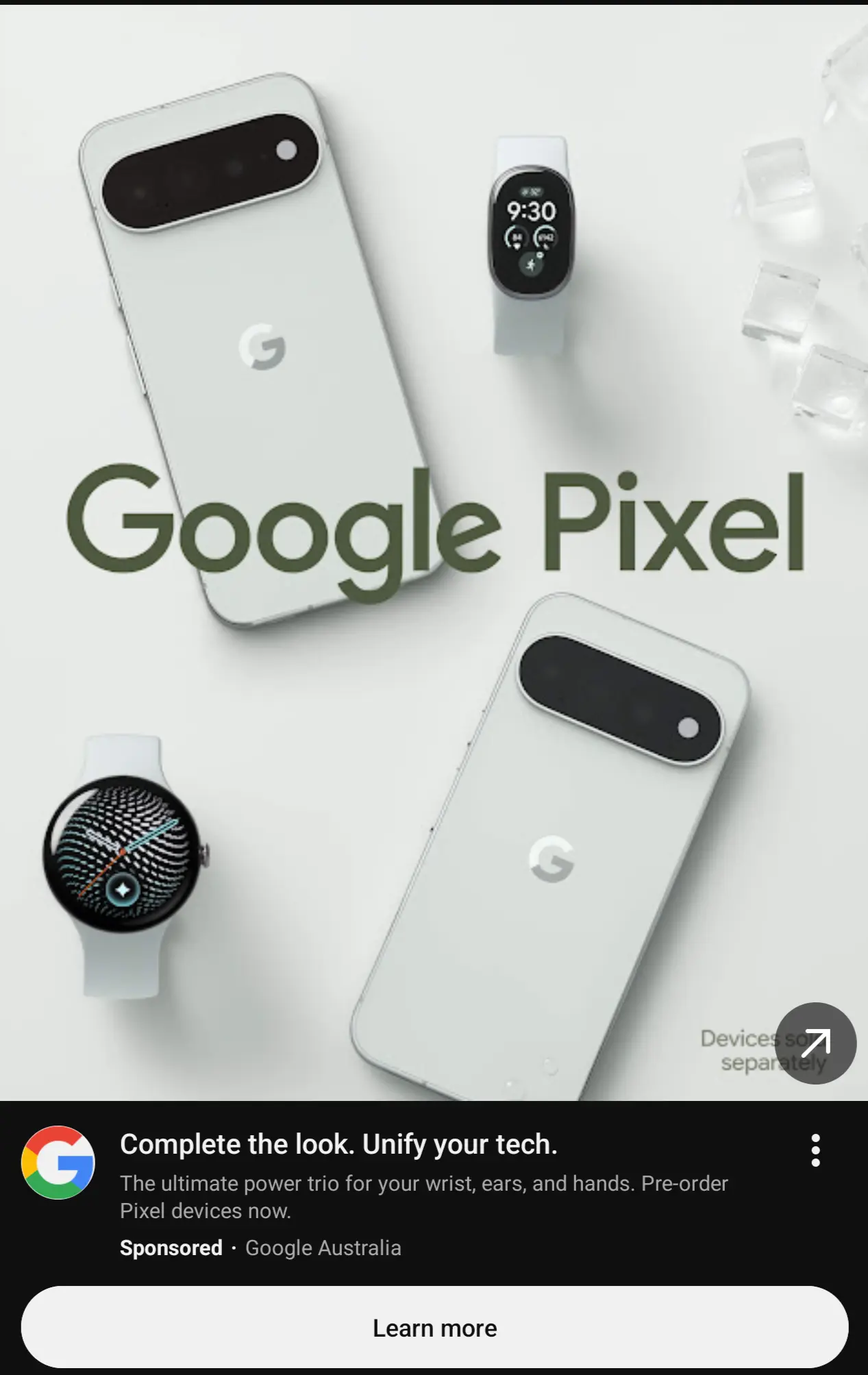
The mystery arose from several recent Google ads displayed on YouTube. Reddit users noticed that alongside the new Pixel 11 smartphones and the Pixel Watch 5 was a small wearable device previously unknown. 9to5Google has confirmed that multiple ads show the same device.
This detail is significant.
If it were just a single visual, one could easily argue it was a rendering error or a generic element. The fact that the product appears repeatedly in different ad creations makes this explanation somewhat less plausible.
However, Google has yet to announce a new tracker, and there is no indication that this device will be launched. For now, we primarily have a visual hint—intriguing, but far from confirmation.
It’s Neither a Pixel Watch 5 Nor a Fitbit Air
The wearable has a much slimmer profile than a typical smartwatch. 9to5Google describes a casing that resembles the compact shape of the Fitbit Air, but with a more elongated screen, bringing it closer to a Fitbit Charge-style device. The displayed interface also seems to borrow some graphical themes from the Pixel Watch 5.
Thus, the difference with Google’s currently marketed products is quite clear.
The Pixel Watch 5, officially unveiled on August 12, 2026, maintains the traditional circular format of its line and is priced starting at 419 euros for the 41mm version. The Fitbit Air, launched in May 2026, follows an entirely different philosophy: it is a strap designed without a screen, intended to track activity, sleep, and various health metrics discreetly. Google retails it at 99.99 euros.
The mysterious product seen in the ads would thus fit exactly between the two.
Google May Have Found the Missing Link in Its Lineup
This positioning would make a lot of sense. Today, Google’s wearable catalog primarily features two experiences. On one side, the Pixel Watch acts as a full-featured smartwatch: complete screen, applications, notifications, and deep integration with the Android ecosystem. On the other side, the Fitbit Air adopts a minimalistic and nearly invisible approach, recording health data but requiring users to check their smartphones for display, as it has no screen. Google officially markets it as a “screenless” tracker for continuous well-being and activity tracking.
However, there has historically been an important category between these two formats: wristbands with screens. They are lighter and generally more autonomous than smartwatches while allowing for quick checks of heart rate, step count, or notifications without needing to pull out a phone.
The mysterious device could precisely fulfill this role.
An Heir to the Fitbit Charge?
It’s hard not to think of the Fitbit Charge family. For years, this range represented Fitbit’s premium connected wristband: compact format, vertical screen, and more advanced sports tracking than entry-level devices. The wearable visible in the Pixel 11 ads seems to reflect this philosophy. 9to5Google itself points out that it looks more like a Fitbit Charge than an actual Pixel Watch. However, it may be premature to refer to it as a Fitbit Charge 7 or any other product name.
No software reference, regulatory certification, or sufficiently clear leak currently allows for the device’s identification. Even its definite affiliation with the Fitbit brand has not been confirmed.
The only observable factor is its design: a small tracker with a narrow screen presented among official Google products.
The Fitbit Air Just Abandoned the Screen
The emergence of this wearable is particularly intriguing just months after the launch of the Fitbit Air. With this product, Google took an unusual direction: completely removing the screen to favor a lighter, more discreet wristband. The Fitbit Air promises up to a week of battery life and shifts most user interaction to the Google Health app.
This philosophy aligns the product with solutions like Whoop: the user wears the sensor continuously but interacts relatively little with it.
A new tracker with a screen wouldn’t necessarily contradict this approach; it could complement the lineup. The Fitbit Air would remain the minimalistic model designed for 24/7 tracking, while a second device would target users who want immediate access to their data without moving to a full smartwatch.
Fitbit Remains a Significant Hardware Brand for Google
The context of 2026 is also noteworthy. Google has closely integrated its Fitbit activities with its overall health strategy, launching the Google Health app and rebranding Fitbit Premium as Google Health Premium.
Nonetheless, the Fitbit brand has not disappeared from hardware. The Fitbit Air launched this year serves as the most direct proof: Google continues to utilize the name for wearables specifically oriented towards health and fitness. A new wristband with a screen could thus help maintain a clear distinction.
The Pixel Watch would remain the brand for complete smartwatches, while Fitbit could continue to occupy the specialized and accessible health tracking territory. This separation would also provide Google more freedom to compete with devices like the Xiaomi Smart Band or Garmin trackers without needing to lower the price or complexity of the Pixel Watch.
A Lighter Alternative to the Pixel Watch 5
The timing would be especially relevant following the Pixel Watch 5 announcement.
Google introduced its new smartwatch on August 12 with mainly internal and software improvements while maintaining the now-iconic circular design of the series. It will be available starting August 20.
However, a Pixel Watch may not suit everyone.
Some users have no need for apps on their wrist, a full Wear OS interface, or such a large screen. They primarily want to track their sleep, heart rate, and workouts.
A thinner wristband could potentially offer better battery life, more comfort at night, and a lower price.
This is precisely Fitbit’s historical territory.
Google Could be Building a Three-Tier Wearable Lineup
If this mysterious tracker is real, Google’s strategy would become particularly coherent. The group would then have a three-tier offering. The Fitbit Air would serve as a minimalistic entry-level device without a screen and focused on passive tracking. A wristband with display could fill the middle of the catalog, with more interactions but without the complexity of a smartwatch. Finally, the Pixel Watch 5 would remain the premium product, featuring Wear OS and the deepest integration with Pixel smartphones and Google services.
This commercial structure would be much more flexible than a lineup relying solely on the Fitbit Air and the Pixel Watch. It would allow coverage of various price points and user types with clearly differentiated products.
However, an Ad Is Not a Product Announcement
One must remain particularly cautious. Google has not confirmed the name, function, or even the commercial existence of this wearable. Ads do not serve as absolute proof either. Marketing campaigns sometimes utilize intermediate renders, prototypes, or graphical elements that do not necessarily correspond to market-ready products.
9to5Google notes that it remains impossible to determine if this is truly a new tracker or just an element present in the advertising visuals. The product’s repetition across several ads makes the mystery more intriguing, but it does not turn the rumor into confirmation.
Google May Have Created Its Own Unintentional Teaser
Ultimately, this is what makes this appearance so effective. The product lacks a name, price, or technical specifications. And Google has not announced it. Yet, a few seconds in a Pixel ad suffice to reignite the question of Fitbit’s future and the group’s wearable strategy.
A wristband positioned between the Fitbit Air and the Pixel Watch would indeed make sense. It could offer the discretion and autonomy of a tracker while reintroducing what the Fitbit Air deliberately excluded: a screen for checking data without a smartphone.
It remains to be seen whether Google has genuinely revealed its next Fitbit too soon or if internet users are simply analyzing a graphical element that may never extend beyond advertising.
In either case, Google has achieved something quite rare: transforming a tiny device seen in the background into one of the most intriguing products in its new Pixel lineup.



