

Asus Shifts Focus to Usability with AI-Enhanced Laptops
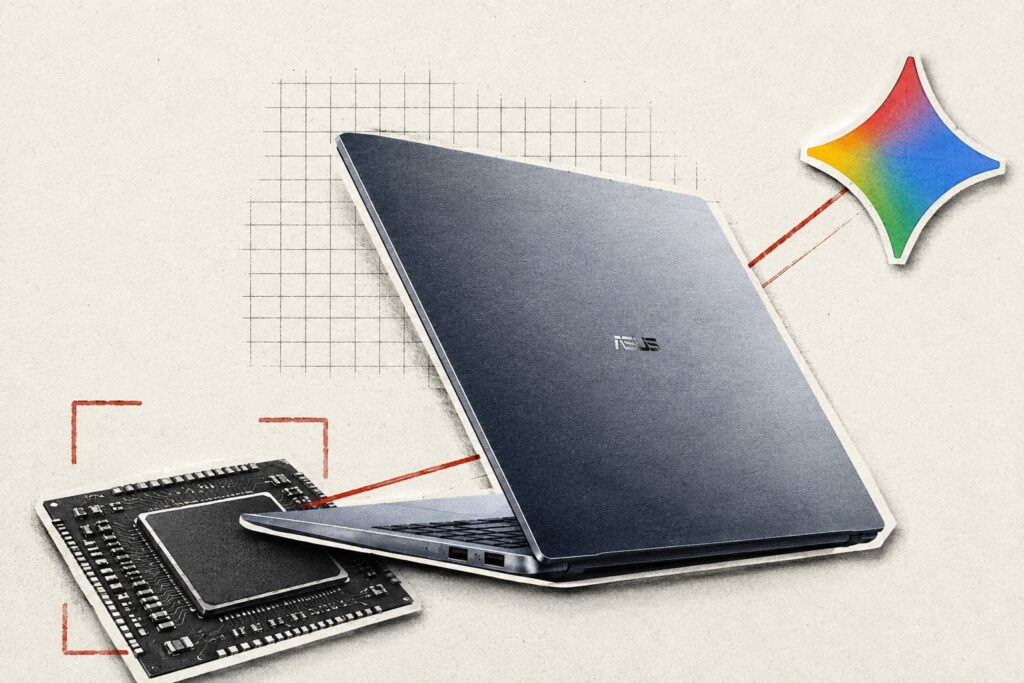
After two years of promoting Neural Processing Units (NPUs) and its Copilot+ features, Asus is pivoting in 2026 to emphasize practical applications. While the company continues to embrace the Microsoft ecosystem, it is diversifying its AI offerings by integrating Google’s services, aiming to compensate for manufacturers’ struggles to make AI-capable PCs a compelling standalone purchase.
Initially, the PC AI concept was marketed as a revolutionary hardware development. Manufacturers touted the ability of NPUs to perform specific tasks locally, reducing reliance on cloud computing and opening the door for new functionalities within Windows. Microsoft branded this promise with its Copilot+ initiative, setting a minimum performance threshold of 40 trillion operations per second for the NPU. Asus echoed this message at Computex 2024 and CES 2025, presenting it as a “new chapter of AI on PC” and declaring “AI for all.”
As NPUs are gradually integrated into new processors, consumers are typically renewing their devices to replace aging machines, upgrade to Windows 11, or extend battery life. In this context, AI is an added feature rather than a driving force behind purchases. To reignite interest, Asus is now providing immediate access to a suite of services, shifting the narrative from merely envisioning the potential of NPU power to actually experiencing tangible benefits.
NPU Adoption Lags Behind Expectations
Gartner projected in September 2024 that PC shipments would hit 114.2 million in 2025. However, eleven months later, this estimate was revised down to 77.8 million, representing a 31% market share. This significant downward adjustment reflects a shortfall of 36.4 million units—almost a third of the original expectation—indicating that early forecasts have not materialized.
This cautious outlook was present in Gartner’s earlier projections, which suggested that while businesses would eventually adopt AI PCs as NPUs became standard components, they would be reluctant to pay a premium for AI features. As a result, a device equipped with an NPU could be sold during a routine upgrade without AI being a decisive factor in the purchase. The growth of this category does not, therefore, validate that the commercial promise has resonated with buyers.
In 2025, Gartner attributed growth in professional sales to transitions from Windows 10 and replacements for machines purchased during the pandemic, with AI being part of new configurations. The timing of upgrades spurred expenditure, leading manufacturers to provide concrete use cases if they want AI PCs to influence purchasing decisions rather than being viewed as standard default features.
Google Transforms Hardware Promises Into Usable Services
Asus is offering eligible models from its ROG, TUF Gaming, ProArt, Zenbook, and Vivobook lines a three-month trial of Google AI Pro or Google AI Plus, valid until August 9, 2027. Users can activate this offer through MyASUS, requiring a payment method for continued service subscription after the trial ends. This initiative encompasses gaming, content creation, and productivity, extending beyond machines merely branded under Copilot+.
The Google AI Pro package includes Gemini, advanced search features, NotebookLM, Gemini functions integrated within Gmail and Docs, and the video creation tool Flow. This suite of services is designed to assist users with identifiable daily tasks, making it a more marketable proposition than raw processing power defined by TOPS, while allowing Asus and Google to monitor its adoption. Asus is pricing the Pro subscription at $19.99 per month and Plus at $4.99, with variations depending on the market.
Notably, Gemini, NotebookLM, and Flow primarily operate within Google’s infrastructure, requiring minimal reliance on the installed NPU’s capabilities. Asus is responsible for the hardware and activation process, while Google handles the subscription relationship post-trial. This mechanism provides Asus with an immediate sales argument, but ultimately, any conversions to paid services first validate Google’s offerings, not necessarily the NPU’s value.
Asus previously tested this model in 2024 by bundling Google One AI Premium with select Chromebook Plus devices. Now extending this feature to Windows laptops, the integration of AI into familiar practices positions the hardware as an entry point to a service that Google hopes to monetize.
Asus Maintains Copilot While Embracing Gemini for AI PCs
Continuing its partnership with Microsoft, Asus in 2026 is still showcasing new Zenbook, Vivobook, ExpertBook, and mini-PC models as Copilot+ devices. These machines retain Windows, their NPUs, and various system-integrated features like Recall, Click to Do, Windows Studio effects, and enhanced search capabilities. However, Asus is moving away from solely attributing the justification for the “AI PC” label to Copilot.
Now, both Gemini and Copilot are included on the same devices. Asus acknowledges the competitive nature of both assistants, as their coexistence increases the likelihood that one will deliver practical AI benefits to users. This strategy reduces Asus’s commercial dependency on Microsoft’s offerings alone, indicating that the company seeks more than just a Copilot+ certification to distinguish and sell its products.
While Copilot+ denotes a category of hardware and Windows features, Google AI represents a cloud subscription that can be accessed across multiple devices. Technically, both can coexist, but they may compete when users decide which assistant to rely on for document management, search functions, and subscription payments. Asus is ensuring compatibility with Microsoft while allowing Google to attempt to capture user engagement.
Asus laptops now feature locally executed AI alongside Google cloud services. For IT managers, these two architectures do not entail the same data governance, contracts, or dependencies. Local inference capability is influenced by memory and bandwidth as well, not just TOPS performance. As individual activations in MyASUS may position a Google subscription outside the managed software catalog, this offers further logistical challenges.
In this shift, Asus’s three-month offer seeks to revitalize interest in AI laptops by redefining the promise. While the company initially marketed hardware capabilities as preparations for the future, it now offers services that deliver results instantly upon starting the device. This transition from NPU-focused selling to practical usage underscores the continued relevance of Copilot but highlights that Copilot+ alone is no longer sufficient to motivate consumers to purchase an AI PC.



