

Microsoft Defender Security Team Reveals Storm-2949 Cyber Espionage Campaign
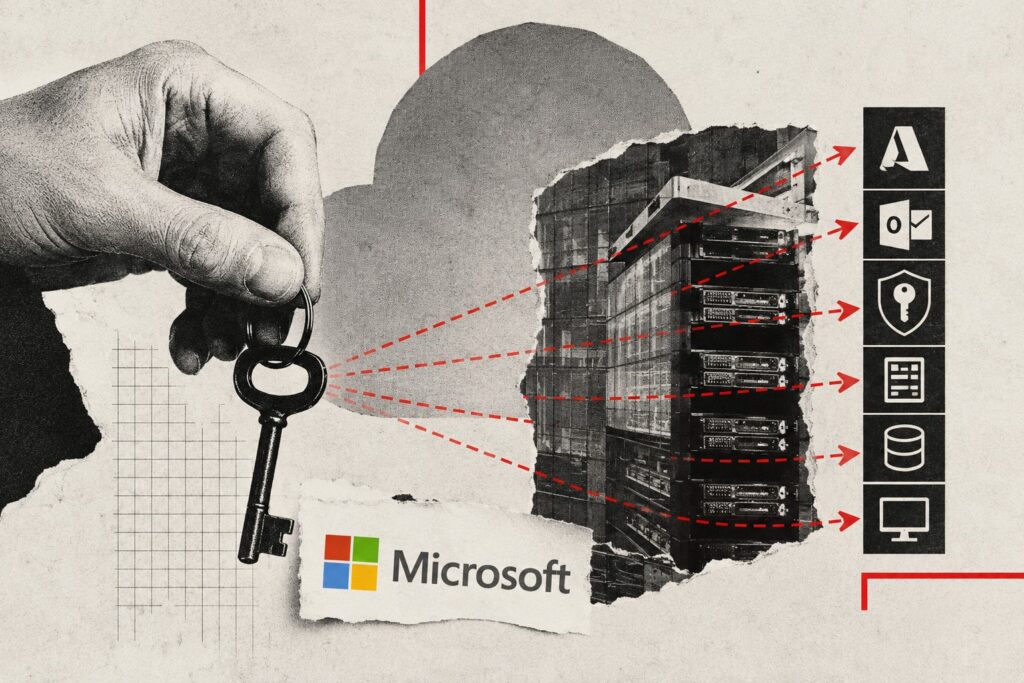
The Microsoft Defender Security Research Team has recently uncovered a sophisticated cyber espionage campaign linked to an actor identified as Storm-2949. In a matter of days, the attack leveraged a single compromised Microsoft Entra ID through social engineering, escalating into a full-scale breach of the cloud infrastructure of a targeted organization, including Microsoft 365, Azure App Service, Key Vault, Storage, SQL, virtual machines, and endpoints using ScreenConnect. The attacker judiciously employed legitimate operations from Azure’s management and data services, making their activities indistinguishable from expected administrative behavior.
The detailed report from the Defender Security Research Team outlines the attack chain, specific techniques used, and potential countermeasures for European organizations using Microsoft Entra ID and Azure. The attack attribution to Storm-2949 is based on a thorough internal investigation, with high confidence in the self-service password reset (SSPR) methodology utilized. Notably, the campaign did not deploy any malware, rely on off-site tools, or exploit unpatched vulnerabilities. Instead, the entire attack chain took advantage of native and legitimate features within Microsoft Entra ID, Microsoft 365, and Azure, rendering it particularly challenging to detect through traditional signature- or reputation-based controls.
The attacker initiated the SSPR process on behalf of targeted users and, through social engineering—likely via phone impersonation as internal IT support—gained validation for MFA invitations. Once validation was acquired, the attacker reset the password, removed existing authentication methods (such as phone numbers, email addresses, and Microsoft Authenticator entries), reactivated MFA, and registered Microsoft Authenticator on their own device. Consequently, the victim was locked out of their account, giving the attacker authentic persistence. This method was systematically applied to multiple users, including members of the IT and executive teams.
Microsoft 365 Exfiltration and Azure App Service Compromise
Following the initial takeover, the attacker queried the Microsoft Entra ID tenant using a custom Python script via the Microsoft Graph API. These requests enumerated users by name and role attributes to identify privileged accounts. An attempt to add credentials to a compromised service principal failed due to insufficient permissions, but the enumeration mapped service principals and application identifiers. Subsequently, three additional accounts were compromised using the same SSPR technique, widening access to shared folders and Azure subscriptions.
With the hijacked identities, the attacker scoured OneDrive and SharePoint for documents detailing VPN configurations and remote access procedures. Through a OneDrive session, they successfully downloaded thousands of files in a single operation via the web interface. This operation was repeated across each compromised account, with varying access to shared folders depending on the user.
The compromised accounts held custom RBAC roles with elevated privileges across several Azure subscriptions. The attacker invoked the management plan operation microsoft.Web/sites/publishxml/action to extract publication profiles from secondary App Service applications. These profiles contained basic authentication credentials for FTP, Web Deploy, and Kudu, the administrative interface allowing file system exploration, environment variable inspection, and command execution in the application’s context. Several auxiliary applications (such as authentication systems and internal APIs) were compromised, although direct access to the main production application was not achieved.
Key Vault Breach and Storage and SQL Exfiltration
One specific compromised account had Owner access to a Key Vault. In just four minutes, the attacker manipulated the Key Vault access configurations and extracted dozens of secrets, including database connection strings and identity credentials. Among these secrets, the attacker obtained credentials for the primary production application, authenticated, changed the password to maintain control, and began exfiltrating sensitive content.
The attacker then modified the firewall rules of the Azure SQL server using the operation microsoft.sql/servers/firewallrules/write, connected using the extracted Key Vault credentials, exfiltrated data, and subsequently deleted the modified rules (a defense evasion tactic). Concurrently, they adjusted the network access configurations of Storage accounts via microsoft.storage/storageaccounts/write to allow public access from a limited range of controlled IP addresses before invoking microsoft.Storage/storageAccounts/listkeys/action to retrieve SAS tokens and account keys. A Python script utilizing the Azure SDK systematically downloaded blobs over several days, toggling between token and OAuth authentication as the controls evolved.
Endpoint Compromise and Recommendations
The attacker exploited Azure VM extensions, particularly Run Command and the VMAccess extension, to execute remote code on compromised virtual machines, collect credentials, conduct domain reconnaissance, and prepare to pivot to the on-premises environment. The attacker subsequently installed the legitimate ScreenConnect remote administration tool on the endpoints, creating a persistent command-and-control channel that blended in with normal administrative usage.
Microsoft advises implementing six controls: enhancing SSPR with prerequisites for robust authentication and training for users on phone-based social engineering; monitoring sensitive Azure management-plane operations; restricting Owner permissions on Key Vaults with conditional access and minimum roles; enabling logging through Microsoft Defender for Cloud and XDR with cross-domain correlation (identity, endpoint, cloud); establishing behavioral monitoring for high-volume OneDrive and SharePoint downloads; and formally inventorying remote administration tools such as ScreenConnect to alert on any unplanned installations. For European organizations, using Microsoft Entra ID and Azure places their infrastructure within the scope of the Cloud Act, which should be integrated into sovereignty assessments for workloads subject to European regulatory obligations under NIS2, DORA, and GDPR. The described behavioral signature (malware-free actor, legitimate operations in sequence) warrants a review of custom RBAC roles on production subscriptions, reflecting the SecNumCloud framework for relevant scopes.



