

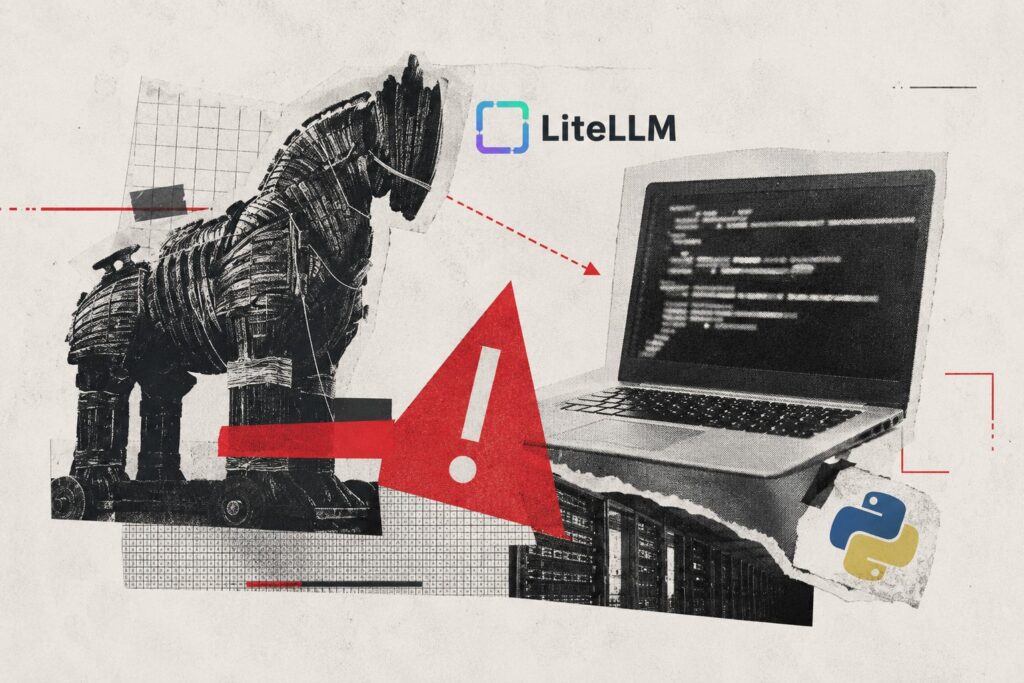
A critical SQL injection vulnerability, designated CVE-2026-42208, impacts LiteLLM, a Python library utilized as a proxy layer in enterprise agentive AI architectures. With a CVSS score of 9.3, this flaw was actively exploited within thirty-six hours of its public disclosure. The Cybersecurity and Infrastructure Security Agency (CISA) has added this vulnerability to its catalog of known exploited vulnerabilities, with a remediation deadline set for May 11 for U.S. federal agencies.
Approximately 64% of organizations deploying agentive AI applications in production utilize a Large Language Model (LLM) proxy or gateway component to centralize model calls, manage quotas, log requests, and enforce security filters. LiteLLM, developed by BerriAI, is the most commonly used component in this category. Its adoption within the internal AI stacks of major organizations far exceeds that of dedicated commercial products, largely due to its open-source nature, cost-effectiveness, and compatibility with most Python environments.
CVE-2026-42208 represents a convergence of AI agent vulnerabilities, credential theft, and the proliferation of tools, forming a triad of cybersecurity concerns for 2026 within LiteLLM’s request management mechanism. An attacker can exploit this flaw by manipulating input parameters to execute arbitrary queries against the underlying database, potentially gaining access to unauthorized data, and depending on the configuration, modifying or deleting records. The high CVSS score of 9.3 categorizes this vulnerability as critical. The rapid active exploitation following its disclosure indicates that attackers were closely monitoring vulnerability announcements for this component.
LiteLLM: A Central Component of AI Production Architectures
LiteLLM serves as an abstraction layer between applications and language models, whether hosted by external providers or deployed on-premises. Applications traversing LiteLLM can seamlessly call models like Claude, GPT, Mistral, or other compatible frameworks through a unified interface, eliminating the need to alter code based on the model in use. This central position in the processing chain positions LiteLLM as a focal point for monitoring all AI traffic within the organization: requests passing through include prompts sent to models, received responses, and, in some configurations, business data embedded in contexts.
Organizations that have deployed LiteLLM within augmented generation retrieval (RAG) architectures, agent pipelines, or assisted development environments must assess their exposure to CVE-2026-42208. The first step is to verify the production version across their instances. The second is to check if any instance is exposed to potentially vulnerable networks, especially in development architectures where LiteLLM instances may sometimes be accessible from shared environments with production.
AI Libraries in the Crosshairs
The thirty-six-hour window from vulnerability disclosure to active exploitation is one of the shortest observed for software components, typically associated with widely used network equipment or high-traffic web services. The emergence of this vulnerability within an AI processing element indicates that attackers have begun integrating the monitoring of AI library ecosystems into their surveillance processes. Vulnerability management programs cover operating systems, business applications, and network devices, but often overlook Python libraries within AI stacks, creating a newly exploited blind spot.
The CISA’s Known Exploited Vulnerabilities (KEV) catalog marks a new milestone with CVE-2026-42208, as it lists an agentive AI chain component vulnerability for the first time. This could pave the way for similar entries as attackers broaden their targets to include production AI stacks. An inventory of AI layer components—LLM proxies, agent orchestrators, integration libraries, and augmented generation retrieval environments—must be integrated into scanning, monitoring, and update processes with the same priority as traditional components.
Regulatory Obligations Apply Equally
NIS2 and DORA regulations do not differentiate between traditional software components and AI libraries in their risk management requirements. Any entity subject to NIS2 deploying LiteLLM in production within a scope covered by the directive must ensure this component is subjected to the same inventory, monitoring, and updating processes as other software in its information system. The absence of LiteLLM in the catalog of assets subject to vulnerability management constitutes a failure to meet the security obligations set forth in the directive.
The upcoming Cyber Resilience Act, which will impose requirements for reporting actively exploited vulnerabilities starting in September 2026, introduces an additional framework. Organizations incorporating open-source components into products marketed in the European internal market will need to report to ENISA’s single platform regarding actively exploited vulnerabilities affecting these components. A fix for CVE-2026-42208 is available in recent LiteLLM releases. For teams without a formal inventory of their AI chain components, this vulnerability serves as an urgent impetus to create one before the next incident arises.



