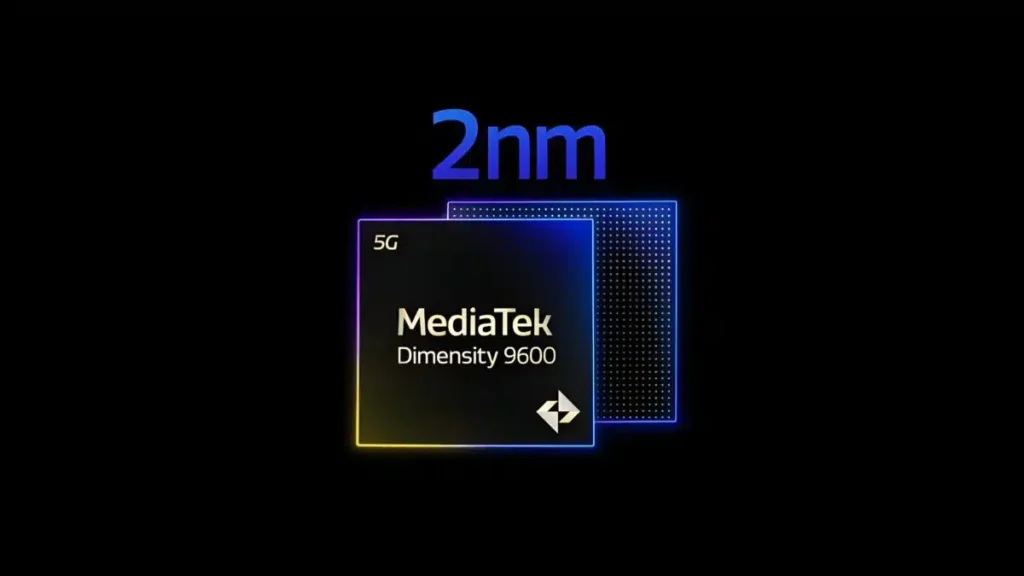
Dimensity 9600: MediaTek Prepares a 2nm Chip to Dominate the Competition
Just as the first rumors about the upcoming Snapdragon 8 Elite Gen 6 start to gain traction, MediaTek is back in the conversation.
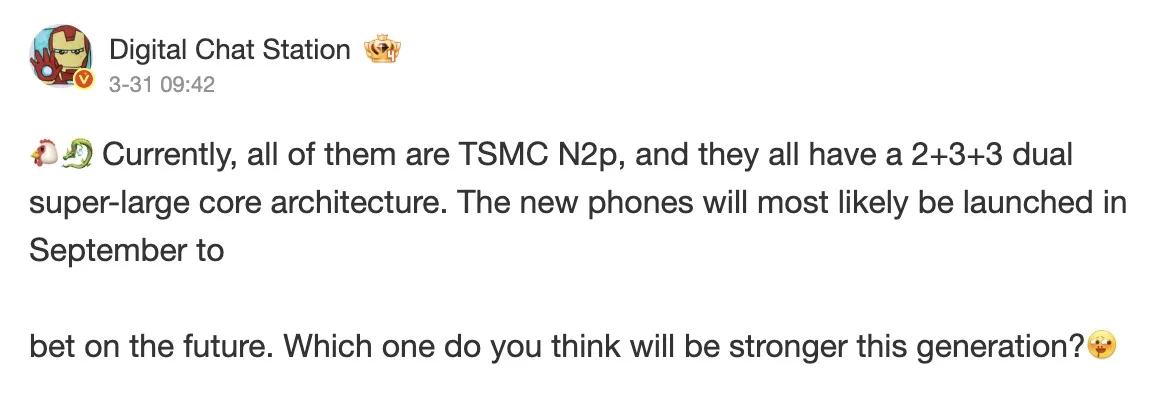
According to a new leak attributed to Digital Chat Station and reported by several tech outlets, the Dimensity 9600 could mark a significant architectural shift for the Dimensity 9 series, featuring TSMC’s N2P process and a new CPU configuration of 2+3+3.
On paper, this may seem like a simple technical adjustment. In reality, this type of decision speaks volumes about the current evolution of premium mobile chips: reducing compromises between peak performance, load consistency, and efficiency in increasingly demanding AI processing.
Dimensity 9600: A Potential First for the Dimensity 9 Line
According to this leak, MediaTek would abandon the current configuration of a single “prime” core in favor of two prime cores accompanied by six performance-oriented cores, organized in a 2+3+3 layout. Gizmochina highlights that this would be a first for the Dimensity 9 family.
The contrast with the current generation is quite evident. The specifications for the Dimensity 9500 currently indicate a structure of 1x ARM C1-Ultra at 4.21 GHz, 3x C1-Premium at 3.5 GHz, and 4x C1-Pro at 2.7 GHz.
In other words, MediaTek could transition from a sharply differentiated hierarchy between one flagship core and the rest of the cluster to a more balanced structure capable of handling complex loads over extended periods.
N2P Process: MediaTek Aiming for High-End Technology
Rumors about TSMC’s N2P are not new, but they have resurfaced persistently. As early as January, speculations suggested that both the Snapdragon 8 Elite Gen 6 and the Dimensity 9600 were being tested on TSMC’s 2nm N2P process instead of the standard N2, to achieve better frequencies and improved efficiency.
Of course, caution is advised: MediaTek has not officially confirmed anything about the Dimensity 9600. However, the notion of a transition to N2P aligns with the announcement made in September 2025 that MediaTek intended to deliver its first 2nm products by late 2026.
A Codename “Canyon” and a GPU More Closely Tied to AI
According to the leak, the dual prime core setup is reportedly known internally as “Canyon.” The same report also mentions a new GPU with neural network shader technology designed to enhance the coordination between the GPU and NPU.
While this point remains to be confirmed, it is plausible given the current market context. Wccftech mentioned back in February a future ARM GPU capable of leveraging a logic akin to a Neural Shader Scheduler, to better distribute certain inference calculations between the GPU and NPU, resulting in reduced power consumption and fewer graphical bottlenecks.
This reflects an underlying trend: mobile GPUs are no longer only evaluated based on gaming or ray tracing, but also on their ability to collaborate with AI accelerators in hybrid workflows.
Qualcomm Following a Similar Logic
Perhaps the most interesting aspect is that Qualcomm seems to be pursuing a similar architecture. Multiple recent reports suggest that the Snapdragon 8 Elite Gen 6 will also adopt a 2+3+3 structure, this time around its in-house Oryon cores.
This convergence is telling. The two main competitors in the Android space now appear to be pursuing similar goals: greater flexibility in load scaling, higher sustained performance density, and better alignment with use cases incorporating AI, computational photography, local generation, and advanced mobile graphics.
A Competition Played Out Less on Specs and More on Execution
For now, all of this remains speculative. However, one thing is already clear: MediaTek does not seem willing to content itself with a reasonable chasing role any longer. With the Dimensity 9600, the company appears to be developing a chip designed to compete on equal footing with Qualcomm in the most strategic areas of high-end Android: efficiency, AI processing, sustained power, and more ambitious architecture.
And this is perhaps where the next generation of mobile SoCs will become truly interesting. Not merely because they will boast even more spectacular figures, but because they will need to demonstrate that they can manage, continuously, much more complex usage than before.