French Cybersecurity Label Promotes 2026 Cohort with 91 Solutions from 85 Companies amid Geopolitical Challenges
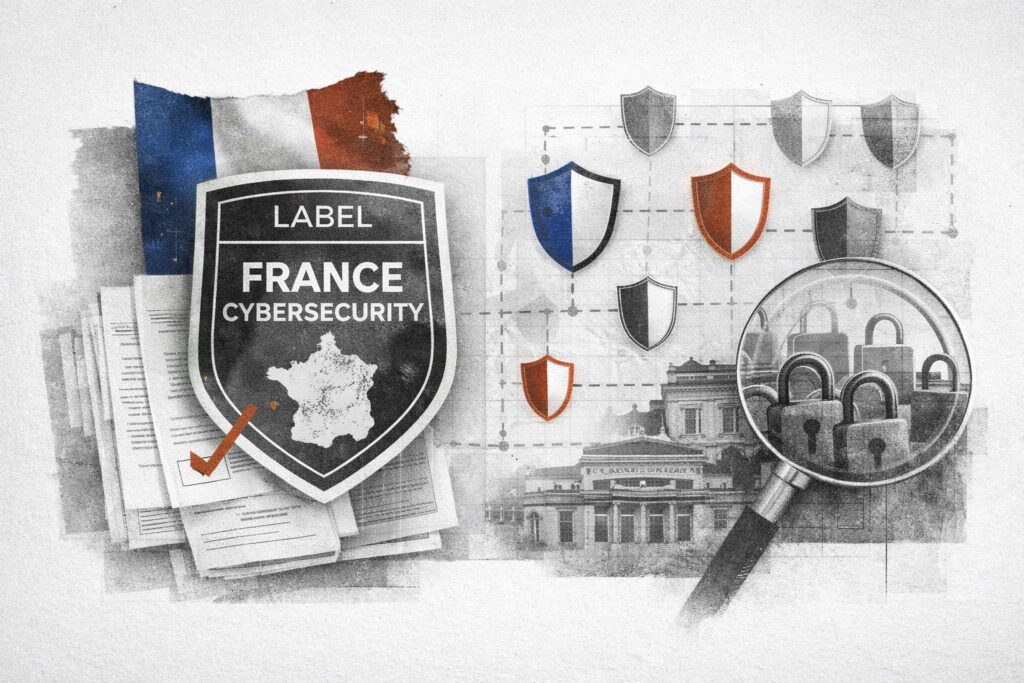
The 2026 cohort of the French Cybersecurity Label has launched, featuring an impressive lineup of 91 solutions from 85 companies, including 22 inaugural recognitions. Announced just ahead of the InCyber Forum, this edition comes at a time when geopolitical tensions have elevated the choice of cybersecurity solutions to a strategic level, extending far beyond mere technical or financial considerations.
Established in 2015 as part of the New Industrial France initiative, the French Cybersecurity Label is governed by three independent bodies: industry representatives from ACN and Hexatrust, users through CESIN, CIGREF, and GITSIS, and public authorities including ANSSI, DGA, DGE, and Business France. The awarding of the label relies on evaluations carried out by independent third parties, setting it apart from self-declaration processes. Solutions that receive the label must be designed, developed, and operated in France, ensuring compliance with European legal frameworks. For both public and private buyers, the label serves as a benchmark in a market where technological dependence has increasingly been identified as a vector of vulnerability.
The 2026 promotion encompasses a wide array of categories, including vulnerability management, DNS and DDoS protection, identity and access management, encryption, sovereign backup solutions, Digital Forensics and Incident Response (DFIR), penetration testing, secure video conferencing, health data hosting, and training. Notable first-time recipients include Mailinblack with U-Cyber 360°, Leviia with its sovereign cloud storage offerings, Secdojo with its next-generation cyber training platform, and Pradeo with its mobile security suite.
A Reference Point for Public Buyers
The geopolitical landscape plays a crucial role in the positioning of this promotion. Maxime Alay-Eddine, chairman of the label, articulates the key challenge: “In an increasingly complex international context, the label provides a trusted guide for buyers looking to actively contribute to their organizations’ resilience.” The label aims to steer both public and private procurement towards solutions that maintain French and European control over the value chain.
Jean-Noël de Galzain, president of Hexatrust, emphasizes the credibility of alternative solutions: “Alternatives do exist; they are effective and operate within a framework of trust that meets our European requirements. In a climate of geopolitical instability, directing procurement towards these solutions is both a strategic and economic move.” Grégory Wintrebert, president of ACN, highlights the clarity it offers buyers: “The label is a simple and reliable marker in a complex market.”
22 Inaugural Recognitions Reflecting a Dynamic Segment
The 22 new entries into the 2026 promotion illustrate segments where regulatory pressure and recent incidents have accelerated the development of French offerings. Messaging protection and phishing awareness are represented by Mailinblack and Hucency, while sovereign storage is showcased by Leviia and Inspeere, whose Datis solution claims a resilient and distributed backup architecture. Incident response and DFIR are underscored by several entrants, including Bouygues Telecom Business Solutions and Inquest.
Secdojo’s participation with its next-generation cyber range platform exemplifies the maturation of a training segment focused on attack simulations, directly relevant to NIS2 requirements for awareness and crisis exercises. The recognition of Tixeo’s secure video conferencing solution confirms the label’s expanded scope, now addressing collaborative use cases where security has become an operational priority for organizations with confidentiality obligations.
Simplifying Pre-Selection in Bidding Processes
While the French Cybersecurity Label guarantees both origin and sovereignty, it does not replace ANSSI qualifications, Common Criteria certifications, or specific sector evaluations. Its primary utility lies in simplifying the pre-selection phase in bids where control over the value chain and adherence to European legal standards are explicit criteria.
The 2026 promotion covers all layers of enterprise security architecture, including network and DNS protection, identity and access management, incident detection and response, backup and business continuity, compliance, and risk governance. For organizations subject to NIS2 or DORA, where operational resilience necessitates precise mapping of technological dependencies, the list of 91 labeled solutions serves as a useful reference starting from the early phases of supplier qualification.