Samsung Unveils Quantum-Resistant S3SSE2A Security Chip at CES 2026
Awarded the “Best Cyber Innovation” at CES 2026, Samsung System LSI’s S3SSE2A security chip integrates Thales’ secure operating system and cryptographic libraries directly into silicon. This groundbreaking chip brings post-quantum security beyond critical infrastructure, embedding it into embedded electronics and connected devices.
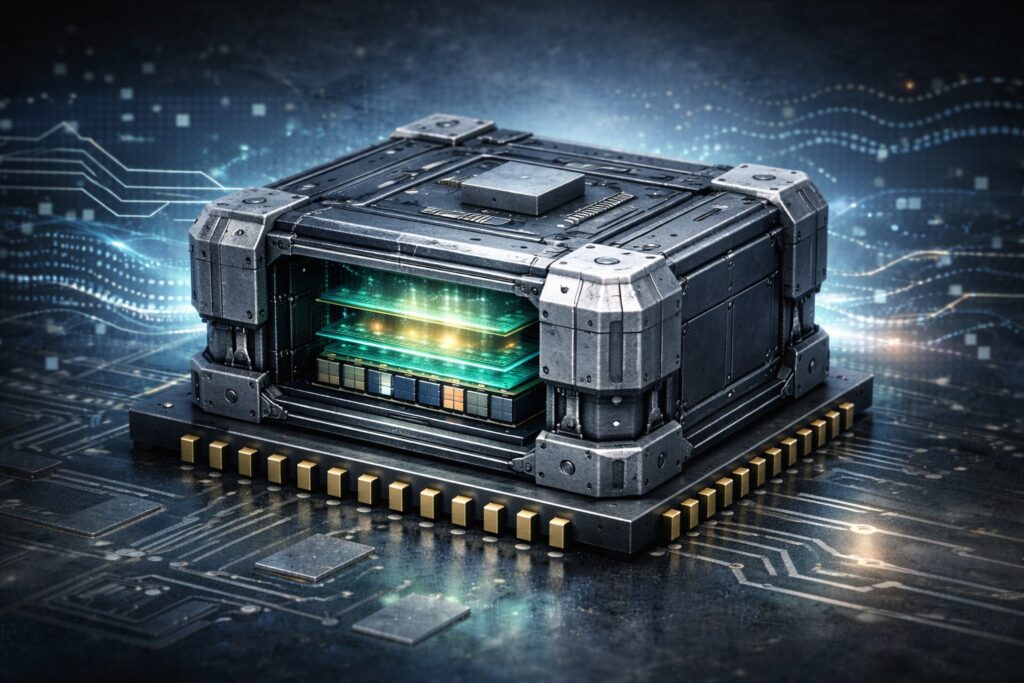
The S3SSE2A belongs to the family of standalone secure elements. Rather than relying on software hardening of the host system, this component physically isolates critical security functions within a dedicated microcontroller. The chip features a secure core, protected internal memory for cryptographic key storage, and hardware accelerators to perform sensitive cryptographic operations without exposing them to the larger system.
Samsung System LSI has specifically designed the S3SSE2A for large-scale integration into long-lifecycle connected devices. From smartphones and industrial IoT devices to smart home appliances and critical embedded systems, all face a common challenge: the security mechanisms in use today must remain valid for a decade or more, especially as the rise of quantum computing threatens the foundations of traditional asymmetric algorithms.
A Blueprint for the Post-Quantum Transition
From a cryptographic standpoint, the S3SSE2A employs a hybrid architecture. It continues to support widely adopted classical algorithms in existing infrastructures, such as RSA and elliptic curve schemes, while also integrating post-quantum cryptographic algorithms aligned with NIST’s ongoing standardization efforts. This dual support ensures immediate interoperability with current systems, avoiding any functional disruption.
The post-quantum libraries provided by Thales operate directly within the chip’s secure environment. They are based on algorithm families recognized for their resistance to quantum attacks, particularly those derived from mathematical lattice structures. The hardware implementation of these algorithms yields significantly superior performance compared to purely software-based solutions, all while effectively managing power consumption and memory footprint.
Countering the “Collect Today, Decrypt Tomorrow” Threat
The S3SSE2A directly targets a well-identified scenario in cybersecurity: the interception and storage of encrypted data today, anticipating sufficient quantum capabilities to decrypt it later. This attack model primarily concerns connected devices, whose lifecycles extend far beyond those of traditional cryptographic algorithms.
By embedding post-quantum cryptography at the component level, Samsung and Thales aim to neutralize this risk from the ground up. Cryptographic keys, digital identities of devices, and authentication mechanisms are generated, stored, and utilized exclusively within the secure element. They never traverse the host system’s memory in plaintext, significantly reducing attack surfaces, even against adversaries with physical access to the hardware.
A Component Resilient to Both Logical and Physical Attacks
The S3SSE2A boasts compliance with the Common Criteria EAL6+ certification, one of the highest standards for security components. This certification verifies advanced resistance to logical attacks as well as physical ones, such as side-channel analysis, fault injection, and reverse engineering attempts.
This level of certification is significant, positioning the chip for not only consumer applications but also regulated and industrial environments where hardware security is a contractual or regulatory requirement. The combination of a certified secure element and post-quantum primitives executed at the hardware level establishes a trusted foundation suitable for large-scale deployments.
Embedding Post-Quantum Security
For Thales, this collaboration signifies a strategic shift in post-quantum cryptography. “The S3SSE2A chip is a true breakthrough, providing robust and sustained security in an energy-efficient design,” asserts Eva Rudin, Vice President of Mobile Connectivity Solutions. The goal is no longer to confine these technologies to sovereign or banking infrastructures but to make them accessible to the industrial chains of embedded electronics.
On Samsung System LSI’s side, the S3SSE2A is part of a clear technological differentiation strategy. Hwa Yeal Yu, Vice President of Security and Power Products, refers to it as a “comprehensive post-quantum cryptography solution,” designed from the ground up to tightly integrate hardware and software. Beyond the accolade received at CES, this announcement marks a tangible step forward: preparing for the post-quantum era transitions from theoretical concepts to industrial components ready for integration.