

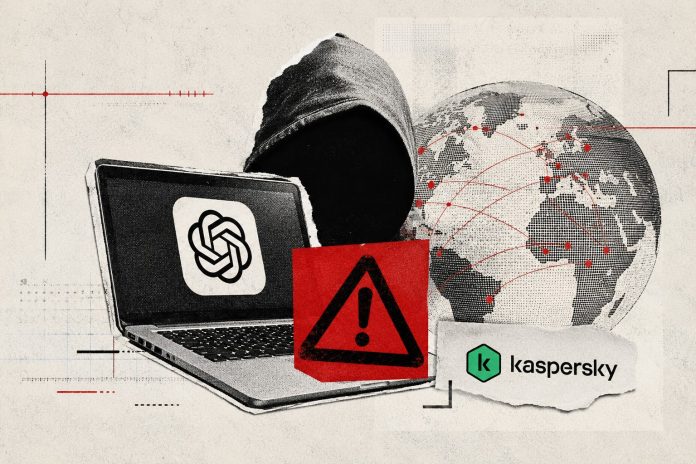
From January to early May 2026, Kaspersky’s solutions detected over 92,000 malware and potentially unwanted application attacks worldwide, cleverly disguised as popular AI agents and services. Fake ChatGPT applications accounted for 49% of the reported attacks, while those mimicking Claude and Gemini each represented 18%. These alarming statistics were unveiled during the Kaspersky Horizons conference in Rome.
Among these threats, more than 15,000 malware samples masqueraded as agent-based AI tools, including counterfeit versions of OpenClaw, according to Kaspersky researchers. These samples comprised banking Trojans, spyware, credential stealers, and downloaders capable of deploying additional malicious payloads. In May 2026, Kaspersky’s Global Research and Analysis Team, known as GReAT, also uncovered a campaign linked to the APT group Silver Fox: fake Claude AI applications targeting Windows, macOS, and Linux, which quietly deployed malware upon launch, granting long-term access to compromised systems.
Cybercriminals have been leveraging the popularity of major AI brands to bypass user vigilance, distributing their malicious payloads through channels that mimic legitimate download processes. Previous investigations by Kaspersky had already documented credential stealers disguised as Claude Code and standalone AI tools, indicating a troubling trend that predates major announcements in 2026 and highlights a sustained increase in such activities since 2024.
The AI Supply Chain: A New Attack Surface
Beyond fake applications, attackers are now targeting the software components that underlie AI ecosystems. The most documented compromise during this period involved LiteLLM, a Python library used to access AI models. This library, which recorded approximately 97 million monthly downloads, was found to have incorporated malicious code capable of stealing database credentials, cryptocurrency wallet files, and other sensitive information. A single compromised component can expose the networks of multiple organizations sharing the same ecosystem.
Kaspersky has also reported the emergence of what it refers to as “malicious skills”—harmful capabilities embedded in seemingly legitimate extensions, prompts, or plugins, designed to covertly conduct data exfiltration, reconnaissance, or result manipulation activities. This category of threat is particularly relevant to agent-based AI architectures, where an agent can call external components as part of its normal workflow. According to a concurrent Kaspersky study, 99% of organizations plan to integrate AI into their security processes, further expanding the attack surface.
AI-Specific Risks Beyond Malware
The cyber threats related to AI extend beyond traditionally disguised malware. AI systems expose organizations to inherent operational risks: data leaks during inference, biased or manipulated datasets, data poisoning attacks, prompt injections submitted to models, and unpredictable behaviors or hallucinations. These vectors are distinct from traditional threats and necessitate tailored security controls that conventional detection tools may not cover.
“As AI systems evolve from being assistants to autonomous agents, the challenge is no longer just technical resilience, but responsible autonomy,” stated Luana Lo Piccolo, a technology law and AI governance advisor, speaking at the Kaspersky Horizons conference. “Organizations must transcend traditional resilience to aspire to cyber endurance, especially as AI-based threats become faster, more autonomous, and increasingly coordinated—and could have an unprecedented impact when combined with advancements in quantum computing,” added Andrea Fumagalli, a cybersecurity and AI consultant.
Five Principles for Secure Agent Deployment
Kaspersky has put forth five operational recommendations for organizations deploying agent-based AI systems. Standardizing interfaces, data formats, and communication protocols ensures consistent control across all systems. Minimizing data exchanges mandates that each entity only receive the data strictly necessary for its function. Trust management requires clear identification of who or what is interacting with the system, with defined permissions for each agent. Human oversight maintains the ability to manually intervene in critical processes. Finally, gradual deployment with predefined rollback scenarios reduces operational risk during production launches.
“The introduction of AI agents into environments changes the very nature of trust. Every automated action integrates into a broader chain of interconnected systems and data exchanges, meaning security is no longer just about protecting endpoints, but about controlling how intelligence, permissions, and decisions propagate through interconnected, AI-driven processes,” summarized Dmitry Galov, head of GReAT for Russia and the CIS. For CISOs and CIOs, the practical concern lies in the trust perimeter: every tool, extension, or AI service added to an agent-based workflow represents a potential entry point, and the qualification procedures for third-party components warrant reevaluation in light of these new threats.



